Good day my good friend.
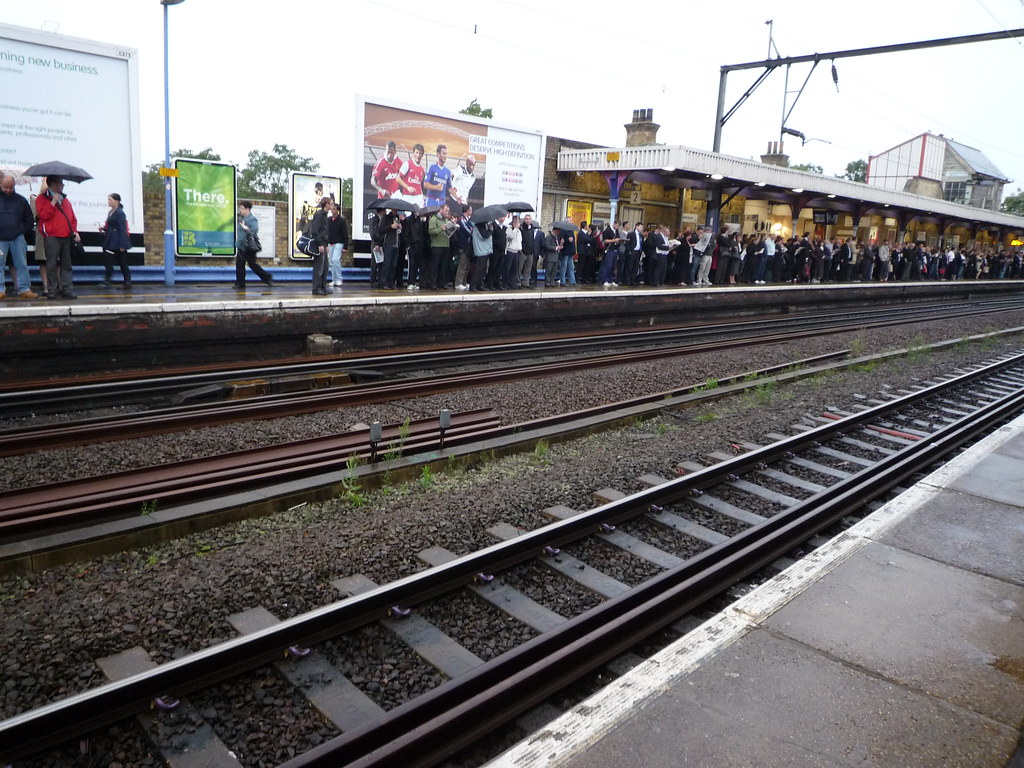
In the latest in an ongoing series of “don’t plan evenings out in London without checking the trains first,” I am writing this as the electricity supply has failed on the train. I think we are about 10 minutes from starting a campfire and singing Kum Ba Yah. If you have not heard from me in 3 days, send a search party. My last co-ordinates were somewhere south of Harpenden.
If you have any suggestions for interesting news items or bits of research to include in this newsletter, you can email me.
James
Forecasting is not a bad thing
There has been much pushback in recent years in transport strategy and futures on the idea of forecasting-led strategy development. And too often this is misunderstood as an attack against forecasting itself. Forecasting is an extremely useful tool in exploring uncertainty, so long as it is not the driver of that exploration. And importantly, so long as the assumptions underpinning the forecast are shared, open, and can be challenged.
That is where this new research into electric vehicle forecasts comes in. What this research has done is useful. It does not state that what has been done has been bad forecasting, necessarily. But it urges ways by which the forecasts can be better by understanding diffusion effects in social networks – something that is brutally hard to to do even with online social networks. A key learning from the Good Judgement Project is not to discount forecasting, but to realise there is an art to it based on self-learning. Don’t ditch forecasting, just do it better.
Consumer rights are good for performance. Maybe?
This research paper into the links between delays and passenger rights, in this case European air passenger rights, poses an interest conundrum. It states that flights covered by such rights are much less likely to be delayed than rights not covered by those flights. In my view, the results point towards a decisive ‘maybe’ on there being a causal link. Where there is little competition, there is evidence that regulated routes are more likely to be on time. But the average delay reduction time of 4 minutes is well within the margin for error.
But it points towards something interesting. Do stronger rights improve operator behaviour? Its one seldom studied. There is evidence that reducing delays on trains closely correlates with passenger satisfaction. But proving the causal link between customer satisfaction and regulation is hard. There is a logic there – improving the baseline improves satisfaction – but it can also establish a new satisfaction baseline. Much in the same way that most people would not be happy with a Nokia 3210 as their new mobile phone (sorry, old phone fans). But, it has not been studied that much. Maybe that should change.
Random things
These links are meant to make you think about the things that affect our world in transport, and not just think about transport itself. I hope that you enjoy them.
Changes in Twin Births in the United States, 2019–2021 (National Vital Statistics Reports)
More effective solutions? Senior managers and non-routine problem solving (Strategic Management Journal)
New water-based battery could help reduce dependence on lithium for energy storage (Interesting Engineering)
The North-South cost of living divide continues (Centre for Cities)
Something interesting
![r/dataisbeautiful - [OC] Carbon inequality: who should reduce their CO2 emissions, and how much?](https://mobilitymatters.io/wp-content/uploads/2023/12/7df5d-bd81c9d7-c252-4525-9a4b-5183034797ca_640x755.jpeg)
The inequality of carbon emission reductions, visualised. Its quite sobering.
If you do nothing else today, then do this
Following on from my post yesterday, Paris has banned e-scooters. The fall out from this is…interesting.