
This blog, plus additional exclusive content, was published last Friday on my free Mobility Matters newsletter.
For years, the national concessionary bus pass has been mischaracterised by the media, and severely undervalued more generally. Routinely dismissed by critics as an expensive perk for retirees, and treated by policymakers as a transport subsidy to be debated, its true and profound value has not been well understood. What is often not known is how the national concessionary bus pass has, unintentionally, been an amazing public health intervention.
Simply put, the national concessionary bus pass adds years to your life. It is a piece of preventative medicine carried in the wallets and purses of millions of people. It holds back physical decline, cognitive decay, and drastically improves mental health.
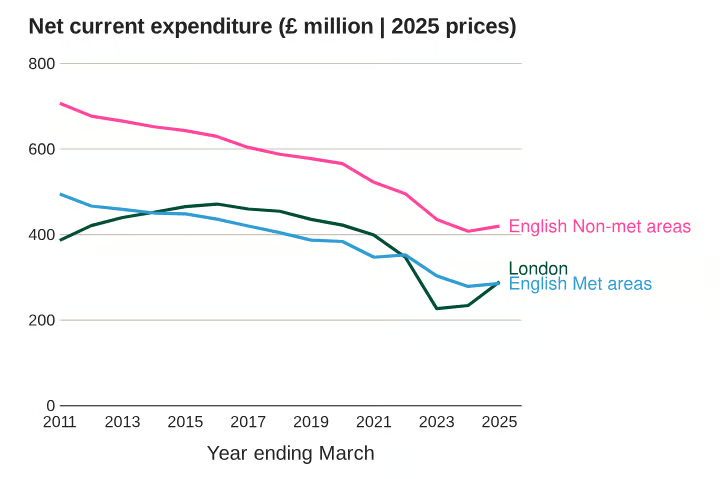
While the scheme requires substantial public funding—costing the public sector in England £995 million net in 2025—it is arguable a vital investment in the health and care of the elderly of the UK.
The greatest threat to longevity and independent living in later life is a sedentary lifestyle. The transition into retirement, or the onset of age-related mobility challenges, often triggers a sharp, sudden decline in physical activity. Doing so accelerates muscle sarcopenia (muscle loss), cardiovascular disease, osteoarthritis, and metabolic disorders such as type 2 diabetes.
The humble bus pass helps against this in a very simple way – it gets people walking to and from the bus stop. By incentivising public transport over the private car, taxis, or simply remaining housebound, we are making it easy for people to walk every day.
A study published in the American Journal of Public Health systematically proved this mechanism. The research used data from the National Travel Survey to track the movement habits of the elderly population. The researchers found that buss pass holders are drastically more likely to engage in active travel compared to their peers who do not have a bus pass. Crucially, the intervention was most effective among those who needed it most. disadvantaged groups holding a pass area four times more likely to walk or cycle as part of their transport routine compared to those without one.
Further detailed research leveraging the English Longitudinal Study of Ageing (ELSA) demonstrated exactly how this routine walking translates into clinical outcomes. The study revealed that older people with a bus pass maintain a significantly faster gait speed and lower levels of body fat.
Gait speed is not just a measure of how fast someone can walk. A slower gait speed is a predictive inidicator of conditions that radically alter people’s mobility, such as falls. If you can retain a faster gait speed for longer into old age, it shows you are active and healthy. By forcing people out of their living rooms, down the street to the bus stop, and through their local high streets, the concessionary pass directly preserves their health. Meaning they can walk quicker, for longer.
If physical inactivity is a slow killer, social isolation is a silent assassin. The UK, mirroring global trends across Europe and North America, is suffering from a profound epidemic of loneliness among older adults and disabled individuals.
Loneliness is frequently dismissed as a purely emotional issue. But it isn’t, and medical science proves it isn’t. Prolonged social isolation is a physiological trauma. Epidemiological studies routinely show that chronic loneliness is prospectively associated with a mortality risk comparable to smoking 15 cigarettes a day. It drives up blood pressure, destroys sleep quality, impairs immune function, and drastically increases the risk of clinical depression and suicide.
But, to the rescue, comes the humble bus pass. By completely removing the financial friction and anxiety associated with travel, it grants older adults the unconditional freedom to participate in society.
A UCL-led evaluation found that having a buss pass is associated with a marked reduction in depressive symptoms and significantly higher life satisfaction. The researchers found that those denied a pass scored nearly 12% higher on validated indices designed to measure clinical depression.
Another study went a step further. The researchers proved that eligibility for the pass actively reduces feelings of loneliness and increases the likelihood of regular volunteering, community participation, and routine contact with friends and family.
We must also recognise the qualitative, human element highlighted in urban sociology. Research on London’s Freedom Pass demonstrates that the bus pass grants visibility, autonomy, and civic inclusion to a demographic that society too often pushes into the shadows. Travelling on a bus means being part of the ‘general public.’ It means interacting with drivers, witnessing the changing seasons, and feeling connected to the rhythm of a town or city. It literally keeps older adults engaged with the world, which is a fundamental prerequisite for maintaining the will to live a long, healthy life.
The UK is also facing a devastating rise in dementia and Alzheimer’s disease, conditions that ravage families and demand unprecedented levels of social care funding. While there is no cure (yet), research increasingly points to the importance of cognitive reserve—the brain’s ability to improvise and find alternate ways of getting a job done.
Building and maintaining cognitive reserve requires ongoing, complex mental stimulation. Navigating a public transport network provides exactly this. Planning a route, reading timetables, understanding spatial geography, managing time, and interacting with strangers demands continuous, multi-layered cognitive processing. While there is a balance to be struck with reducing cognitive overload for some, using the bus can also provide the brain with a workout.
When older adults are confined to their immediate surroundings because they cannot afford a £5 return bus ticket, their physical environments shrink, and consequently, their cognitive stimulation plummets. Research stemming from global initiatives like the MINDMAP project indicates that the social engagement and spatial navigation facilitated by independent public transport use actively help maintain neuroplasticity.
Wayfinding exercises the hippocampus, a part of the brain heavily involved in memory and one of the first regions to suffer damage in Alzheimer’s disease. The bus pass essentially funds a daily cognitive workout. Every trip to a new town centre, a museum, or a distant friend’s house preserves cognitive years that would otherwise be lost to the under-stimulation of the living room armchair.
The concessionary bus pass is also a critical tool for ensuring equitable access to healthcare. Older people and disabled individuals make up a disproportionately high percentage of NHS patients, requiring frequent, routine visits to general practitioners, outpatient clinics, dentists, pharmacies, and physiotherapy.
Health inequality in the UK is heavily dictated by transport infrastructure. A report by the charity Age UK highlighted the stark, undeniable realities of the social determinants of health. The report noted that nearly 1.5 million people aged 65 and over in England find it difficult to travel to a hospital. Crucially, it is consistently the people with the worst baseline health and the lowest incomes who struggle the most with transport.
The bus pass cuts through this. By eliminating the fare at the point of use, the policy ensures that an older adult does not have to make a choice between heating their home, buying food, or paying for the bus to get to a vital medical appointment.
When older adults delay going to see their doctor because they cannot afford the bus fare, the results are as catastrophic as they are inevitable. Minor, highly treatable conditions like a small infection are left to deteriorate until they escalate into to the point where an ambulance needs to be called, followed by several weeks in hospital. The bus pass facilitates early intervention, which is universally cheaper and more effective than emergency crisis management.
When discussing the national concessionary travel scheme, critics, certain think tanks, and budget-constrained politicians inevitably focus entirely on the operational cost. Reimbursing private bus operators for the journeys taken by pass holders costs the UK taxpayer. In times of fiscal austerity, the idea of means-testing the pass, introducing a flat nominal fee (e.g., £1 per journey), or scrapping it altogether is frequently floated.
I should know. I thought that once.
What I came to learn about what the health impacts of the bus pass are, I swiftly changed my mind. When we account for the public health dividends, the bus pass generates a massive economic return. An appraisal commissioned by the Confederation of Passenger Transport (CPT) calculated these returns using the Department for Transport’s own TAG guidance. The analysis demonstrated that every £1 spent on concessionary travel generates £3.79 in societal and economic benefits.
A vast proportion of this return stems directly from healthcare and social care savings. By keeping hundreds of thousands of older people physically active, the bus pass helps to save the NHS money. Its a classic systemic impact. Restrict the pass to balance the transport budget, and add the cost to the NHS budget.
While much of the media and academic focus centres on age-related eligibility, it is imperative to state that the English National Concessionary Travel Scheme—and its devolved counterparts—also mandates free off-peak travel for eligible disabled people of working age. The health, wellbeing, and economic arguments apply just as forcefully to this demographic, if not more so.
A report by the mobility charity Whizz-Kidz highlights exactly how bus travel offers young wheelchair users, individuals with visual impairments, and those with hidden disabilities the baseline freedom to attend further education, secure employment, manage chronic health appointments, and maintain social lives. For a working-age disabled person, the bus pass is often the difference between independence and total reliance on an overstretched social care system. The report noted that disabled pass holders accounted for roughly a quarter of all concessionary bus trips in specific studied areas, demonstrating immense reliance on the scheme.
However, the report also exposed severe geographical inequalities and structural flaws in the current policy. The statutory national minimum only requires free travel during off-peak hours (between 9:30 am and 11:00 pm on weekdays). While a minority of local authorities use their discretionary powers to fund 24/7 travel for disabled pass holders, the vast majority do not.
This arbitrary time restriction actively discriminates against disabled people trying to participate in the economy. It hinders them from using their passes to commute to a 9:00 am job, or to attend an 8:30 am hospital blood test. It creates unnecessary, deeply frustrating barriers to independence, directly harming mental wellbeing and exacerbating the disability employment gap. Expanding the scheme to cover peak times universally for disabled users is consistently cited by health and transport advocates as an urgent, non-negotiable step for achieving basic public health equity.
The UK is not alone in grappling with these issues, and looking at global approaches to transport and ageing reinforces the necessity of the bus pass. The World Health Organization (WHO) explicitly links transport to health in its Age-Friendly Cities framework. The WHO dictates that affordable, accessible public transport is a core determinant of whether an older person can remain healthy and integrated into their community, or whether they will succumb to isolation and rapid physical decline.
Across Europe, municipal and national authorities are increasingly viewing public transport subsidies through a public health lens. In countries like Spain and parts of Scandinavia, heavily subsidised or free travel for seniors is integrated into broader active ageing strategies, explicitly designed to keep older adults out of expensive, state-funded residential care homes for as long as possible.
Because the health benefits of the bus pass are not in the transport budget, bus passes remain vulnerable to political short-termism, a good example of which is raising the eligibility requirements with age. A study proved that raising the eligibility age caused a direct, severe, and immediate drop in public transport use among people in their early 60s. These are the “lost years.”
By delaying access to the pass until an individual reaches retirement age, the state is encouraging an entire demographic cohort to adopt sedentary, isolated lifestyles just as their physical vulnerabilities are increasing. The good health and the social networks lost during these five or six years of restricted mobility cannot be easily clawed back once the pass finally arrives in the post. To maximise the life-extending benefits of the scheme, policymakers should seriously consider early access.
The narrative surrounding the national concessionary bus pass must undergo a radical transformation. It is not a handout. It is not merely a mechanism for managing traffic congestion. It’s a public health intervention.
By putting physical movement into daily routines and forcefully eradicating the financial barriers to social connection, the bus pass actively combats the primary physiological and psychological drivers of mortality in older adults and disabled citizens. It delivers a return on investment by keeping people physically robust, mentally resilient, out of emergency hospital beds, and actively engaged in the fabric of their communities.
In the face of an ageing population, a crumbling social care system, and an NHS stretched beyond its absolute limits, expanding access to public transport is not a luxury. It is an absolute, non-negotiable necessity for public health and national longevity. The bus pass adds years to your life, and it adds life to those years. It must be protected at all costs.


 Mobility Matters