
This blog, plus additional exclusive content, was published last Friday on my free Mobility Matters newsletter. You can sign up for the newsletter by clicking here.
In a hospital in a major city, a registered donor sadly passes on an operating table. The time will come for their family to grieve their passing, and for friends to pay their respects. No doubt beautiful words will be said about their kindness at their funeral. In the meantime, on a hospital on the other side of the city, another person entirely – likely completely unknown to the donor – waits patiently in another hospital for a viable heart to be available. They have been waiting for months, and today, another family’s misfortune is about to become the day that their family have been waiting months for.
From the moment of passing, the clock ticks. A healthy heart has about 4 hours of viability post death, a time period that could be extended to 8 hours if it is immediately placed in cold storage. But doing this has its own risks. The cooling procedure itself, when the temperature of the heart is reduced to around 4C, can damage the heart. Once you place it in cold storage, you cannot take it out again until its with the recipient, meaning you cannot monitor its condition in the meantime. It is imperative that the heart gets to the patient within 4 hours.
There are three options to get this heart from one side of the city to the other. The first option is the NHS Blood and Transplant Service, which provides most of the transplant logistics services across the NHS. But this is time critical, so a van being stuck in traffic won’t do the trick. An ambulance, with its sirens screaming, can clear a path through the city. But as anyone who has experienced rush hour knows, even ambulances with their blues-and-twos blazing can get held up. The final option is by helicopter. The local air ambulance can provide this service, but may be out dealing another emergency. Plus, transporting by helicopter is expensive. Each air ambulance mission costs about £3000 – well worth the price for the recipient and their family, but a price that needs paying regardless.
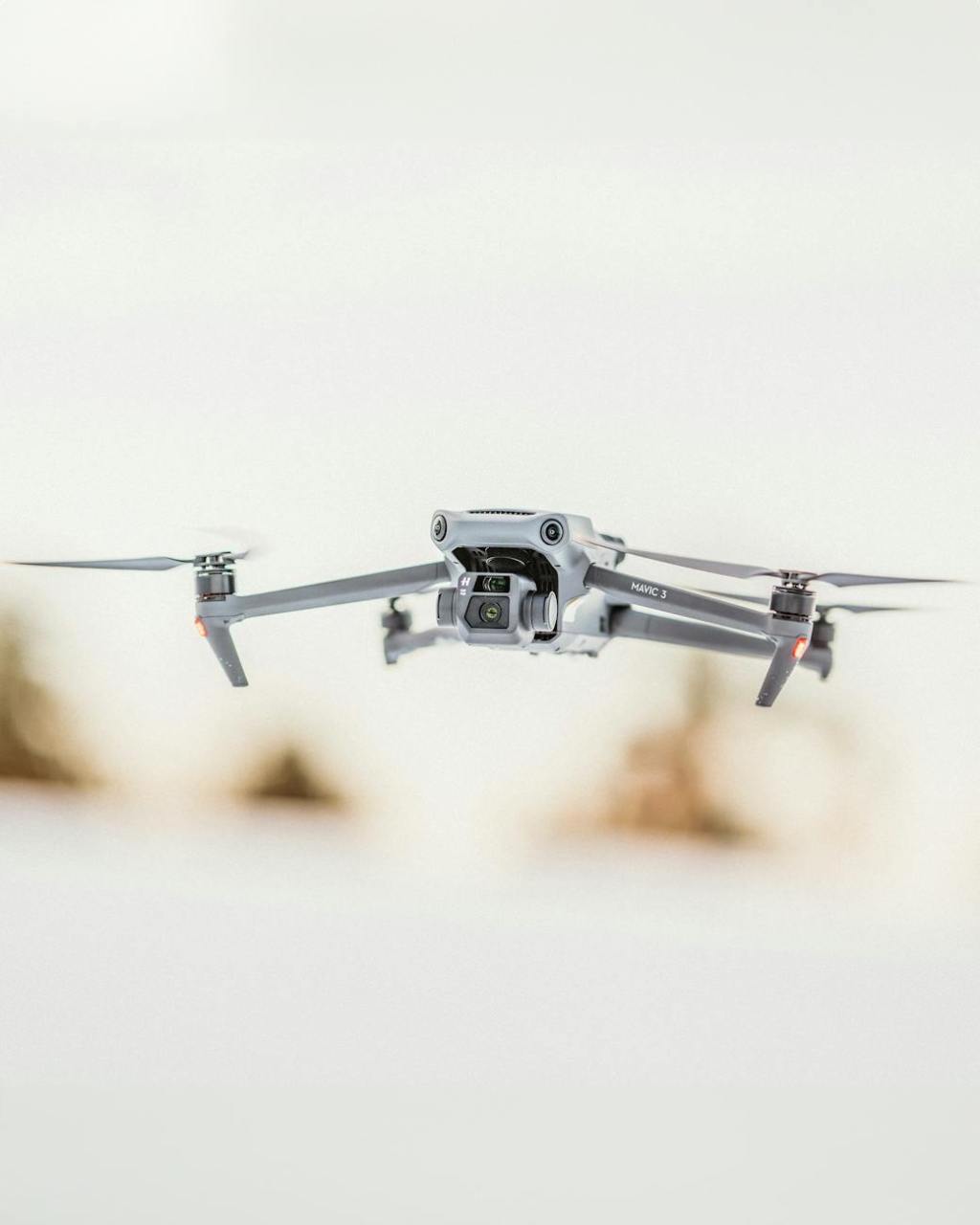
There is another way to deliver time-critical cargo such as a heart: by drone. If you believed the headlines from five years ago, our skies should be buzzing by now. We were promised a revolution in urban logistics—a near-future where electric drones would silently whisk urgent medical supplies between hospitals, deliver parts to engineers on construction sites, and perhaps even drop off the occasional grocery order, all while reducing road congestion and carbon emissions.
The technology to do this exists. The demand, particularly for medical and emergency deliveries, is real. The discrepancy between the potential of drone delivery and its operational reality is no longer a question of engineering. We have solved the battery density problems. There are on-board sensors that detect and avoid other air traffic. We have quiet rotors.
What we do not have is a regulatory framework that allows these machines to fly. We are like a bird that has allowed its fledglings to take their practice flights, but is stopping them from leaving the nest.
Over the last few years, the UK and Europe have excelled at one thing: the Regulatory Sandbox. Governments have poured millions into programmes like the UK’s Future Flight Challenge or the EU’s AMU-LED demonstrations. These initiatives produce fantastic press releases. They show drones delivering defibrillators in controlled environments or ferrying mail between remote islands. However, a 2026 evaluation by the Policy Institute at King’s College London highlights a critical failure: what they call the “Sandbox Trap.”
The idea of a Regulatory Sandbox is to provide a safe, secure environment that is rigorously controlled for the purpose of testing. For Government’s they are perfect. They allow them to test new ideas and concepts, as well as new regulatory frameworks, without doing anything that might be seen as controversial or seen as dangerous. The problem is then scaling those changes to the wider world.
For example, lets say a Regulatory Sandbox allows you to deliver ten drone deliveries in one neighbourhood well away from conflicting air traffic. But for the service to be commercially viable, it needs to deliver a thousand deliveries across a city. Would the rules in the sandbox look the same as that needed by the commercial reality? Newsflash: its very unlikely.
In the context of the UK, this means shifting from a regulated airspace where risks are managed, to a tightly regulated airspace which demands zero risk. The Rules of Air Regulations 2015 provide the basic legal framework for testing drones at low altitudes. But outside of the test environment, the same basic legal framework applies to drones as it does to a commercial airliner or someone flying a Cessna for fun.
For drone delivery, the practical implication is this. Drones have to meet a safety standard that is, for all intents and purposes, zero risk. Whereas delivery drivers and paramedics in the cab of an ambulance just have to manage their risks. So the higher risk and less reliable form of transport gets locked in.
In Europe and the UK, the mechanism for approving drone operations is known as SORA (Specific Operations Risk Assessment). On paper, SORA is a triumph of logic. It categorises flights based on risk (ground risk to people, air risk to other planes) and assigns a “safety score” that dictates what safety systems you need. In practice, however, SORA has become a suffocating administrative burden.
Recent industry feedback from late 2025 suggests that SORA has evolved from a safety methodology into a market gatekeeper. The requirements for urban operations is so high that the cost of compliance is astronomical. Operators are required to provide cold, hard data on population densities and ground risks that often simply doesn’t exist in the format regulators demand.
This creates a paradox:
- You need flight data to prove your operation is safe and to satisfy SORA requirements.
- You cannot get permission to fly to generate that data because you haven’t yet satisfied the SORA requirements.
This paradox crushes the ability of smaller, innovative companies to get established. Unless you have an experienced legal team on hand (and most startups don’t), the compliance paperwork takes 4 to 8 months to process for a single operational approval.
At the heart of all this is achieving the drone equivalent of a holy grail, but one that could be tackled with the stroke of a pen: Beyond Visual Line of Sight, or BVLOS.
Under current rules, the pilot of the drone has to be within visual line of sight of it. You cannot have one pilot per drone for a 10-mile delivery. You need one operator monitoring 10 or 20 drones autonomously. Without that, the economics of the operation don’t exist. Imagine if every Amazon or Evri delivery driver had to have someone sitting in the passenger seat. The whole operation would collapse under its own weight, and no more free delivery.
Technically, drones are ready for this. They use 5G, satellite links, and onboard AI to navigate. Yet, as of 2026, routine BVLOS permissions in non-segregated airspace are as rare as hen’s teeth. The primary sticking point is Electronic Conspicuity (EC).
You may not be aware, but not everything in the air has to transmit its position. While Flightradar may show a congested skies over the UK, it does not show the position of many, many more aircraft that do not have an electronic transponder. Gliders, paragliders, and even some military aircraft do not show up on the radar screen. This is dealt with through some restrictions on airspace (e.g. don’t fly your glider across the approach to a major airport) and relying on the good will and common sense of pilots.
For drones, this is not the case. This means that the drone has to “see” non-transmitting aircraft, and take actions to avoid accordingly. This is technically feasible, but is orders of magnitude more difficult than having every object in the sky be required to transmit its position. This need not even require fitting a transponder to every aircraft. There are, quite literally, apps that give most of the functionality of a flight computer on your mobile.
The frustration here is not just about commercial profits for delivery companies. It is about what our cities lose. When we block drone delivery through excessive caution, we are actively choosing:
- More vans: Every parcel not delivered by a drone is likely delivered by a van, contributing to the 30% of urban congestion caused by logistics. Even a small dent in this market helps in a congested urban area.
- Slower Healthcare: We are denying the NHS and emergency services the ability to move pathology samples, blood, and hearts between hospitals in 15 minutes instead of an hour.
- Carbon Emissions: We are delaying the decarbonisation of the “last mile.”
Cities should have the option to integrate this layer of transport. Of course, there will always be restrictions. No one expects drones to buzz around Heathrow or swarm over sensitive government buildings. Privacy and noise concerns are valid and must be managed through zoning and strict time of day rules. But there is a vast difference between regulated operations and the current state of effective prohibition.
To unlock the benefits of this technology, we need a fundamental shift in regulatory philosophy:
- Accept Equivalent Safety, Not Perfect Safety. We accept that road transport carries risk, even if we trying our hardest to manage it downwards. We accept that pilots and a computer in charge of a fully-loaded Airbus A320 carries some risk. Drones should be held to a high standard, but not an impossible one. If a drone delivery network creates a statistical risk that is lower than the fleet of vans it replaces, that should be viewed as a net safety gain.
- Modernise the airspace. We need to accelerate the deployment of automated air traffic control for drones. This digital infrastructure allows drones to file flight plans and avoid each other automatically. But it only works if all airspace users participate. The days of silent flying in busy airspace must end.
- Automate the Approval Process. We cannot run a 21st-century industry with a 20th-century rubber-stamp bureaucracy. The SORA process needs to be digitised and streamlined. If an operator has proven their safety case in one city, they shouldn’t have to start from zero in the next. This means passporting of approvals across regions.
- Create Permanent Drone Corridors. Instead of temporary sandboxes, cities need permanent drone highways —designated corridors where BVLOS flight is pre-approved. This allows businesses to invest in infrastructure with confidence. We have had the concept of air corridors nailed down since the 1950s. Its time to expand this into the city.
By failing to update our regulatory frameworks, we are stifling innovation and denying our cities a cleaner, faster, and more efficient future. The technology is ready. The question is: are the regulators?
A final thought from me, and that is on perception. There is a reason I painted a picture of transporting a heart across a city. Too much of our urban logistics discussion focuses on parcels, because its the most obvious. Maybe it extends to store deliveries. But amongst the millions of packages crossing the UK every day are ones that are truly a matter of life and death.
Logistics is a complex beast, and we have to think outside of simplistic assumptions. You might not like the idea of drones flying across the city dropping Amazon parcels all over the place. But that does not mean that drones cannot play an important role for time critical deliveries. What we are doing is stopping them from realising that role.



 Mobility Matters