
Good day my good friend.
This is going to be my last newsletter until October. As well as preparing for Mobility Camp, I have a lot of project work due in the coming 2 weeks. I honestly need every spare minute I can get.
Accordingly, this week’s is again some random bits and pieces. Some of which may be interesting, others not. Once September ends I might have some headspace to write something meaningful. For the moment, this is what I can offer.
📅Mobility Camp is back, and on 29th September we are going to Cardiff. It promises to be an amazing day. It would be amazing if you can be there, or maybe sponsor the day.
💼 I am also available for freelance transport planning consultancy, through my own company Mobility Lab. You can check out what I do here.
❌ Our Survey Said…
Every so often I send out a survey, asking for your views on what I should do with the newsletter. I must admit that I am feeling that things need freshening up around here, with a new focus, but I don’t know what it is yet!
Please help by filling in a one question Google Form, by clicking on the below button.
🚚 The Shipping Hits The Fan
This week has been a learning experience in trying to get heavy loads shipped from one address to another. I have been trying to order in some stationary, including things that are most definitely not small, for Mobility Camp. I tried different options to reduce the carbon footprint. Could I just ship the orders straight to the venue, and have them store it? Could I pick them up and have them shipped already signed up, please sign up now), but I have a pile of project work due in the coming 2 weeks. I honestly need every spare minute I can get.
Accordingly, this week’s is again some random bits and pieces. Some of which may be interesting, others not. Once September ends I might have some headspace to write something meaningful. For the moment, this is what I can offer.
📅Mobility Camp is back, and on 29th September we are going to Cardiff. It promises to be an amazing day. It would be amazing if you can be there, or maybe sponsor the day.
💼 I am also available for freelance transport planning consultancy, through my own company Mobility Lab. You can check out what I do here.
🚚 The Shipping Hits The Fan
This week has been a learning experience in trying to get heavy loads shipped from one address to another. I have been trying to order in some stationary, including things that are most definitely not small, for Mobility Camp. I tried different options to reduce the carbon footprint. Could I just ship the orders straight to the venue, and have them store it? Could I pick them up and have them shipped by way of low carbon options like cargo bike (with some lorry driving for the longer stretches).
I spent literally hours researching options. And the lowest carbon option that was actually feasible was…having it all shipped to my home and hiring an electric van to drive it the 200 miles from my house to Cardiff.
People talk about cargo bikes being an alternative solution, and they should be. But they are part of a much wider logistics system, one that is not always integrated and aligned. Even well-meaning people such as me may struggle with some slightly unusual deliveries in such a disjointed environment.
📱 MaaSter of Nothing
Yesterday, it was proclaimed by on LinkedIn by Russell King that the vision of Mobility as a Service (MaaS) is dead. With some justification, I might add. As me and Beate Kubitz wrote about in our book on MaaS, it has outgrown its original concept of the all-in-one mobility app.
I added this in the comments, and its worth re-iterating here. Establishing any kind of business in transport is really hard to do, as transport is an incredibly cost intensive business. The single biggest costs of the transport operator are typically the driver and the vehicle. Often followed by the infrastructure, especially if they run light rail, metros, and heavy rail services.
What this does is give a high up-front cost to running a service, which then needs to be intensively used to make a good return. This means that unless services are full to capacity, the return on this investment is pretty small. This poses a challenge to MaaS service providers not in terms of start up costs (in comparison to running buses, these are usually small), but in terms of the business transactions, where operators need to make the maximum amount of return on their high up-front investments. So any software provider taking a lot of revenue off the top to do this is treated suspiciously. Doubly so when there are operational environments where combined ticketing results in revenue sharing arrangements.
As it is, the MaaS market has largely matured. The main ‘mobility’ apps that offer multiple modes are of a significant scale (e.g. Uber) or dominate regional and local markets centred on cities. Meanwhile MaaS software providers have pivoted towards providing technical solutions for operators and cities, and doing away with multimodality unless the customer requests it.
🛳️ Not a Barbie Girl
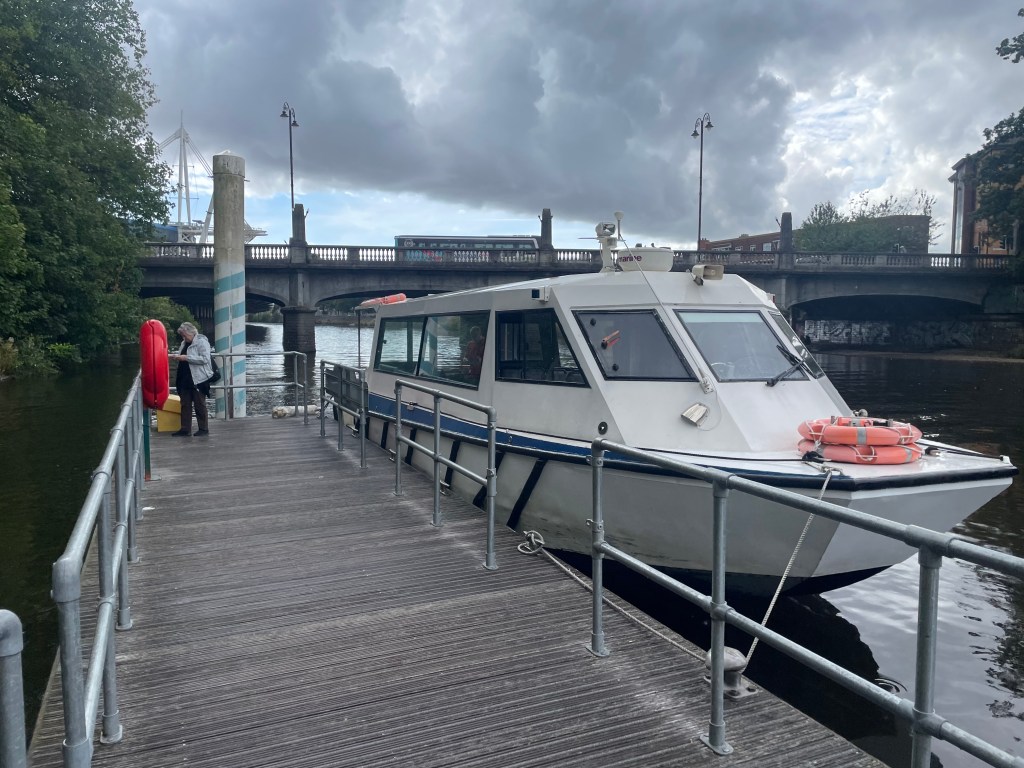
When on a site visit to Techniquest ahead of Mobility Camp, I took the opportunity to take a different mode of transport than usual. Namely, a boat. More specifically, the Aquabus from Cardiff Castle to Cardiff Bay.
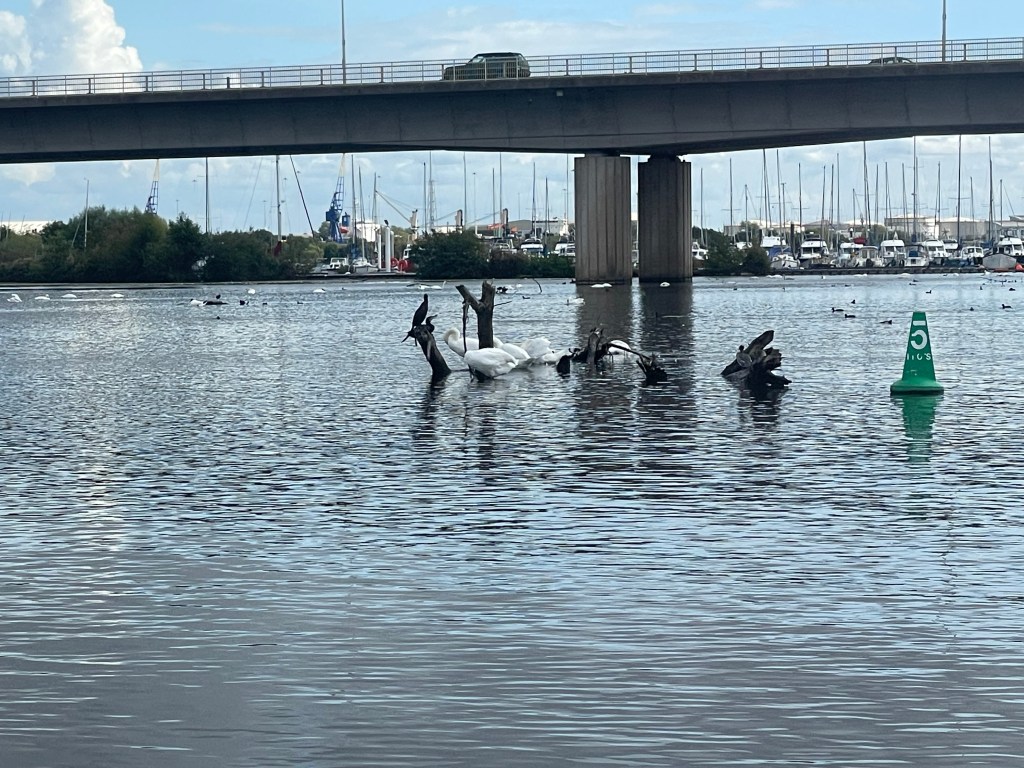
The voyage was 25 minutes down the River Taff and across the bay. On it, I took in two national stadiums (The Principality Stadium and Cardiff Arms Park next door), lots of new development, a lot of birds and fishes, and a very pretty freshwater lagoon that once accepted cargo ships from all over the world. Highly recommended!



🚗 Oxford beats Cambridge
After Cambridge has tried, and failed, for many years to introduce a congestion charging zone, Oxford did it this week. If you plan to drive into Oxford from November onwards – and considering the excellent Park and Ride sites across the city I would sincerely hope you wouldn’t – you will have to pay £5 to enter the central area.
Reading the reports from the committee meeting I very much recommend you do. Seeing the strategic case for the scheme set out is compelling: there is no more room for bus lanes, so reducing traffic in the city centre is the only game in town. Also seeing that removing the Low Traffic Neighbourhoods was investigated as an option for improving traffic flow, and consequently reducing delays for buses, though was quickly slapped down in the face of overwhelming evidence that it would not work.
But the killer sentences here is this:
The traffic filters and congestion charge are forecast to achieve average traffic reductions across city centre and outer sites of around 12% and 10% respectively across all time periods. Assuming a linear relationship between traffic reduction and bus productivity, the bus productivity benefit of the temporary congestion charge would be around 5.4% – a significant contribution to the 10% target.
To clarify, Oxfordshire wants to improve the productivity of buses by 10% – namely the number of buses and drivers required to operate a set frequency of service, given bus operating speeds and journey time reliability. The congestion charge on its own would achieve half of that target, which is for the entirety of Oxfordshire.
Now that is an impact.
🎵 Musical Out-tro
This song has a sad story with a happier ending. Its What I Got by punk ska band Sublime.
Having released two albums that got some critical but no commercial success, Sublime’s self-titled third album finally made the band hit the big time. Unfortunately, it was released 2 months after lead singer Bradley Nowell died of a heroin overdose.
The good news? That baby in the video is Bradley’s son, Jakob. Who is the lead singer in the reformed band.
Accordingly, this week’s is again some random bits and pieces. Some of which may be interesting, others not. Once September ends I might have some headspace to write something meaningful. For the moment, this is what I can offer.
📅Mobility Camp is back, and on 29th September we are going to Cardiff. It promises to be an amazing day. It would be amazing if you can be there, or maybe sponsor the day.
💼 I am also available for freelance transport planning consultancy, through my own company Mobility Lab. You can check out what I do here.
❌ Our Survey Said…
Every so often I send out a survey, asking for your views on what I should do with the newsletter. I must admit that I am feeling that things need freshening up around here, with a new focus, but I don’t know what it is yet!
Please help by filling in a one question Google Form, by clicking on the below button.
🚚 The Shipping Hits The Fan
This week has been a learning experience in trying to get heavy loads shipped from one address to another. I have been trying to order in some stationary, including things that are most definitely not small, for Mobility Camp. I tried different options to reduce the carbon footprint. Could I just ship the orders straight to the venue, and have them store it? Could I pick them up and have them shipped already signed up, please sign up now), but I have a pile of project work due in the coming 2 weeks. I honestly need every spare minute I can get.
Accordingly, this week’s is again some random bits and pieces. Some of which may be interesting, others not. Once September ends I might have some headspace to write something meaningful. For the moment, this is what I can offer.
📅Mobility Camp is back, and on 29th September we are going to Cardiff. It promises to be an amazing day. It would be amazing if you can be there, or maybe sponsor the day.
💼 I am also available for freelance transport planning consultancy, through my own company Mobility Lab. You can check out what I do here.
🚚 The Shipping Hits The Fan
This week has been a learning experience in trying to get heavy loads shipped from one address to another. I have been trying to order in some stationary, including things that are most definitely not small, for Mobility Camp. I tried different options to reduce the carbon footprint. Could I just ship the orders straight to the venue, and have them store it? Could I pick them up and have them shipped by way of low carbon options like cargo bike (with some lorry driving for the longer stretches).
I spent literally hours researching options. And the lowest carbon option that was actually feasible was…having it all shipped to my home and hiring an electric van to drive it the 200 miles from my house to Cardiff.
People talk about cargo bikes being an alternative solution, and they should be. But they are part of a much wider logistics system, one that is not always integrated and aligned. Even well-meaning people such as me may struggle with some slightly unusual deliveries in such a disjointed environment.
📱 MaaSter of Nothing
Yesterday, it was proclaimed by on LinkedIn by Russell King that the vision of Mobility as a Service (MaaS) is dead. With some justification, I might add. As me and Beate Kubitz wrote about in our book on MaaS, it has outgrown its original concept of the all-in-one mobility app.
I added this in the comments, and its worth re-iterating here. Establishing any kind of business in transport is really hard to do, as transport is an incredibly cost intensive business. The single biggest costs of the transport operator are typically the driver and the vehicle. Often followed by the infrastructure, especially if they run light rail, metros, and heavy rail services.
What this does is give a high up-front cost to running a service, which then needs to be intensively used to make a good return. This means that unless services are full to capacity, the return on this investment is pretty small. This poses a challenge to MaaS service providers not in terms of start up costs (in comparison to running buses, these are usually small), but in terms of the business transactions, where operators need to make the maximum amount of return on their high up-front investments. So any software provider taking a lot of revenue off the top to do this is treated suspiciously. Doubly so when there are operational environments where combined ticketing results in revenue sharing arrangements.
As it is, the MaaS market has largely matured. The main ‘mobility’ apps that offer multiple modes are of a significant scale (e.g. Uber) or dominate regional and local markets centred on cities. Meanwhile MaaS software providers have pivoted towards providing technical solutions for operators and cities, and doing away with multimodality unless the customer requests it.
🛳️ Not a Barbie Girl
When on a site visit to Techniquest ahead of Mobility Camp, I took the opportunity to take a different mode of transport than usual. Namely, a boat. More specifically, the Aquabus from Cardiff Castle to Cardiff Bay.
The voyage was 25 minutes down the River Taff and across the bay. On it, I took in two national stadiums (The Principality Stadium and Cardiff Arms Park next door), lots of new development, a lot of birds and fishes, and a very pretty freshwater lagoon that once accepted cargo ships from all over the world. Highly recommended!
🚗 Oxford beats Cambridge
After Cambridge has tried, and failed, for many years to introduce a congestion charging zone, Oxford did it this week. If you plan to drive into Oxford from November onwards – and considering the excellent Park and Ride sites across the city I would sincerely hope you wouldn’t – you will have to pay £5 to enter the central area.
Reading the reports from the committee meeting I very much recommend you do. Seeing the strategic case for the scheme set out is compelling: there is no more room for bus lanes, so reducing traffic in the city centre is the only game in town. Also seeing that removing the Low Traffic Neighbourhoods was investigated as an option for improving traffic flow, and consequently reducing delays for buses, though was quickly slapped down in the face of overwhelming evidence that it would not work.
But the killer sentences here is this:
The traffic filters and congestion charge are forecast to achieve average traffic reductions across city centre and outer sites of around 12% and 10% respectively across all time periods. Assuming a linear relationship between traffic reduction and bus productivity, the bus productivity benefit of the temporary congestion charge would be around 5.4% – a significant contribution to the 10% target.
To clarify, Oxfordshire wants to improve the productivity of buses by 10% – namely the number of buses and drivers required to operate a set frequency of service, given bus operating speeds and journey time reliability. The congestion charge on its own would achieve half of that target, which is for the entirety of Oxfordshire.
Now that is an impact.
🎵 Musical Out-tro
This song has a sad story with a happier ending. Its What I Got by punk ska band Sublime.
Having released two albums that got some critical but no commercial success, Sublime’s self-titled third album finally made the band hit the big time. Unfortunately, it was released 2 months after lead singer Bradley Nowell died of a heroin overdose.
The good news? That baby in the video is Bradley’s son, Jakob. Who is the lead singer in the reformed band.


 Mobility Matters