
Good day my good friend.
As I write this, hopefully I will meet some of you today at Active City York. Which I am very much looking forward to doing. Considering the warm weather has meant that I have not slept well for a week I hope that the tea is strong.
🗓️ Mobility Camp is back, and this September we are going to Cardiff. It promises to be an amazing day. It would be amazing if you can be there, or maybe sponsor the day.
💼 I am also available for freelance transport planning consultancy, through my own company Mobility Lab. You can check out what I do here.
⚠️ 5 Controversial Opinions About Transport
On a recent call, I was discussing this newsletter with a good friend of mine, and they said that a fun newsletter would be me sharing some of my most controversial opinions on the world of transport, just to see what the reaction would be. As I have a bit of a filler week this week as I am between conferences, I thought I would take up this challenge.
Just in case it wasn’t obvious, some of these opinions you may not like. You have been warned!
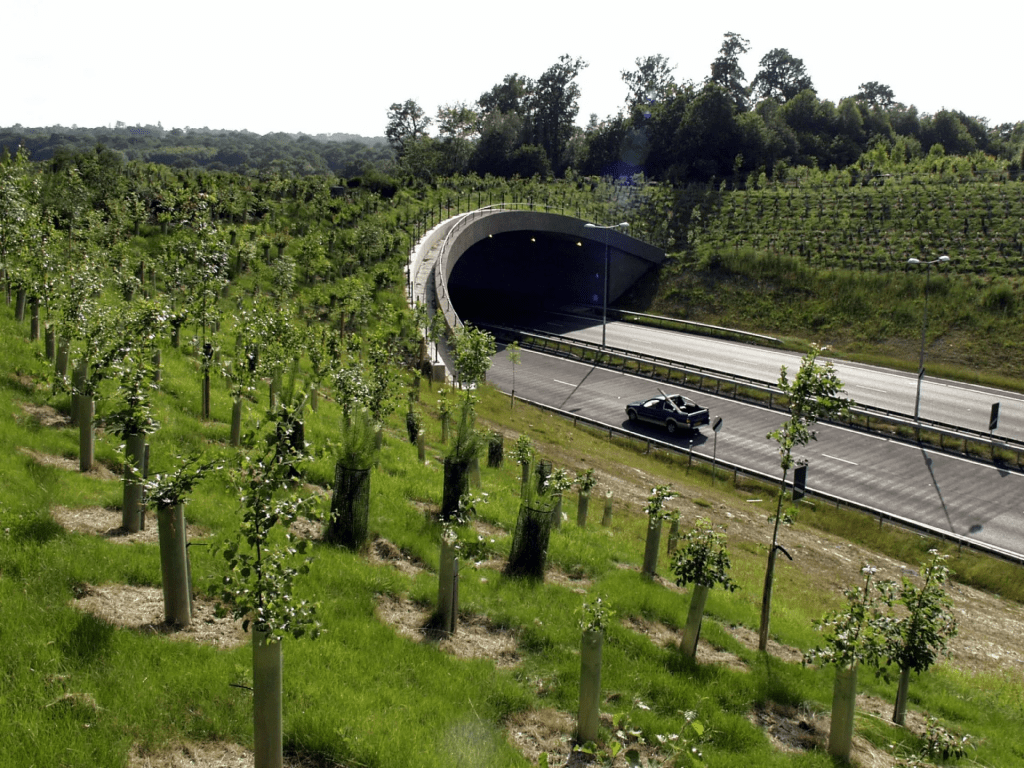
Sometimes, building roads is the right thing to do.
Might as well start with the painful one. Its pretty much heresy in many transport planning circles to even think that road building might be a good thing. But without the development of a national road infrastructure like we have today, we would not have the country we have today.
When you take the attitude of no roads anywhere, for any reason, it shuts you off the very clear and obvious benefits that they bring. They are especially critical for freight, as even if we shifted every tonne to rail it still has to travel by road at some point. Minimising delays for freight traffic helps businesses through providing reliable journeys, so promises to customers can be made.
While the economic benefits of roads might be overstated as part of scheme development and business cases, this does not mean there are none. Especially for areas which currently experience relatively poor connectivity by road. Many of which suffer from high levels of Transport-Related Social Exclusion. Improved road infrastructure helps businesses get their goods to market much more quickly and efficiently in such areas.
Furthermore, roads – especially those designed as streets – are the most flexible infrastructure that you can get. With just a few well placed bollards and planters (and a legal order), a traffic dominated hell hole can become a pedestrian paradise. Some poles can make a useful, though imperfect, cycle lane, while a bus gate can do wonders for bus journey times (also a reminder that buses, our most used form of public transport, also use roads).
Finally, there are also some instances where the severity and nature of the challenge posed necessitates a road to deal with it, as alternatives either play a complimentary role to the road, or do not solve the fundamental challenge. A good example is bypasses around towns and villages where the percentage of through traffic is very high. In some such instances, while the goal of encouraging that through traffic to use sustainable modes is laudable, it does not solve the challenge in a timescale that is in any way reasonable or arguably viable. All the while, villagers experience high levels of air pollution and noise from the passing traffic.
Furthermore, just because a road is built does not preclude doing sustainable transport work as well. And in fact in some instances building a road can give the space to make this happen. Carrying on the previous example, when a village is bypassed, local trips by walking and cycling can be made much more attractive through road space reallocation within the village. Indeed this is part of the thinking behind the Welsh Roads Review, which notably does not preclude road building, but says that where it is done it should be done better and meet some conditions.
We frame the actual problem as a transport problem too much
Everybody who has ever worked a transport business case in their life knows that the first step is problem definition. And reading business cases in support of schemes or packages of measures often states the problem being solved as a transport problem first. For example, stating that traffic congestion along a road that the scheme will be delivered is a problem, which ultimately has an economic impact through increased journey times.
Nearly always, such statements ignore a fundamental truth about transport. Namely that it is a derived demand. Thinking about transport challenges in this way makes you realise that the challenge itself is often outside of transport, and potentially the solutions also reside outside of transport too.
Several years ago, the work of the Total Transport pilots started to delve into this a little bit, but joining up aspects of health and education service planning with transport services. The problems being not that buses do not run to education and healthcare facilities, but that such facilities are being relocated away from where people live. Consequently, the problem is not a transport one, but a public service one.
Taking this line of thinking means that it opens up opportunities for us to consider non-transport interventions. For instance, if a road between two cities is congested at peak time, is the problem not one of congestion, but of people having to live in one city and work in the other? That could mean that dedicated campaigns with businesses to encourage home working could be explored before major transport interventions are planned.
The reality, of course, is much more messy than this. Some problems really are transport-specific (notably road safety), and due to us generally not wishing to restrict how people travel and the choice of whether or not to travel, some problems will manifest themselves in a transport manner regardless of what is done. I just thinking we are restricting our thinking by thinking just in terms of transport problems.
People’s attitudes towards ‘bad’ methods of consultation would change if they produced the results they liked consistently
This has a very simple premise: the ends of the consultation method influences people’s opinions on the means. Lets have a thought experiment. Imagine a town hall or council meeting. Middle aged or elderly white people who are clearly either rich or at least middle class turn up. They say passionate words and give speeches about how their area is unique and deserves special consideration. And the result is that they all support cycle tracks and road space reallocation. As well as affirmative action to reduce car use and prioritise the needs of excluded groups. And the town halls and council meetings did that consistently.
Do you like the sound of that? BE HONEST.
Does that make town halls and council meetings a good way of engaging people in that context? Again, BE HONEST.
My experience has been that complaints about the representativeness of a form of engagement or consultation suddenly vanish when they produce the result that is desired, whether you are for or against a scheme. For those of us who have been around consultation and engagement for a while, we know that each method has its strengths and weaknesses, and some are more accessible to certain people than others.
I mention town halls and council meetings, which are often considered to be unrepresentative and exclusionary. Yet even methods seen as good such as citizens assemblies do have their own issues with representativeness and exclusion. Understanding their relative strengths and weaknesses and recognising these is key to undertaking good engagement. Too bad that too many of us judge whether engagement has been good by the decisions that result as opposed to the inherent quality of the method and its application.
The love for trams is at a level that is far greater than what they can do
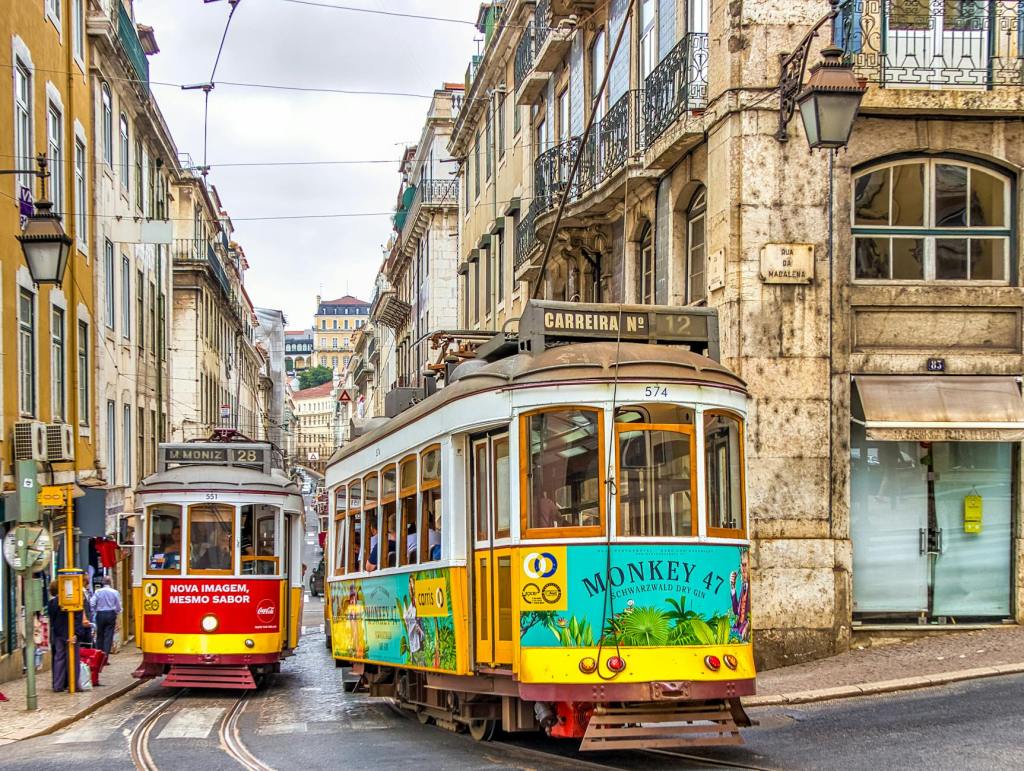
To get this out of the way – I like trams. Trams are good things, especially when the infrastructure and services are planned properly, where they can radically improve the public transport offer of an area. They also have a very different image to that of buses. One that is cosmopolitan, stylish, sophisticated. Dare I say European? And this is exactly where the problem lies.
They are deified to an almost insane degree by many urbanists. The number of videos I have seen with sleek looking trams elegantly sliding through ancient streets, saying how trams are the symbol of a progressive urban area is insane. Stop it. Stop it now, and get real with these kind of things.
Many schemes to bring back trams into urban areas that have lost them are driven by the same forces that drive road schemes. We know what the problem is, and we know the solution is trams. Therefore, everything must be done to ensure that the solution proposed is trams. If this approach to scheme development is bad for road schemes, the same applies for trams.
Such attitudes also ignore some quite fundamental issues with trams. Namely that they are more expensive to build compared to other forms of public transport – namely buses, which even in cities that do have tram networks often carry more passengers than trams do. Such issues can be overcome of course, such as by using Workplace Parking Levies like in Nottingham, but they still are very real. And yes, I know on high density routes they can have lower operating costs compared to buses. Do I need to point out the difference between capital and revenue spend to you?
Personally, I would love to see more tram networks developing. But this needs to be based on a sound analysis of the challenges and a good assessment of the options without any pre-conceived notions of the end solution. Something that I fear many of the new tram schemes I have seen are lacking, or the business case pays lip service to other options.
I would also like to challenge this notion that to be a progressive city you need trams. London is probably the most progressive city in the UK, and it has no trams in its central area. Yes, I know a tram runs in Croydon, but that is not as core to the city’s identity as the Underground is, or its red buses. In my view, many progressive cities just happen to have trams, as opposed to trams being a mark of a progressive city.
And don’t get me started on trams on grass. Style over substance, that’s all I’ll say.
Public ownership doesn’t solve the most fundamental issues with public transport
Much has been said during the time of this government about bus franchising and taking the railways back into public ownership. For me, arguments about public ownership of public transport have always been beside the point, and tend to not tackle the most pressing issues facing passengers who use public transport in the UK.
Again, lets use a thought experiment. Take the current franchised rail operators, and turn them all, in their current form with the current structures, into public ownership. How much would the experience of the passenger change? Would ticket prices reduce? Would services become more reliable? Looking at buses. Would a public operator not sit in the same traffic as a private operator?
Public ownership as an end goal, to me at least, is a solution looking for a problem. We can debate the philosophical and political basis of public transport as a public good all day (I happen to think it is), but simply changing to public ownership and expecting more fundamental challenges to be solved is fanciful.
If you are looking at changing structures, you need to look at how incentives are changed when it comes to operating services and tackling issues. And the thing about incentives is that they work regardless of the structure of operation. It is the case that in the UK that when it comes to public transport, our structure actively disincentivises integrated travel. Integration between bus operators is essentially illegal across most of the UK, while rail franchises barely mention integrating with other modes at all. I honestly believe that all of the challenges the bus industry has faced since deregulation could have largely been tackled by amending the original Act of Parliament so as to focus on co-operation and not competition.
The public sector can provide incentives to the private market so that it acts in an integrated manner. This is part of the reason why bus franchising can work so well. Taking London, while Transport for London specifies the contracts for services and provides the subsidy, the services themselves are actually mostly run by private operators such as Arriva London, Go-Ahead London, Metroline, and First Group. If you don’t believe me, look for their logo near the passenger door as you board a London bus.
Again, my point here is not to say public ownership is good or bad. It just doesn’t solve everything.
Now all of that is off my chest, I feel a bit better. Though I daresay that many of you might like me a little less. I did warn you!
👩🎓 From academia
The clever clogs at our universities have published the following excellent research. Where you are unable to access the research, email the author – they may give you a copy of the research paper for free.
Does urbanization cause crime? Evidence from rural–urban migration in South Africa
TL:DR – Its complicated.
TL:DR – Active travel intentions can be predicted by subjective norms, habit, and theory of planned behaviour constructs. Oh, and Psychosocial is a mid-tier Slipknot song.
TL:DR – “Conscientiousness, Neuroticism, and Openness significantly influence EV purchase decisions” is probably my favourite line from a summary I have seen and I don’t know why.
An assessment framework for 15-minute Cities: Progress worldwide and the impact of urban form
TL:DR – European cities are closest to the 15-minute city vision.
😀 Positive News
Here are some articles showing that, despite the state of the world, good stuff is still happening in sustainable transport. So get your fix of positivity here.
- Work on new Carlisle to Cargo cycleway section to begin (BBC News)
- Opening of dual cycle track on Westfield Avenue marks major milestone in plans for Stratford to become London’s first Green Zone (Newham Council)
- £3.5m investment sees electric buses serve airport (West Bridgford Wire)
- More pedestrianisation plans for London’s West End (BBC News)
- Salford to host new project to boost e-bike, e-scooter use by disabled people (Traffic Technology Today)
📻 On the Wireless
While painting my garden fence at the weekend I had a chance to listen to a couple of excellent podcast episodes. The first was on the impact of North Sea Oil in the UK on the always-excellent Jam Tomorrow podcast. Whatever your views on oil extraction and climate change, the very true social impact of the industry is well explored.
The second was the Going Rural episode of the Streets Ahead podcast. Primarily because it recognises that the rural experience of cycling is different to that of urban cycling. However, one of these days eventually cycling activists will realise that the rights of way network exists and is quite extensive and well used by people on foot.
📺 On the (You)Tube
“American infrastructure is crumbling” seems to be a constant thing on YouTube. But Half as Interesting at least adds humour to it. Such as in this episode on how the second busiest passenger rail route in the US is falling into the Pacific Ocean.
📚 Random things
These links are meant to make you think about the things that affect our world in transport, and not just think about transport itself. I hope that you enjoy them.
- No representation without reservation: The long-term limits of gender quotas in India (VoxDev)
- Mapping the Unmapped (Grist)
- Why energy markets fluctuate during an international crisis (The Conversation)
- Fast-growing, global-south cities are ‘strikingly underrepresented’ in climate research (Carbon Brief)
- ‘Local Control, Cheaper Prices, and Flexibility:’ Rural Electric Distribution Co-op Goes Independent (The Daily Yonder)
📰 And finally…
An American explained why the British complain about the heat so much. I felt this in my very soul.
To introduce something new, I will be posting a random bit of music to sign off the newsletter with. I will try and keep it transport relevant, and not just focus on my own love of rock and heavy metal.
This week’s song is from my favourite band of the Britpop era – Supergrass. Going Out is my favourite song on one of the best albums of the mid to late 1990s – In It For The Money. The catchy chorus reminds me of cycling along the Tarka Trail to the beach at either Instow or Braunton Burrows with my friends when I was a kid. Good times.



 Mobility Matters