
Good day my good friend.
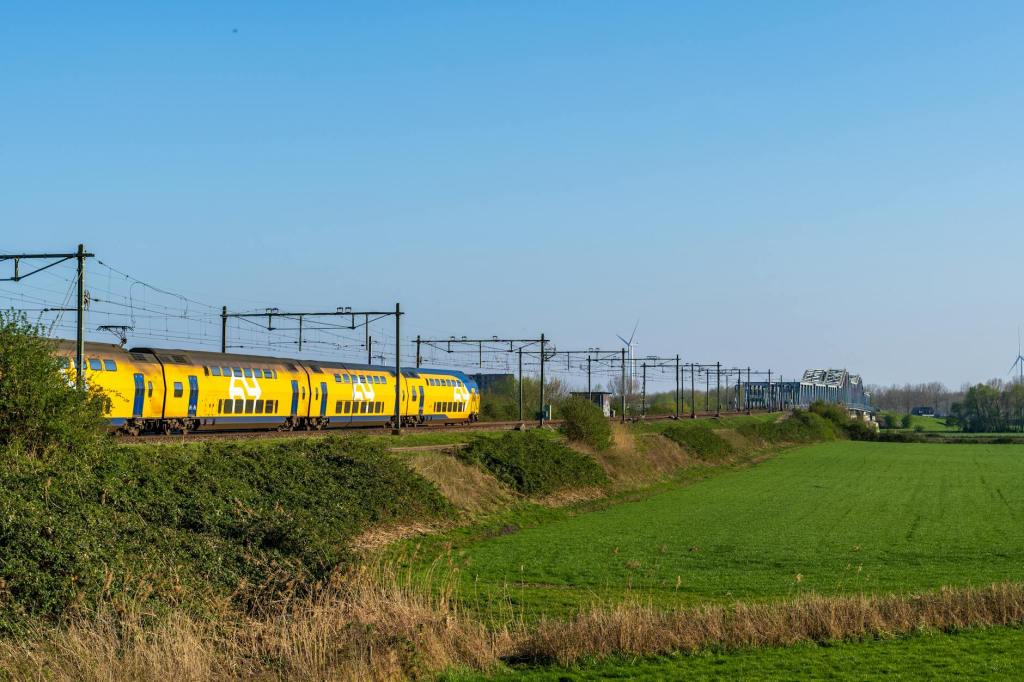
UK readers will know that right now we are in the middle of a heatwave. Currently, I am sat on a overcrowded, late-running CrossCountry train that, thankfully, has the air con working. As someone who does not do well in the heat this is very welcome indeed.
🗓️ Mobility Camp is back, and this September we are going to Cardiff. It promises to be an amazing day. It would be amazing if you can be there, or maybe sponsor the day.
💼 I am also available for freelance transport planning consultancy, through my own company Mobility Lab. You can check out what I do here.
🚅 HS2, again
There is no sugar coating it, so we might as well get on with it.
Following the publication of the James Stewart Review into Major Projects, focussing on HS2, earlier this week, it is safe to say that HS2 is an embarrassment. While the end scheme may yet be good and the failings of its creation are lost to history, right now the UK’s biggest infrastructure project is a humiliation and everyone involved in decision making or failing at risk management of this project should be ashamed of themselves.
I, personally, am a fan of HS2. I believe that it will have a transformative impact on connectivity in the UK, especially if it is the start of a wider network of high speed lines. We can argue about priorities, but regardless of that overall I think its a good thing. But this project has been a disaster. The James Review sets it all out in excruciating detail.
Everything that was possible to go wrong on a project of this scale to date has gone wrong. It has experienced unprecedented political meddling with no buffer to allow for it. There is a complete collapse in trust between the Department for Transport and HS2 Limited to the point where an Estimated Outturn Cost has not been agreed. Not helped by the spiralling costs of focusing on gold-plating and the schedule ahead of cost control.
Reading the report, I have seen these criticisms before. They were raised by the National Audit Office in their review of HS2 TWELVE YEARS AGO. Its conclusion of the project, then at the early stages, was stark:
High Speed 2 is at a very early stage of planning and development and, as such, we cannot conclude on whether the programme is likely to deliver value for money. The cost and benefit estimates in its economic case are uncertain and will change because the programme is at an early stage. Furthermore, there have been past errors in the underlying model and some key data needs to be updated. In presenting its case for investment, the Department has poorly articulated the strategic need for a transformation in rail capacity and how High Speed 2 will help rebalance economic growth. The Department and HS2 Limited have started a lot of work recently to strengthen the evidence and analysis on which the case is based. The challenging programme timetable, however, makes delivering this work difficult and increases the risks that the programme will have a weak foundation for securing and demonstrating success in the future.
And this wasn’t the last time that the National Audit Office raised the alarm either.
The most damning criticism for me relates to the Main Works Civils Contracts, which reads as a lesson on how not to procure and monitor contracts. In this space, nobody escapes criticism. HS2 Limited has been shown to be a less-than-intelligent client, but there have been failures in assurance and in the supply chain.
The latter is particularly of concern to me. I have heard, in confidence, from well respected contractors about how HS2 has been, in their words, “a licence to print money.” A significant project that is highly political desirable with little concern for costs, combined with a client trying to meet an ever-shifting brief, is rife for exploitation from unscrupulous contractors. Too many times I have heard from respected consultants about how they have booked extra time to HS2 to meet their quarterly revenue targets, on the understanding that the cost would simply be waved through. Every single person who did this needs to hang their head in shame. Where is your sense of public duty to a transformational national infrastructure project? Screw it, where is your sense of professional pride?
The most frustrating thing about this whole debacle is that, ultimately, the money for these mistakes needs to come from somewhere. Cutting the links to Leeds and Manchester are the obvious things, but the reality of government expenditure that that every additional penny going towards HS2 means that another investment elsewhere does not make the cut. A tram scheme delayed, active travel funding postponed, even hospitals not funded. Such things have consequences.
So, where do we go from here? The obvious thing is for the Department for Transport and HS2 Limited to get their heads together and get on top of things. Maybe borrow some ideas from a Major Project Accelerator (me being cheeky there)? But the most critical thing that transport planning as a profession can do right now is to be an ally of HS2.
While something has gone clearly wrong and those responsible must face consequences if not shame, we need to remind ourselves that it is a project worth delivering. It will offer a high speed, high quality public transport link that could significantly improve intercity connectivity, while providing much-needed rail capacity to help meet our climate goals. We know this, and we need to reiterate this.
For while this review has provided some much needed and well overdue unwanted medicine, the wolves are also at the door. Opportunists are salivating at the chance to potentially kill or at least disable a project they have long-hated. They cannot be allowed to succeed. If we are to genuinely make the UK a better place and deliver a national transport network that balances connectivity and reduced carbon emissions, we need to defend HS2. Even if we have just savaged it ourselves.
👩🎓 From academia
The clever clogs at our universities have published the following excellent research. Where you are unable to access the research, email the author – they may give you a copy of the research paper for free.
The impacts of airline corporate social responsibility in the air transport industry
TL:DR – Why doesn’t the airline industry take this seriously when so many benefits are to be had?
Metro ridership recoverability and the built environment: Exploring station-level non-linear impacts
TL:DR – More businesses around metro stations increases ridership, but takes a longer time to recover from shocks like COVID-19. Meanwhile, buses are good.
The Melbourne declaration on transport, health and inequalities
TL:DR – Talk is cheap.
Making the city uninhabitable. The impacts of touristification on the commercial environment
TL:DR – Businesses in tourist areas are becoming more focussed on the needs of tourists.
😀 Positive News
Here are some articles showing that, despite the state of the world, good stuff is still happening in sustainable transport. So get your fix of positivity here.
- Teenage Mothers in Mathare 4B Lead Climate Action Through Urban Farming (CityFix)
- Brighton council plans two-way cycle lane across Hove seafront (The Argus)
- Free city bus service extended after new funding (BBC)
- What’s in the infrastructure strategy? (BBC Sounds)
- Improvements to Suffolk seafront are broadly welcomed at public consultation (Yahoo News)
🖼️ Graphic Design
This brilliant tool shows what is needed to achieve different temperature increases in the climate based on different percentage chances of achieving that temperature increase. For example, here it says that to achieve a 50% chance of 1.5C increase in warming, the carbon budget will be exhausted within 3 years. That’s…sobering.
📺 On the (You)Tube
Bus lanes are good. As this video of New York shows.
📚 Random things
These links are meant to make you think about the things that affect our world in transport, and not just think about transport itself. I hope that you enjoy them.
- Offsetting global fossil fuel stores by planting trees is impossible (New Scientist)
- Rural Americans Are More Likely to Participate in the Informal Economy, Study Shows (The Daily Yonder)
- Where the brain pays sleep debt (Science)
- A False Start on the Road to an All-American Bitcoin (Wired)
- Am I boring you? Good (Undercover Economist)
📰 And finally…
This was a few weeks back, but it is still funny to read. A man woke up with a ship in his garden. Apparently, he slept through the whole ordeal.

 Mobility Matters