
Good day my good friend.
This week’s newsletter is going to be slightly different to the usual programming. In that it is more in the form of an essay as opposed to interesting news and tidbits that I usually share. I hope to occasionally do this just to try and mix things up, and this is the first try. Do let me know if you like it.
📕 I have co-authored a book on Mobility-as-a-Service, which is a comprehensive guide on this important new transport service. It is available from the Institution of Engineering and Technology and now Amazon.
💼 I am also available for freelance transport planning consultancy, through my own company Mobility Lab. You can check out what I do here.
❎ Our reckoning with populism
With the return of an extended period of more settled weather, not only have the plants and animals emerged from their winter hiding places, but also the familiar sounds of lawnmowers and hedge trimmers. Having both a front garden and a back (with the former needing far more work to look presentable than the latter), it gives the opportunity to casually observe people as they walk up and down the street.
My street is relatively unusual in my town in that it is what is commonly referred to in transport circles as a distributor road. Though it is not designed in that way. What was a historic track to a few homes that got upgraded in the 1920s as a few more homes were built by the Duke of Bedford of the time. The town rapidly expanded in the 1970s, and one of the final acts of building one such new housing estate was to build a connection between the estate and this road. Resulting in an extremely convenient cut-through for those wanting to avoid the centre of town, as well as for hundreds of school children each morning as they walk to the Upper School.
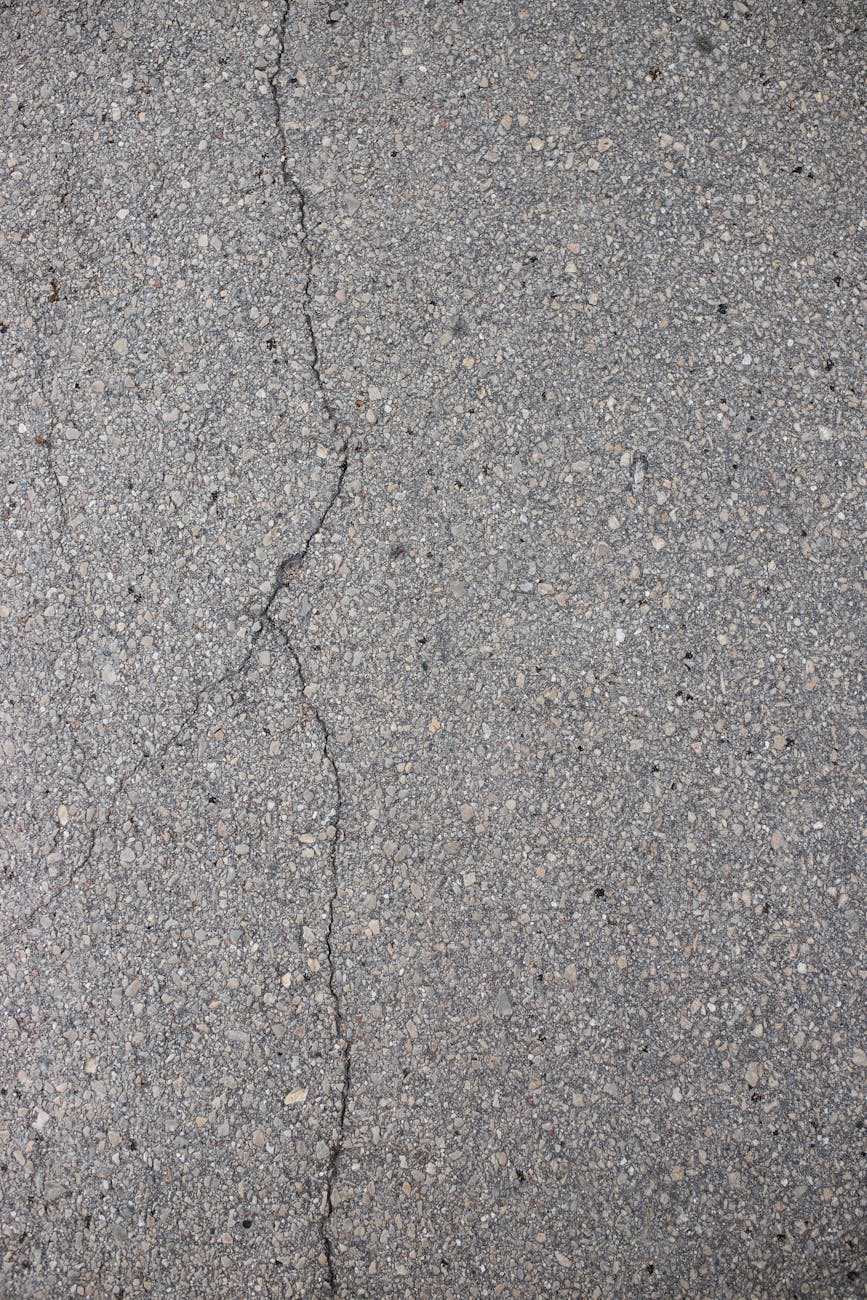
The endless years of being pounded by delivery vans, construction vehicles, and modded Vauxhall Astra’s have taken their toll on the surface. First the odd crack, then the hole, followed by the patch job when it gets too big, which inevitably fails during the next winter. Getting a visit from Virgin Media and Anglian Water also does not help.
Among those of us either taking the lawnmower to the front lawn or – in my case – painting a picket fence with probably the thinnest fence paint to have ever existed, the occasional conversation breaks out. Usually with the road in mind, with comments on how the Council should just fix the holes properly. One guy on our street often proudly states about the number of times he has reported the same pothole on FixMyStreet, to be told it has been fixed when it clearly hasn’t been. I think the latest number is the 12th time.
Occasionally these short conversations delve into the realms of politics, albeit briefly. Despite our local council changing from Conservative to an independent controlled administration, they are still “all useless,” and something should be done about it. A general sense of frustration is clear in the subtext, and while people accept that things like adult social care are important and should be funded, their sense of political frustration is that this seems to be coming at the cost of everything else.
That really chimed with what I found in my time as a town councillor. People get incredibly passionate about the state of roads or the lack of local buses. Or even the location of dog poo bins. Things that, considering all of the variety of political issues of the day, are relatively minor.
This latter fact is borne out by polling, which shows that when asked, people think that the likes of the economy, immigration, crime, and healthcare are among the most important issues facing the nation. Yet it is very easy to take the wrong conclusions from this analysis. This is measuring the response to a question, whereas unprompted responses come from a sense of frustration or hope. That is why the best election campaigns don’t just rely on polling data, but on feedback from campaigners on the doorstep.
People care about these everyday annoyances, and sense of general decay which in the grand scheme of major issues facing our planet are minor, but are still meaningful. This annoyance leads to frustration, which if not tackled can lead to anger.
An interesting, if flawed, study by the consultancy Stonehaven claimed to demonstrate a possible link between poor transport connections and voting for populist parties in the UK. It is hard to definitively link poor transport infrastructure and populist politics, but based upon my own experience the logic is sound. If you do not tackle frustrations, then don’t be shocked when people don’t vote for you any more.
Yet, we should remind ourselves that the reverse can also be true. When people see their streets and squares being cared for, that frustration goes away, and in some cases can turn to optimism. Instilling a sense of pride in a place that may have not been seen in many years. We often think that this can only happen as a result of big placemaking schemes, yet something as simple as filling in potholes and fixing street lights can help frustrations with the world go away, or at least temper them.
And it is here where I find the greatest hope for transport to enact meaningful change to create a better world. Its not in the big infrastructure projects or flagship schemes, but in the mundane and every day. Fixing potholes, street lights, painting faded lines, and doing small scale improvements might not mean much in the grand scheme of things, and may not result in the radical changes necessary to save the world. But people notice them.
I sometimes think that transport professionals consider that only through great power and big changes can make the world a better place. But that is not what I have found. It is the seemingly small, every day work of committed people that keeps the darkness at bay. These small acts of kindness and love matter more than we care to think.
Maybe this is transport’s greatest weapon against the oncoming forces of authoritarianism. To show love for the little things. To do the honest, every day work that is needed to instil pride in our places, and not spend more time writing strategy or designing the next grande project. Collective small changes can have an outsized impact on our places.
I finish this essay by referring to another one by Evelyn Quartz, who takes aim at the Democratic Party in the USA for focussing on performance and not meaning. Whilst the context is an increasingly-authoritarian USA, the message is the same. Real world, tangible change is what counts to people in the end. Not performative things that get you likes on LinkedIn or supportive comments on Bluesky, or working with a system that has clearly not worked for several decades.
The small things may not seem like much, but they are meaningful and they matter. In our pursuit of the grand structural changes needed to create a sustainable and just world, we need to remember to think and act small. Because a small act is far more meaningful to people than you think it is.
Note: After I wrote this and shortly before I published it, news is breaking that the populist Reform Party has made significant gains in local elections across England, and has won a by-election in a safe Labour seat by 6 votes. Make of that what you will.
 Mobility Matters
One response to “🖐️Touchy-feely”
Loved it! Though not entirely understanding the British meaning of “estate.”I think about writing
LikeLike