
Good day my good friend.
This week has been a week spent talking to a lot of people. And I mean a lot of people. I don’t like talking all that much really, so its been a hard week, and I just need to have a little sleep I think. Thankfully, nothing important happened this week in the UK.
📕 I have co-authored a book on Mobility-as-a-Service, which is a comprehensive guide on this important new transport service. It is available from the Institution of Engineering and Technology and now Amazon.
💼 I am also available for freelance transport planning consultancy, through my own company Mobility Lab. You can check out what I do here.
🚌 Three (quid) coming at once
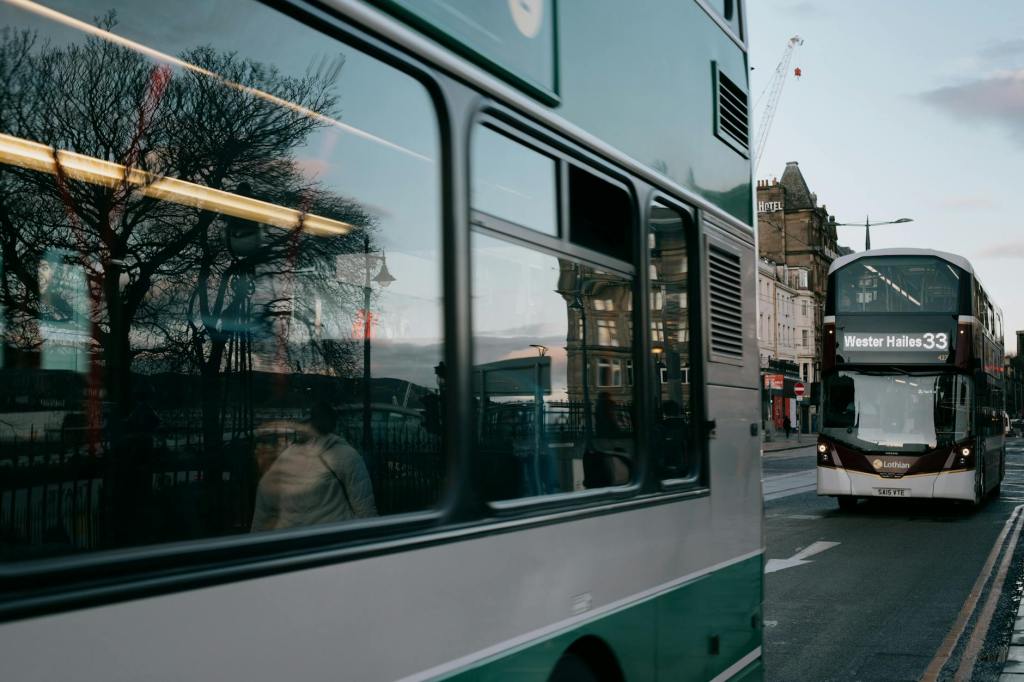
There has been much comment made this week about the UK Government’s announcement that that current £2 flat single fare for buses will increase to £3 next year as the government decides what to do with it. I’m not going to comment on the optics of this in light of freezes to fuel duty (bad), nor the fact that reported spend on the subsidy – with estimates of around £300 million – could barely get you a junction upgrade on a road. What I am going to cover is more fundamental.
What was the purpose of the policy? Should it have been successful in achieving it, and did it?
The purpose of the policy really wasn’t made that clear from the start. The evaluation of the policy states that its aims were…
to save passengers money and encourage more people back on the bus.
Yet when it was announced, it was very much sold as a cost of living measure to help with what was then a deep cost of living crisis. So it is somewhat difficult to judge the scheme because while a broad objective of getting more passengers on buses, especially post-COVID, appears to have been set, it wasn’t sold that way.
During the interim evaluation, around 30% of users of £2 fare said that the fare had been positive for their disposable income. In terms of the number of journeys taken, it is really hard to judge as you are comparing to a time that was affected by the COVID-19 pandemic. But the evaluation reports 10% of survey respondents taking more bus trips, though this is heavily concentrated on people who already take the bus making more trips.
The evidence for the impact of this scheme is largely anecdotal. I have heard reports of coastal bus services and long distance local buses in rural areas getting more users. At this stage, without more evidence being presented in the public domain, all we can really say when asked whether increasing the cap to £3 is a bad thing is “ehhh…probably?”
What we know from the wider literature is that fare caps could increase ridership. But this depends entirely on the type of fare cap that is introduced. For example, monthly fare caps in the US have been shown to increase ridership by around 4%. Looking further back in time, at the excellent Demand for Public Transport: A Practical Guide, flat fares were associated with increases in patronage of 8% (Brighton), and trip generation factor of between 1.2 and 1.9 for flat concessionary fares. In other words, for every trip otherwise taken by concessionary flat fares, a further 0.2 to 0.9 more are generated by the flat fare.
Experience in Los Angeles shows that the benefits of fare capping were not as widespread, as most of those who would benefit can only pay by cash and not smartphone. We also need to consider the emotional angle of this. In an analysis of a flat fare for the Helsinki region, Mari Flink of Aalto University observed that the feelings of those who lose due to the flat fare are much stronger than those who win. This is a well known phenomenon in behavioural science called loss aversion.
So we have a position where the £2 scheme should have increased ridership on buses, and it probably did. But if it did, it would result from existing bus users taking more trips. And it probably had some small impact on some people’s wallets. But we cannot say with absolute certainty.
In all likelihood, your reaction as to whether or not raising the cap to £3 is a good thing is based upon messaging and “the feels” as opposed to the evidence. And that’s fine, you are entitled to feel that way. I certainly won’t judge you for it. But the evidence is usually a good sense check on how you feel about things. Maybe on this occasion, it is a good thing to not be angry, just disappointed.
👩🎓 From academia
The clever clogs at our universities have published the following excellent research. Where you are unable to access the research, email the author – they may give you a copy of the research paper for free.
Electric vehicle adoption in Brazil: Economical analysis and roadmap
TL:DR – EV’s are cheaper over time.
TL:DR – Just 20% of the road network being poor for AVs can really mess with them.
TL:DR – Modal thinking dominates.
20mph speed limits and zones for better public health: Meta-narrative evidence synthesis
TL:DR – They could make health better more broadly, but it needs study.
📺 On the (You)Tube
Geoff rides a tram. It is good.
🎮 Non-transport things
For some reason, many of you sent me messages about me playing the Legend of Zelda: Echoes of Wisdom. Earlier this week I managed to finish the game, and it is a marvellous adventure. Well worth the money.
I have now moved on to the next game in my back catalogue of games I paid for ages ago but have not played yet: Outer Wilds. It’s a lovely game and speaks to the explorer in me, and the supernova mechanic reminds me a lot of the falling moon in Majora’s Mask.
📚 Random things
These links are meant to make you think about the things that affect our world in transport, and not just think about transport itself. I hope that you enjoy them.
- Can people be ‘inoculated’ against misinformation? (Science)
- What Would a Real Renewable Energy Transition Look Like? (Naked Capitalism)
- Addressing ‘Civic Deserts’ May Increase Young Rural Voter Turnout (Daily Yonder)
- How an Urban Bioeconomy Can Promote Healthy Ecosystems and Spur Sustainable Economic Prosperity (CityFix)
- A Lost Mayan City Has Been Found With Laser Mapping (Wired)
👍 Your feedback is essential
I want to make the newsletter better. To do this, I need your feedback. Just fill in the 3 question survey form to provide me with quick feedback, that I can put into action. Thank you so much.


 Mobility Matters