

Good day my good friend.
I have to start with saying thank you to all of you who sent some very kind words through text, WhatsApp, email, LinkedIn, and the comments following my personal news that I shared with you all last week. Your words really mean a great deal to me, and I treasure all of them. I can’t say things are great, nor will they be for a while yet, but your love and support means a lot and helps just that little bit. I won’t forget them.
Mobility Camp is back, and the number one transport unconference is heading to York on Friday 20th September. Book your tickets now! 🎫
I have co-authored a book on Mobility-as-a-Service, which is a comprehensive guide on this important new transport service. It is available from the Institution of Engineering and Technology and now Amazon. 📕
📈 What makes a good baseline?
There is a concept in ecology that I believe explains a lot about some of the current predicament when it comes to changing many people’s attitudes towards reducing car use. That concept is called the “shifting baseline syndrome.” There is a full definition of course, but at its core is something simple. As conditions degrade, people become accustomed to a new normal, to the point where the current situation is acceptable, and even to the point where changing that normal is unacceptable.
Lets demonstrate an example. Look at the British countryside. To many, it is a green and pleasant land, so why change it? Yet it is a land devoid of life. Since 1970, the UK has lost nearly 20% of its species, and over half of flowers have reduced in their geographical extent. The British countryside is a desert of wildlife with a few islands. Yet there is opposition to re-wilding, as it is seen as creating an ‘un-natural habitat.’
Its not that we have forgotten about how it used to be, by the way. I remember when I was a child in the 1980s, running through fields near my home in Devon, and they were teeming with insects and birds. Now, those same fields have no such song.
It is the same with making changes to the transport system. For many of you of a certain age, I bet you can remember a time where fewer cars parked on the street meant you could ride your bike and play with your mates. I too am the same. Now the street where I grew up is wall-to-wall parked cars.
Yet, for many people, what is the situation currently is will be considered ‘normal.’ Even acceptable. Our standards for what we expect on our streets have been gradually lowered over time, whereby we expect it to be bad. We expect people speeding and acting like idiots. We expect everyone to drive. We expect it to be dangerous to cycle and to walk.
When someone tries to do something to shift that, we are at best indifferent and at worst cynical. Why should money be spent on cycle lanes when we expect nobody to use them? New school streets will only cause traffic chaos because people can only drive and kids don’t play in the street anymore.
Those poses a significant challenge for transport policies seeking to reduce car use. Particularly where the situation being spoken of is outside what many of us understand to be possible. Right now, transport planners are basing their strategies in a condition in the UK where we have the highest levels of car ownership in history, where people are driving more than almost any year in history, where the number of bus and cycle trips is among the lowest in recorded history, and where air travel is high (although not the highest in history). From a sustainable transport perspective, while there are encouraging signs, its about as bad as it has ever been.
A couple notable examples of bold strategies are the National Transport Strategy for Scotland and the Connecting Leeds Transport Strategy. The former is supported by a road map to achieve a 20% reduction in car kilometres by 2030, based on a 2019 baseline. Meanwhile, Leeds seeks to reduce trips taken by car by Leeds residents by 30% by 2030 on a 2017 baseline.
In Scotland, the amount of vehicle-kilometres by cars and taxis in 2019 is 36,678 million. To cut this level by 20% by 2030 (to 29,342 million vehicle-kilometres) is to cut it to a level that is lower than 1995 (29,646 million vehicle-kilometres). To put that in context, the Scottish Government wishes to achieve a level of traffic on Scotland’s roads that a 30 year old adult has never seen.

Vehicle-km by cars and taxis in Scotland since 1995. Vertical axis has been changed to emphasise the difference between 1995 and 2019. Source: Transport Scotland
Leeds used a slightly different metric, namely person trips, and sadly I do not have access to their data, so for this demonstration I will be using the regional data for Yorkshire and the Humber for a comparator. A challenging comparator as this data also includes that of a number of rural areas and several cities that are not Leeds, but lets go with it.

The average number of trips per person per annum in the Yorkshire and the Humber region of the UK. Source: National Travel Survey.
To achieve the number of vehicle trips per person per annum in the Connecting Leeds strategy would mean achieving 298 trips per person per annum as a car driver. Something that in the regional data has not been achieved this century. And unlikely to have been achieved in the 1990s.
There is one occasion where these traffic levels have likely been achieved: the COVID-19 pandemic. In fact, from the UK’s transport statistics monitoring activity levels by the day, I can pinpoint roughly the exact time when this was achieved. 21st March 2023, two days before Boris Johnson announced the UK was going into the first lockdown, where car use was 70% of its 2019 levels.
This then leads us to a challenge when it comes to imagining what is possible. Because we have come to accept the current baseline condition through the process of living it, it is hard to imagine what this future world looks like. It leads to scepticism of delivering it, even if the logical part of our brain knows what will work in making that happen.
Selling our vision of the future involves painting a picture of what that future will look like, and persuading people that it can be achieved. That is an uphill task. But the good news here is that shifting baseline syndrome also works in reverse. When things get better, we come to accept the changes made. See any post-intervention attitudinal survey on any LTN to see that. A key part of selling the vision is realising it. So lets just do it.
What you can do now: You should read Earth.org’s description of shifting baseline syndrome. The more you understand it, the more you are prepared to combat it.
👩🎓 From academia
The clever clogs at our universities have published the following excellent research. Where you are unable to access the research, email the author – they may give you a copy of the research paper for free.
TL:DR – This method adds the presence of a driveway to other factors.
TL:DR – Urban economics tries to explain urban changes.
TL:DR – African towns become cities in a variety of complex ways, and it leads to problems in leadership.
Limited impact of roadway construction and traffic congestion on nearby housing prices
TL:DR – Living near busy roads is bad for house prices, constructing more roads does little.
✊ Amazing people doing amazing things
In another example of campaigning actually working, local residents near Creggan Hill in Derry / Londonderry have long fought for a pedestrian crossing to keep their children safe. And now, they are getting one. Every little helps!
📷 Out and About
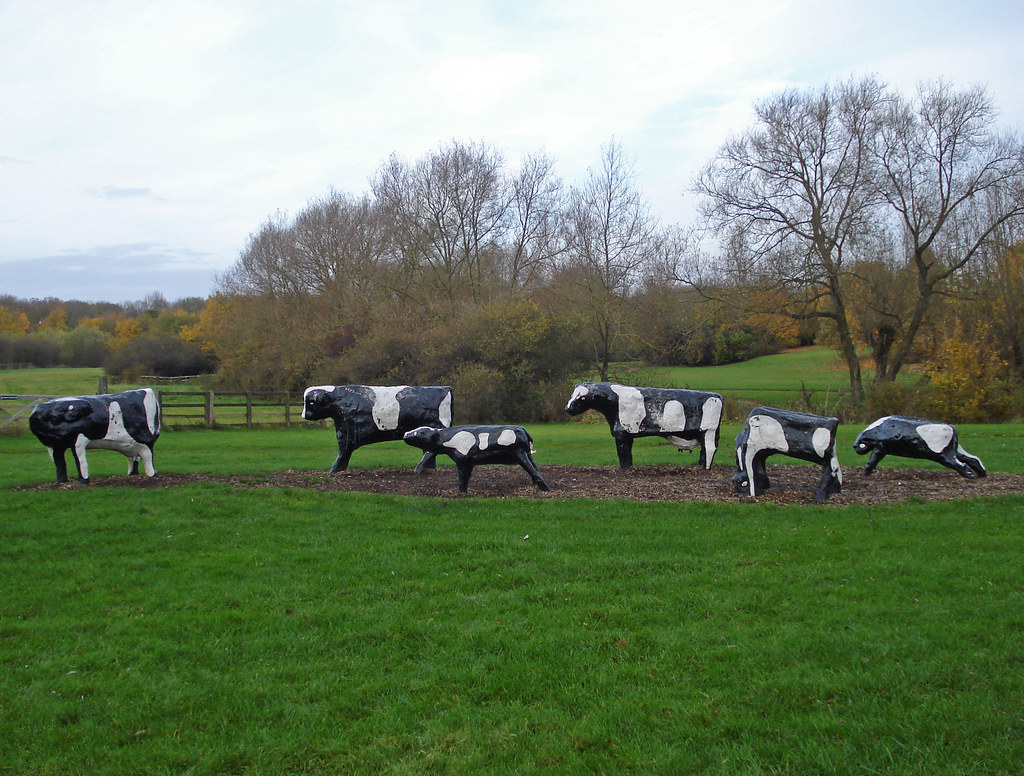
Over the last couple of weeks I have been on an enforced break, for reasons regular readers can probably guess. In that time, I have taken the dogs for plenty of walks. Including to one of my favourite places, the Forest of Marston Vale. All of the little paths and bridleways give you a chance to enjoy some peace and quiet, and some of the sounds of nature.


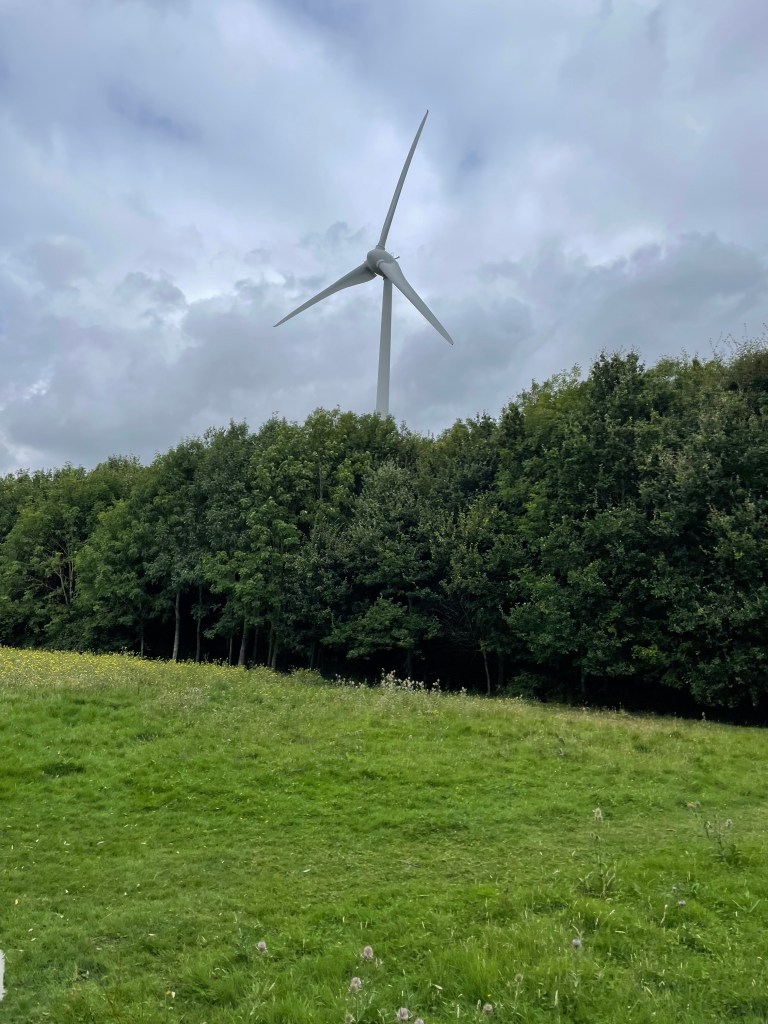
I have also been doing some odd jobs in the garden. Mainly painting fences, moving the hedgehog house, and sanding down a wooden bench that I have been meaning to do for 6 months. We also had a bumper crop of blackberries from the hedge this year – nearly a kilo from what I could reach. That meant only one thing…blackberry jam!


🖼 Graphic Design
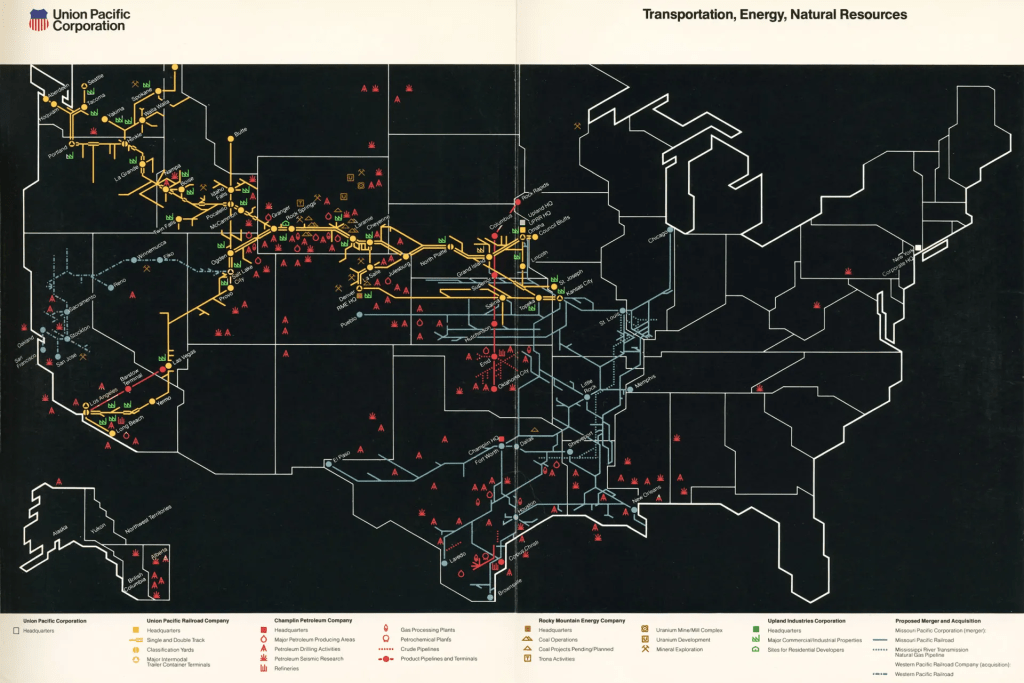
Union Pacific Annual Report Map, 1980 (Source: Transit Maps)
I am only sharing this system map of the Union Pacific Railroad from 1980 because it looks cool. That’s it.
📚 Random Things
These links are meant to make you think about the things that affect our world in transport, and not just think about transport itself. I hope that you enjoy them.
- Does Political Decentralization Improve Urban Governance? Balancing Efficacy and Representation in Rajasthan’s Small Towns (The City Fix)
- Can chief heat officers protect US cities from extreme heat? (Grist)
- Bird deaths from building strikes may be double past estimates (New Scientist)
- Why does traditional masculinity have such longevity, even among younger boys? (The Conversation)
- Challenges and responses: Economic downturn’s influence on urban policy, planning, and transportation (City Monitor)
📰 The bottom of the news
Drones could be used to help save lives by giving advanced warning of coming natural disasters. But it needs to be done well. This example of New York doing just this…isn’t.
👍 Your feedback is essential
I want to make the newsletter better. To do this, I need your feedback. Just fill in the 3 question survey form by clicking on the below button to provide me with quick feedback, that I can put into action. Thank you so much.

 Mobility Matters