

Good day my good friend.
Yet another Public Service Announcement from your truly. Next week I will be having a week off, mainly dog walking and sorting out jobs in the garden. But, because I have been prepared for once in my life, there are some newsletters locked and loaded and ready to go. So you will get the same goodness as normal. But anyone expecting a quick reply might be disappointed. Sorry.
Mobility Camp is back, and the number one transport unconference is heading to York on Friday 20th September. Book your tickets now! 🎫
I have co-authored a book on Mobility-as-a-Service, which is a comprehensive guide on this important new transport service. It is available from the Institution of Engineering and Technology and now Amazon. 📕
👩🏫 Relearning an old lesson
Transport planners among you will know the rule that is effectively transport planning 101. Namely:
Transport is a derived demand.
We don’t just ride trains, buses, bikes, cars, or walk for the hell of it – though sometimes we do. We do this because we want or need to do other things like go and see family and friends, or even go to work. The result of this is that policies and initiatives in other areas of life have a huge potential impact upon transport. Yet very often we do not pay that much attention to them, and their impacts.
The one such example that has got a lot of attention in recent years is working from home. Back in 2022, the ONS reported that 24% of UK workers were hybrid working, with a further 14% exclusively working from home. Taking a potential 38% of commuting trips out during peak times has significant implications for a number of transport operations. For the UK rail market, for instance, many operators are still trying to recover their peak hour demand from before the pandemic due to a mix of working from home and strike action.
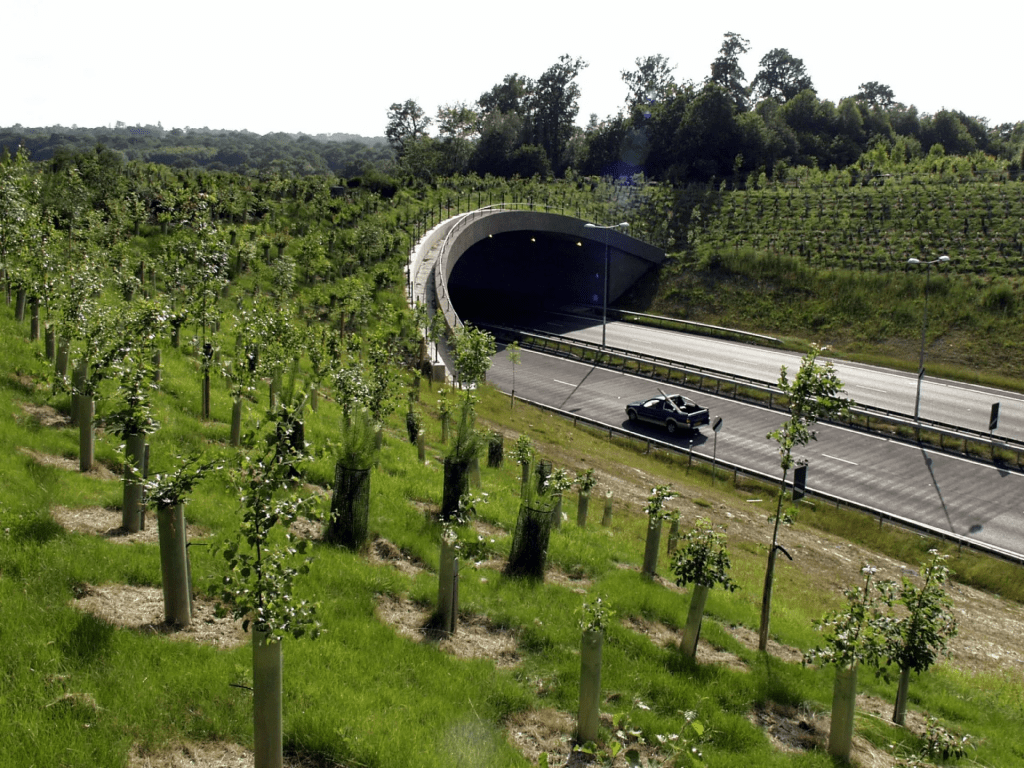
But that is an obvious one. Changes can come from very much less obvious places. So how about changes in farming incentives? Prompted by a post shared by Adam Tranter on LinkedIn, I looked into the Sustainable Farming Incentive. This subsidy regime seeks to shift farming towards more sustainable land management practices.
In his post, Adam rightly points out that farmers could be paid to “give up” some productive land for cycle tracks under this subsidy regime. But this incentive regime is equally as consequential for the establishment and management of hedgerows alongside rural roads, and more consequentially for changing farming practices in areas where rivers have high levels of nutrients from run off. Potentially overcoming what is becoming a major block to development in such areas. One such example being Lynscombe in Dorset, where 3,700 homes were being held up by this issue.
Another area of increasing interest is the impact of digital healthcare. There are a lot of concerns over the impact of digital healthcare technologies, but there are opportunities for increasing levels of remote treatment and diagnosis. In the UK, around 5% of trips on the highway network are purely for the NHS, so the potential travel demand impacts seem somewhat clear to me.
But even this is somewhat simplistic. There are concerns about the impact of such technology on the patient experience, so could increased levels of community care result from the deployment of such technology in support of clinicians? Could it further centralise services as doctors and other physicians do more remote appointments. A seemingly minor change in one sector could have big implications for transport.
The point with all of this is that people’s motivation to do something does not tend to dissipate where transport options make it tricky. Traffic evaporation is a thing, but because in many cases the motivation remains, people often try and find a way to do what they need to do, even if it means changing mode or spending longer in traffic. But other areas of life give people opportunities to do the activities that they want to do (or take them away), with profound impacts on the transport network.
If you are thinking that this is somewhat of a messy newsletter, that’s because the subject matter that I am covering is messy. Transport is the result of a complex web of decision making that results in people undertaking specific activities, that they need to get to and from. We like to focus on our bit of the equation, and maybe what we need to do is understand the decisions being made outside of our remit, which could have significant implications for our ability to create the transport system that we want.
👩🎓 From academia
The clever clogs at our universities have published the following excellent research. Where you are unable to access the research, email the author – they may give you a copy of the research paper for free.
Practitioner Views On Transport Planning’s Evolution – A Sisyphean Task Still Ahead?
TL:DR – I’m not sure if the authors think transport planners are devious tyrants deserving of punishment, or are people who are constantly rolling boulders up hills.
Turnstile politics: practices of care and mobility justice in Santiago’s public transport system
TL:DR – Videos show turnstiles as an act of mobility injustice.
Should short-haul flights be banned? A simple transportation network analysis
TL:DR – More people are likely to drive and take the train.
Does the US have an infrastructure cost problem? Evidence from the interstate highway system
TL:DR – There is no problem.
✊ Amazing people doing amazing things
Alan Goldthorpe needs a huge shout out for his tireless work in promoting sustainable transport. And he got one through his well-deserved Better Transport Hero award. If you are in Hull and see him, give him a thumbs up!
📺 On the (You)Tube
As if the reasons to reduce the use of cars wasn’t enough, it turns out the rubber has to come from somewhere. And much of that somewhere is the rainforest.
📚 Random Things
These links are meant to make you think about the things that affect our world in transport, and not just think about transport itself. I hope that you enjoy them.
- How to fix the UK? Let me count the ways (Undercover Economist)
- The growing problem of how extreme heat damages mental health (Carbon Brief)
- The moral bankruptcy of Marc Andreessen and Ben Horowitz (The Verge)
- U.S. Commercial Real Estate Is Headed Toward a Crisis (Harvard Business Review)
- How gamification took over the world (MIT Technology Review)
👍 Your feedback is essential
I want to make the newsletter better. To do this, I need your feedback. Just fill in the 3 question survey form by clicking on the below button to provide me with quick feedback, that I can put into action. Thank you so much.



 Mobility Matters