

Good day my good friend.
This last weekend has seen something descend on the Gleave household that I have hardly experienced before. Peace and quiet. The puppy is settled. There were no jobs that needed urgently doing, and no workmen in the house for the first time in weeks. It was quiet. I like quiet. Quiet is good.
Mobility Camp is back, and the number one transport unconference is heading to York on Friday 20th September. Book your tickets now! 🎫
I have co-authored a book on Mobility-as-a-Service, which is a comprehensive guide on this important new transport service. It is available from the Institution of Engineering and Technology and now Amazon. 📕
👑 Thanks, Charlie
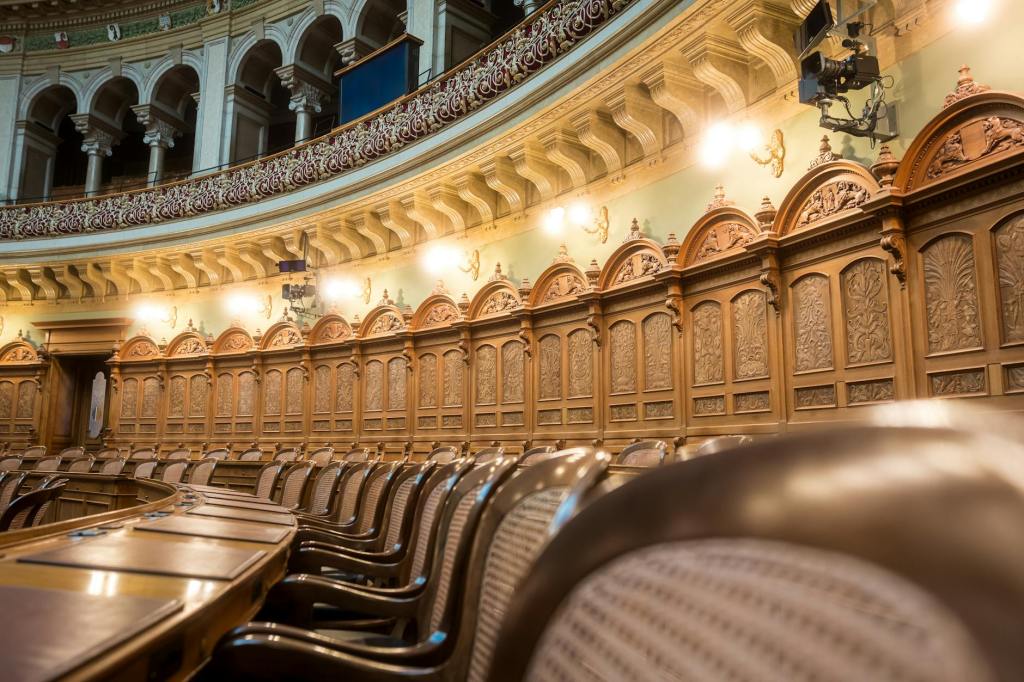
The Kings Speech marks the state opening of Parliament. Its a funny ceremony full of weird quirks and traditions (i.e. its British). But what it does do most importantly is set the legislative agenda for the coming session of Parliament. With this being the first of the Labour Government, it was of particular interest, with people asking what would be the priority.
It turns out, everything is the priority, with over 30 bills being presented to Parliament. The background briefing notes are well worth reading and contain all of the detail. But for those of you who want a quick précis of what this means for transport, then here you go.
Planning Reform featured big, with strong hints that big infrastructure projects contributing to achieving net zero and boosting housing numbers would find it easier. But what on Earth does “reforming planning committees” mean?
For buses, County Council’s will find it easier to franchise bus services, and the silly ban on public sector organisations setting up their own bus companies will be lifted. But no word on the money to do this, as this will be expensive for cash-strapped councils.
For trains, the public sector gets first choice on new franchises, and GBR finally gets set up. The latter acting as a guiding mind for rail is very welcome. The former to me seems like a solution looking for a major problem outside of the principle of public ownership, but I have no issue with it.
The government also plans to set up an underground asset register. Which for anyone building any transport scheme is music to their ears. So much time is taken up with utilities checks, and having this in a single accessible place is very good.
Revenue support for “sustainable aviation fuel.” We should be discouraging flights where we can. The devil will be in the detail here, but if some flights are needed I guess its good to provide support for lower carbon sources of fuel?
More devolution to Combined Authorities (CAs). This is more of a process change, but its welcome. Instead of lengthy negotiations with Whitehall, potential CAs will be offered set devolved powers as standard. But its still up to local authorities to take up the mantle on this.
In the past, it has been too easy to judge the Kings Speech by the number of big ticket items included. As though mentioning the likes of HS2 is an achievement, as opposed to the content of the bill. Indeed, I have noted many political commentators bemoaning their specific schemes not being mentioned.
But this is an excellent Kings Speech because it is clear that the new Government is about fixing the process to deliver things. The message that I took from the Kings Speech is this: if you want to do something to encourage economic growth and deliver net zero, this government will help you. It is a government of less bidding and negotiation, and more trusting people to do things and get on with it. This is very much welcomed.
The Kings Speech is not without its politics. The public sector first approach to railways is clear red meat to the Labour members. Though their wording of ‘public sector first’ is interesting. In that it does not specifically mean that British Rail will be coming back, or that the public sector operator of last resort becomes the operator of first resort.
It leaves open the possibility of regional or local authorities bidding for franchises. With Transport for London running London Overground, Liverpool City Region Combined Authority holding the concession for Merseyrail, and the West Yorkshire Combined Authority overseeing West Midlands Trains, I can’t help but think that Transport for Greater Manchester might see this as a chance to bring suburban rail services under their control.
There is a notable lack of mention for cycling and e-scooters. For cycling, you could make the case that with Active Travel England up and running, no legislative changes are needed – just more money and capability to deliver things. But for e-scooters I am seriously concerned. There has been no meaningful movement on legalisation since 2020, and the companies cannot live on the pilot areas alone. This is a matter that needs resolving in the next Parliamentary session, or we will see some serious exits from the UK market.
Regardless, it is going to make for an interesting session of Parliament. Combined with several awful MPs losing their seats at the election, I might start watching Parliamentary sessions again.
What you can do: Read the background notes and identify what bills you want to see progressed. Then contact your MP, requesting they support the bills you want to see, and why you support it.
👩🎓 From academia
The clever clogs at our universities have published the following excellent research. Where you are unable to access the research, email the author – they may give you a copy of the research paper for free.
TL:DR – Flooding is extremely expensive. And in a warming world, it’s going to get even more expensive.
On-demand ride-hailing platforms under green mobility: Pricing strategies and government regulation
TL:DR – Letting the market rip might not be good for encouraging lower carbon travel, but only because the high carbon version is cheaper.
Navigating acceptance and controversy of transport policies
TL:DR – People who resist the more controversial policies tend to resist everything.
TL:DR – I don’t know whether to say “duh,” “a-doi,” or “oh, really? Dear God.”
✊ Amazing people doing amazing things
Sometimes campaigns take a while to get results, but they are worth it. So kudos to the staff and students of the University of Reading for campaigning for 7 years to get a pedestrian crossing installed. And they finally won.
📺 On the (You)Tube
The fall of the Berlin Wall is one of the most significant geo-political events of my life. But that was just the beginning. This video shows the sheer scale of the investment and infrastructure needed to reunify Germany. A process that still continues 35 years after the wall fell.
📖 Story Time
In the heat of last Friday, I took some time to sit in my (relatively) cool living room and read The Long Way by Bernard Moitessier. It is the story of the author’s experience of the very first round the world non-stop sailing race in 1968, passing the 3 Capes (Cape Horn, the Cape of Good Hope, and Cape Leeuwin).
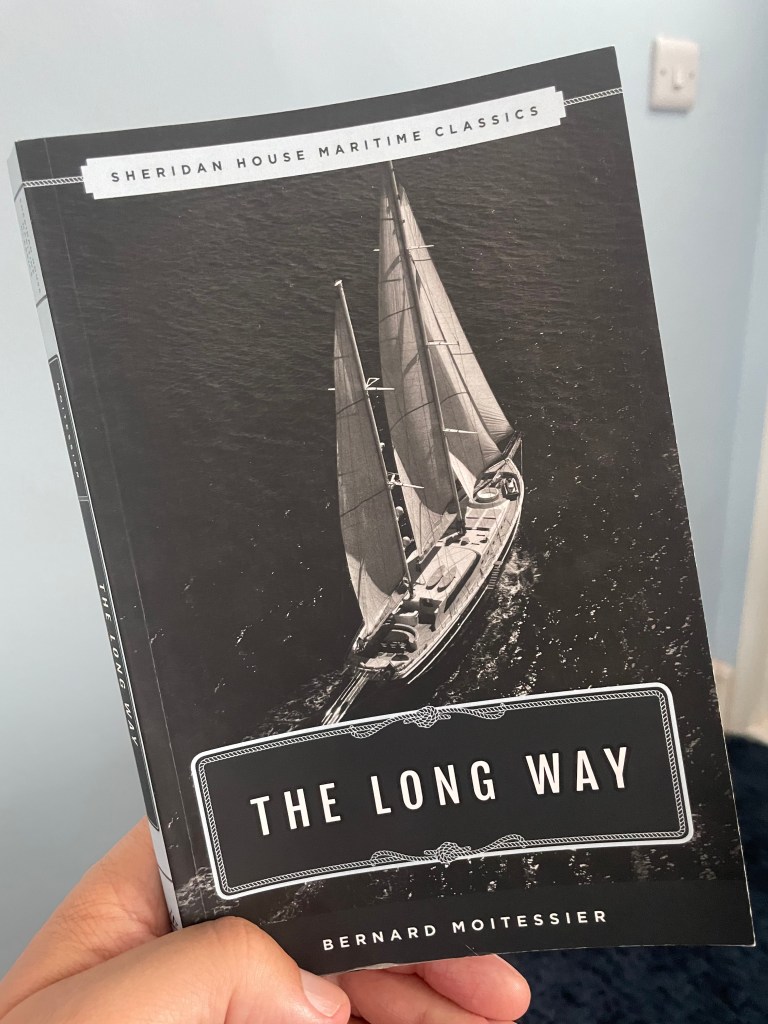
Shortly after the author rounded Cape Horn, and was passing the Falkland Islands on the home straight through the Atlantic to Plymouth in the UK, he abandoned the race, and sailed to Tahiti. In all, he sailed 1.5 times around the world and over 37,000 miles without setting foot on land. The point where he made the decision, and his reason for why, really struck me. He describes it as not wanting to face “the Monster” of the modern world, and he explains his reason by way of a conversation with this Monster:
“Yet it is with thanks to the modern world that you have a good boat with winches, Tergal sails, and a solid metal hull that doesn’t give you any worries.”
“That’s true, but it is because of the modern world, because of it’s so-called ‘civilisation’ and it’s so-called ‘progress’ that I take off with my beautiful boat.”
“Well, you’re free to split, no one is stopping you; everyone is free here, so long as it doesn’t interfere with others.”
“Free for the moment…but before long no-one will be free if things go on. They have already become inhuman. So there are those who go to sea or hit the road to seek the lost truth. And those who can’t, or won’t anymore, who have lost even hope. ‘Western civilisation’ is almost completely technocratic now, it isn’t a civilisation any more.”
“If we listened to people like you, more or less vagabonds and barefoot tramps, we would not have got beyond the bicycle.”
“That’s just it; we would ride bikes in the cities, there wouldn’t be these thousands of cars with hard, closed people all alone in them, we would see youngsters arm-in-arm, hear laughter and singing, see nice things in people’s faces; joy and love would be reborn everywhere, birds would return to the few trees left in our streets and we would replant the trees the Monster killed. Then we would feel real shadows and real colours and real sounds; our cities would get their souls back, and people too.”
That, as well as one of the final entries that I won’t share here, hit me very hard, and really articulated why I do my job. I highly recommend reading this brilliant book. Be warned, though…there is a lot of talk about weather and lots of boat terminology. But its worth it.
📚 Random Things
These links are meant to make you think about the things that affect our world in transport, and not just think about transport itself. I hope that you enjoy them.
- The radical who left Oxfam to fight for democracy: ‘Eight men have the same wealth as half the world. Where does this end?’ (The Guardian)
- I Changed My Race to White on Hinge (The Cut)
- The rich world revolts against sky-high immigration (The Economist)
- By endorsing Trump, Elon Musk is gambling with Tesla’s future (The Verge)
- The Spanish fightback against record tourism (BBC)
📰 The bottom of the news
After yesterday’s news state-side, the US Secretary of Transportation, Pete Buttigeig, is an outside bet for the Democratic nominee for President. Turns out, unlike most of the bores who make up senior decision making in transport, he’s quite funny.
👍 Your feedback is essential
I want to make the newsletter better. To do this, I need your feedback. Just fill in the 3 question survey form by clicking on the below button to provide me with quick feedback, that I can put into action. Thank you so much.
 Mobility Matters