
Good day my good friend.
I am writing this just as the exit poll for the General Election is about to drop. So still no quips about the election results, just a lot of expectation around the result, and wondering what the world will be like on the Monday when this newsletter drops. Will the world be happy and joyous, or full of shock? Or, frankly, who cares?
Mobility Camp is back, and the number one transport unconference is heading to York on Friday 20th September. Book your tickets now!
I have co-authored a book on Mobility-as-a-Service, which is a comprehensive guide on this important new transport service. It is available from the Institution of Engineering and Technology and now Amazon. 📕
🛢 The Supremes Do Good
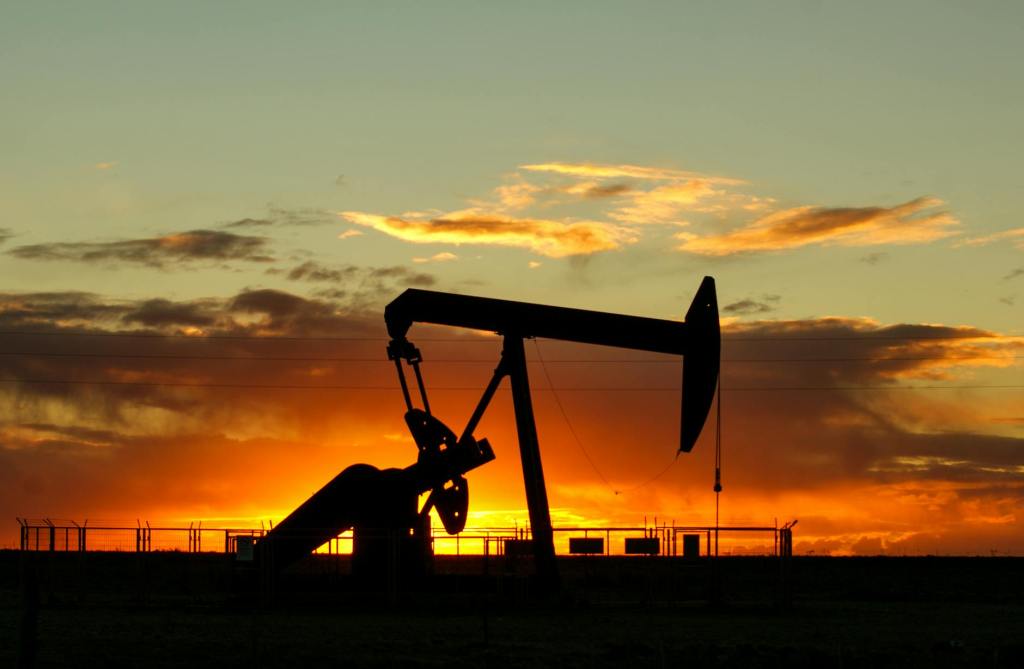
See? Supreme Courts aren’t all that bad really. On 20th June this year, the UK Supreme Court ruled in the case of the Horse Hill Oil Well that when making a decision on it, Surrey County Council did not consider the emissions resulting from burning the oil from said oil well. And it should.
The judgement itself is always worthwhile reading in such cases, and this case is no exception to that. And this comes down to something procedural – are the emissions that are “downstream” counted towards the assessment of the impact? In this case, Surrey County Council initially agreed that downstream emissions should be counted in this way, before changing its mind and restricting the emissions to just that of construction and operation of the buildings.
This case is a relatively simple one: the oil will be extracted will be burned, and therefore will be released into the atmosphere, and so it is within the scope of the Environmental Impact Assessment (EIA). But the critical part of the is that there needs to be present sufficient causal connection between the activities of what is being built, and that of the environmental impact.
To put this in a transport context, you can probably argue that carbon emissions from traffic using a new road are within scope of an EIA. But the carbon emissions from a factory that happens to be built some years later in the presence of a road junction? Much more debatable.
Whatever your views on the merit of the judgement – and as someone who thinks that we should not be giving permission to any new oil and gas wells because, you know, climate, this is a very good decision – this judgment is extremely useful. In that it makes very clear that so long as there is a causal link between the infrastructure and the environmental impact, its within the remit of the EIA. Endless debates and discussions about what is within and outside of the scope are now left to a small sample of fringe cases.
Will this result in fewer polluting schemes? I cannot say. Promoters of such schemes are likely to need to work harder to justify itself, and while this judgement may be welcome its scope is confined to EIA regulations and parts of planning law. The promoter of the Horse Hill Oil Well has already said they will reduce production volumes to under the EIA threshold, and even then may focus on extraction for hydrogen storage. So while a battle may have won in this case, the war for the climate continues.
What you can do: Read the judgement and the press summary. Think about how this affects the schemes you are working on. And if need be, do a good quality EIA that considers downstream emissions.
👩🎓 From academia
The clever clogs at our universities have published the following excellent research. Where you are unable to access the research, email the author – they may give you a copy of the research paper for free.
TL:DR – Apparently. machizukuri means soft and collaborative approaches to urban planning. The key message of this paper? Work across boundaries.
Redefining active mobility from spatial to social in Singapore
TL:DR – Improve the spatial and social function of places, and watch people like it.
The effects of subway operation for commercial land values: A case study in Daejeon, South Korea
TL:DR – Building new subway lines has an effect on property values. The world is not shocked.
Navigate through the haze: Wildfire smoke exposure and Metrorail ridership
TL:DR – I think this is a case of correlation not meaning causation, but apparently when there is wildfire smoke around, public transport use increases.
✊ Amazing people doing amazing things
Personally, I wish all power to the Save Our Safer Streets campaign in Tower Hamlets, London. A group of concerned community members have banded together, and challenged the legality of the Council’s decision to rip out some safer streets schemes to improve traffic flow. They had their day in court, and are awaiting judgement to be handed down. Best of luck to them!
📺 On the (You)Tube
This excellent video by Half as Interesting provides details on what is the best food delivery system in the world – the Dabbawallas of Mumbai. Where for $6 a month you can have hot, home cooked food delivered to your office every day. All without technology, using the rail network, and at 99.9999% accuracy. And I bet that 0.0001% failure was down to Jeremy Clarkson, Richard Hammond, and James May.
🖼 Graphic Design

Casualties in collisions involving e-scooters by time of the day, Great Britain, 2023 (Source: Department for Transport)
I though that this graph of the number of casualties in collisions involving e-scooters by time of day was interesting. Notably how the peak between 4pm and 6pm is so high compared to the rest of the day.
📚 Random Things
These links are meant to make you think about the things that affect our world in transport, and not just think about transport itself. I hope that you enjoy them.
- Another monolith appeared near Las Vegas. Who’s behind these mysterious objects? (NPR)
- How “fast” and “slow” thinking can help us handle technostress (Big Think)
- ‘We wanted to change the norm on smartphone use’: grassroots campaigners on a phone-free childhood (The Observer)
- We’ll Have to Wait a Bit Longer for the World’s Biggest Fusion Reactor (Gizmodo)
- How generative AI could reinvent what it means to play (MIT Technology Review)
📰 The bottom of the news
How can you make a ride on a subway better? Run a reliable service? Have clean, modern trains? Maybe do things to make people feel safer? Boston thought, “nah, lets put googly eyes on subway trains instead.”
👍 Your feedback is essential
I want to make the newsletter better. To do this, I need your feedback. Just fill in the 3 question survey form by clicking on the below button to provide me with quick feedback, that I can put into action. Thank you so much.
 Mobility Matters