

Good day my good friend.
Hello, hello, its good to be back. How have you been? Enjoying the weather and the election fever gripping the UK? Or maybe watching Jude Bellingham’s equaliser on repeat? Regardless of how you have spent the last few weeks, I trust that it was enjoyable and you had a lot of fun doing it. But you aren’t here to hear my small talk, so lets get straight back into it.
Mobility Camp is back, and the number one transport unconference is heading to York on Friday 20th September. Book your tickets now!
I have co-authored a book on Mobility-as-a-Service, which is a comprehensive guide on this important new transport service. It is available from the Institution of Engineering and Technology and now Amazon. 📕
🚗 Why is congestion pricing so hard?
When the news came through about the New York Congestion Pricing Scheme getting cancelled at the last minute. When I heard the news and saw the reaction, I could not help but think of the following quote by one of my favourite TV characters of all time, Captain Jean Luc Picard:
Commander [Data], it is possible to commit no mistakes and still lose. That is not a weakness. That is life.
By most accounts, the technical aspects of developing the Congestion Pricing Scheme went perfectly. The City has engaged with people on the idea for a long time. The technical studies have been done. The link between the funding and improving the subway has been long established and known. People know why it is being done, and according to some sources more people support it than opposed it. Yet here we are, with the scheme paused indefinitely.
A lot has been written about the politics of making congestion charging happen. Mainly from the experience of London and Stockholm, with the latter proving to be an interesting case being the only congestion pricing scheme globally voted for by the public. There are many dangers ahead for any congestion pricing scheme, yet there is no guidance for anyone on what is the opportune moment at which to put one forward to be approved.
From my reading of the literature on this, I would consider that there are a number of essential pre-conditions necessary to introduce congestion pricing:
- The scheme is ready to go. In nearly all cases, congestion pricing has been looked at for a long time. In Stockholm, London, and New York, the idea of congestion pricing has been looked at since the 1980s. The technical studies had been done, and the scheme had been specced. It just needed approving.
- A political landscape that favours risk taking and has a high chance of sticking. In Stockholm, an alliance of the Social Democrats and Environmentalist Parties came together to commit to delivering the experiment. In London, Ken Livingstone won his Mayoral bid in 2000 – that included congestion pricing – with nearly 60% of the final vote. Both of which provided the candidates with confidence that they could deliver the scheme, and not suffer for it electorally, giving the scheme the chance to both be delivered and bed in.
- The benefits to the people who you need to support it are direct and tangible. None of this “everyone benefits from less traffic” stuff. Ken Livingstone tied congestion pricing to improving bus services in London. In the Workplace Parking Levy scheme in Nottingham, it was made very clear that a new tram line would not happen without the levy. Those who benefit the most from the scheme are more likely to support it.
- If all else fails, have an out. Stockholm had this, in that it was a trial. In London, you could just boot Ken out at the next election if it did not work (it did, and he won).
Or you could just go all effective dictatorship, like in Singapore.
Congestion charging, and road user charging more generally, are good ideas. And they should be delivered. But without these conditions aligning, the political environment will never be in place in order to deliver such charging. And even then, you may not be successful. The technical part is the easy bit. And if congestion pricing was easy, everywhere would have done it by now.
What you can do: Learn more about the politics of it all. I highly recommend this study of the Stockholm experience to start with.
👩🎓 From academia
The clever clogs at our universities have published the following excellent research. Where you are unable to access the research, email the author – they may give you a copy of the research paper for free.
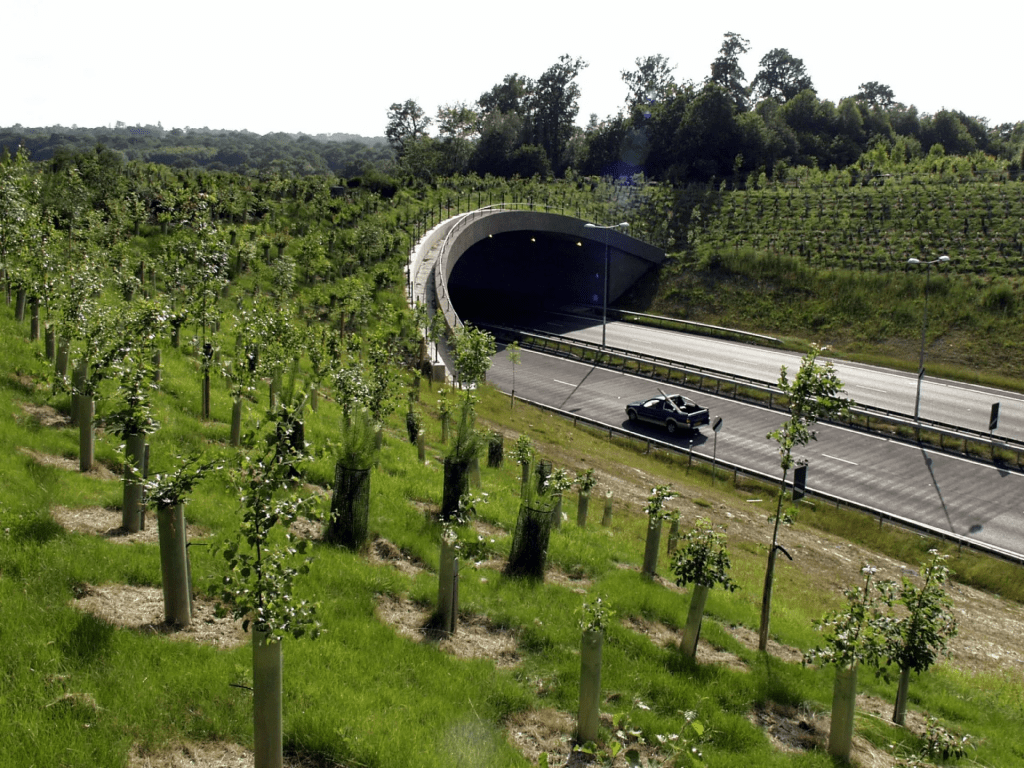
Inclusion of road ecology criteria within environmental Impact assessment
TL:DR – Oh my god, we are so far off caring for animals in transport projects we might as well go out and shoot them ourselves.
TL:DR – Optimism bias is still a thing, the forecasts are getting better, and I’m going to get emails from scenario planners and transport modellers.
TL:DR – Shift when people work, and you can reduce crowding. No biggie.
Transit to parks initiatives in the U.S. and Canada: Practitioners’ perspectives
TL:DR – Getting people to take the bus and train to national parks is really hard, but we are now starting to take it seriously.
✊ Amazing people doing amazing things
In election week, its worthwhile celebrating people who manage to get elected and who are doing great things. Over in the USA, Nashville has elected a Mayor who is a public transport megafan. He’s confident that, after many ballots backing public transport funding failed, he can finally get it right. Good for him!
📺 On the (You)Tube
Not Just Bikes went to Japan, and visited Shinjuku station in Tokyo. It handles 3 million passengers a day. To put that in perspective, the entire London Underground handles around 5 million passengers a day. It does this through great design in and around the station.
🖼 Graphic Design

Cash is going extinct across the world. All hail the onset of the card and contactless.
📚 Random Things
These links are meant to make you think about the things that affect our world in transport, and not just think about transport itself. I hope that you enjoy them.
- Factcheck: How ‘scary-sounding numbers’ are being used to mislead the UK about net-zero (Carbon Brief)
- Why Higher Tariffs and a Wealth Tax Won’t Work (Econlife)
- “What We Got Wrong About Depression and its Treatment” (Marginal Revolution)
- The Hidden Story of Trailblazing Black Astronauts at NASA (Scientific American)
- The detours on memory lane (Undercover Economist)
📰 The bottom of the news
Humour is a great way to communicate, though I admit that it is not always clear of its intention. That is why there was a small bit of uproar as funny road signs in Ohio could soon come to an end, after the Feds said that being humorous should generally be avoided. Spoilsports.
👍 Your feedback is essential
I want to make the newsletter better. To do this, I need your feedback. Just fill in the 3 question survey form by clicking on the below button to provide me with quick feedback, that I can put into action. Thank you so much.



 Mobility Matters
One response to “🚦 Losing My Favourite Game”
Hi James,
I wanted to say I enjoyed the article you shared about the new mayor of Nashville and his transit aspirations.
While Nashville, TN and Wellington, NZ are vastly different cities in terms of population and geography, I found similarities jumping out to me â the progressive local politics at odds with a federal/national conservatism; the overwhelming feeling among all residents that transit has reached a crisis point in the city; and the uneven land use development across the city neighbourhoods. Wellington is at yet another turning point for the many schemes and plans that have been set up and then set down to solve our transport woes.
Thanks for sharing!
NgÄ mihi,
Eleanor
Eleanor Heal (she/her)
Transport Planner
Performance & Practice | System Design Te Toki TÄrai
DDI 64 4 831 5327
E eleanor.heal@nzta.govt.nzeleanor.heal@nzta.govt.nz
Waka Kotahi NZ Transport Agency
44 Bowen Street, Pipitea, Wellington 6011
Private Bag 6995, Wellington 6141, New Zealand
[cid:image001.png@01DACD38.E22502F0]https://nzta.govt.nz/
LikeLike