
Good day my good friend.
This last weekend, the UK got bathed in the radiant beauty of a geomagnetic storm. Which meant that the Northern Lights appeared far further south than usual. It also meant that the British part of the internet stood up, and said these words as one. I have not felt such a joining of the British spirit since the first lockdown in April 2020. It was beautiful.
If you like this newsletter, please share it with someone else who you think will love it. The main way my audience grows is through your recommendations. I will love you forever if you do. 😃
I have co-authored a book on Mobility-as-a-Service, which is a comprehensive guide on this important new transport service. It is available from the Institution of Engineering and Technology and now Amazon. 📕
♥ The value of the things we don’t care about
Let’s face it. There are a lot of transport modes that us transport planners really do not care about. Or at least we don’t think about when it comes to making planning decisions. Given the sheer variety of things that we have to think about to try and keep our networks running, there is bound to be some bias in what modes we think about. After receiving some email correspondence from a good friend, and reading this excellent article by Phil Goodwin on modelling freight, I thought it was worth putting down some quick thoughts on a variety of transport modes most of us forget about and few of us plan for.
Freight. Obvious, really. Let me put it this way, do you have stuff in the room with you right now? If that doesn’t show how valuable freight is I don’t know what will. We can argue about how it should get around, especially in our towns and cities, but freight blindness is probably transport planning’s greatest weakness. In most strategies, freight is an afterthought, and in schemes the benefits of what we are doing for freight is often not thought about. The movement of freight is crucial for our economy, and we ignore it.
Walking. We’ve got better at this one over the years. But we often forget that for the overwhelming majority of people, each and every trip involves walking at some point. Yet it is treated as an inconvenience for vehicle movements, and the most human of movement needs to just go over there please, so that the cars can turn. Pedestrianised areas perform well economically, and walking is good for our health. The world should be designed around two feet.
Coaches. Buses take us around locally, trains take us long distance. Meanwhile the humble coach just trundles on. Its brilliant at filling gaps in the rail network for strategic trips by public transport (the X5 between Oxford, Milton Keynes, and Cambridge being a good example), provides a low cost alternative for long distance travel, and is great at providing long distance links between smaller towns and villages, such as the network in Scotland. Also, the network of night coaches across Europe is one of the unsung part of the European public transport network.
Ferries. You never use them, but good luck trying to get to an island community without one. These ferry services are literal lifelines for many island communities – hence why everyone is so angry at the ongoing problems facing Calmac in Scotland. They also allow road and rail services to overcome to minor barriers posed by huge bodies of water. And let’s be honest here. Nobody likes flying on a plane really. But standing on the deck of a ferry during a smooth crossing? Brilliant. Oh, and they are one of the least polluting forms of transport per passenger.
Horses. Not so much a mode of transport any more, but still a road user. Pretty much on this list because they were one of our main means of transportation for millennia, and still are in some parts of the world. They are also vulnerable road users, particularly in rural areas, and its not just confined to bridleways and small country lanes either.
👩🎓 From academia
The clever clogs at our universities have published the following excellent research. Where you are unable to access the research, email the author – they may give you a copy of the research paper for free.
Optimizing bikeshare service to connect affordable housing units with transit service
TL:DR – How do you balance affordable homes, access to public transport, and bike share locations? With a model of course!
Effects of Mobi’s equity initiatives on public bike share access and use
TL:DR – Hey, you can expand bike schemes in a way that doesn’t just focus on the most privileged. Who knew?
Predicting Undergraduates’ willingness to engage in dangerous e-scooter use behaviors
TL:DR – Get a male student drunk and they will do stupid things on e-scooters. They could have found that out just by asking, well, any male student.
TL:DR – Fancy paying a bargain price for a ticket with no idea of where you will be heading? This research paper tests that idea.
✊ Awesome people doing awesome things
I don’t actually have the name for this person, but to the lady conductor on the 14:35 train from Barnstaple to Exeter on Saturday, I say this. You handled the fact that the signalling system broke and you had no idea what was going on very well indeed. Clear communication, friendly and courteous with passengers, and whenever you heard anything you told us. You even had us smiling after you told us to get back on the train at Crediton barely 5 minutes after telling us to decamp to the nearest bus to Exeter as you had no idea at the time when we would get to Exeter. Great Western Railway – give her some kind of commendation.
📷 Out and About
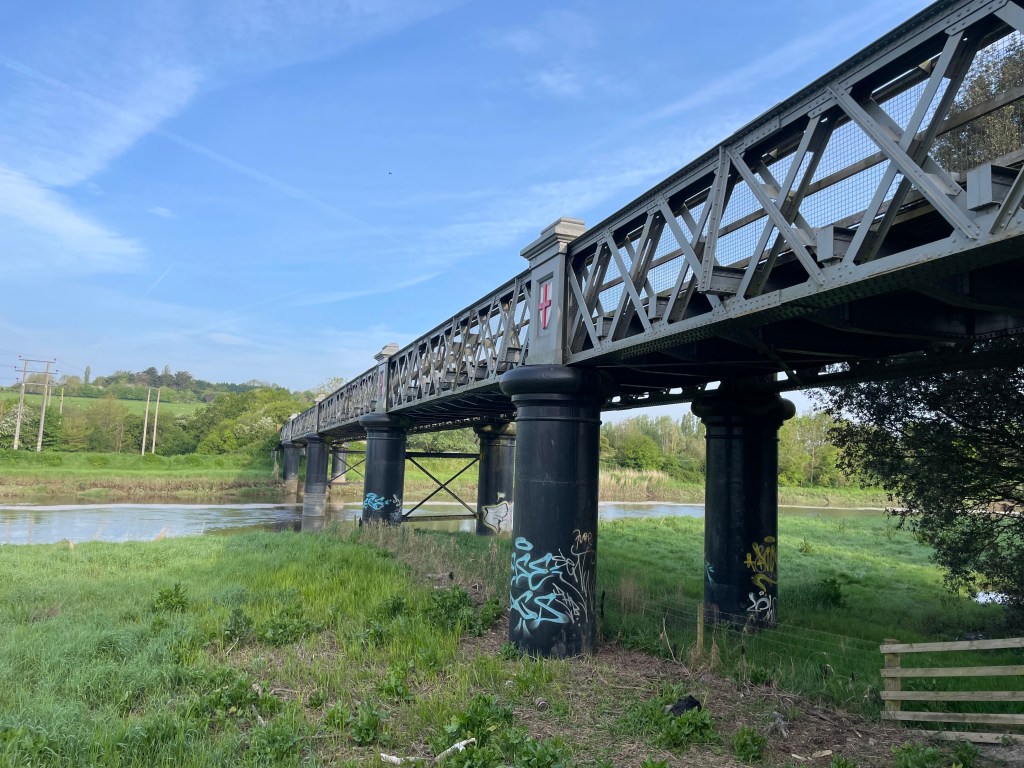

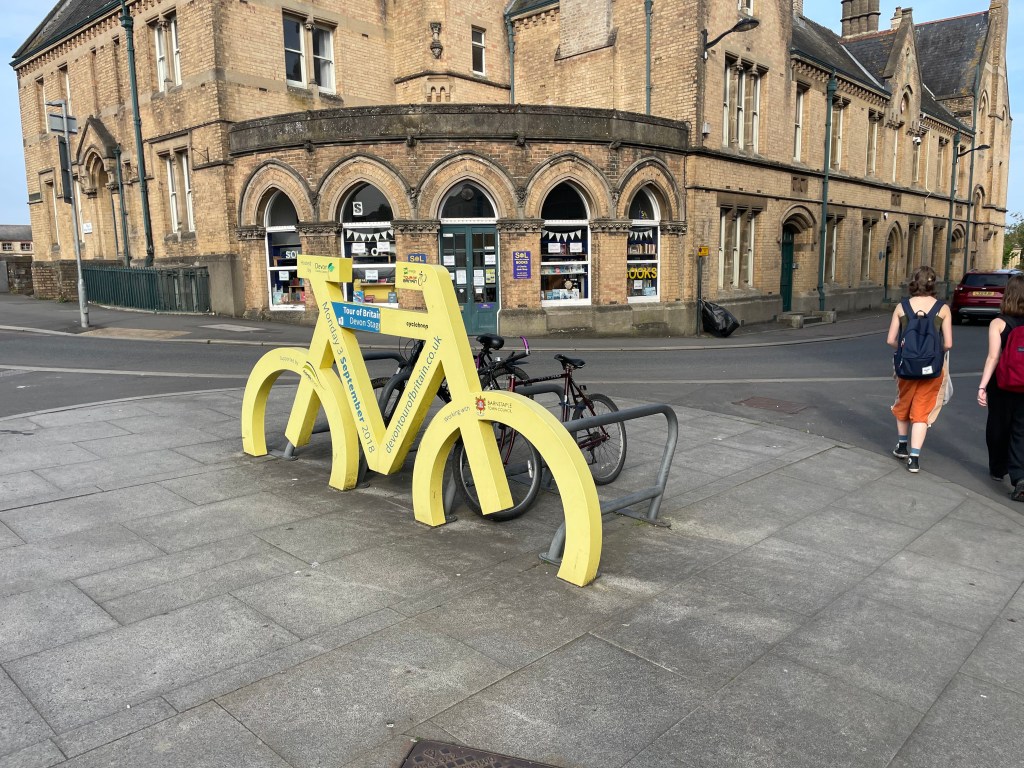


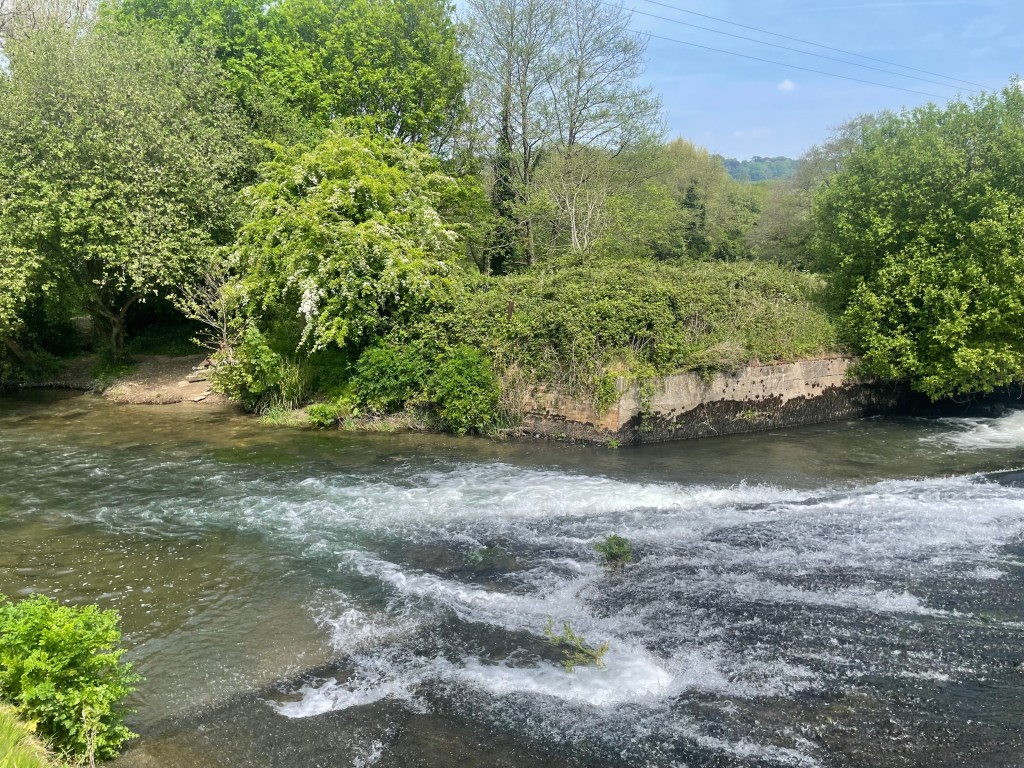
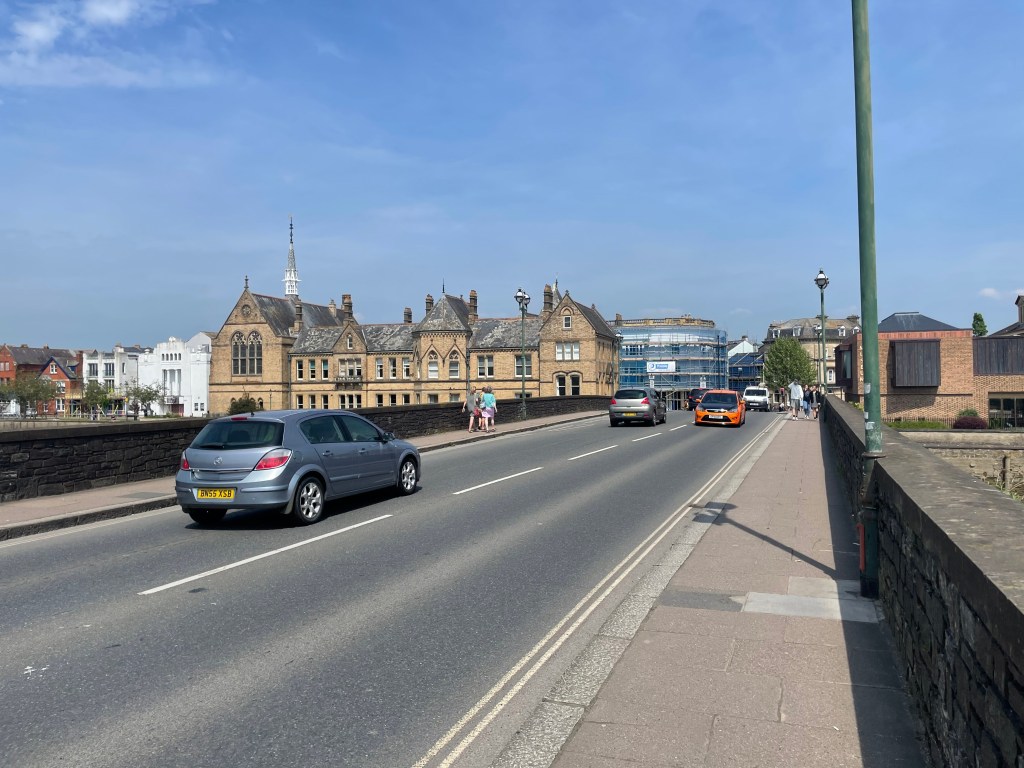
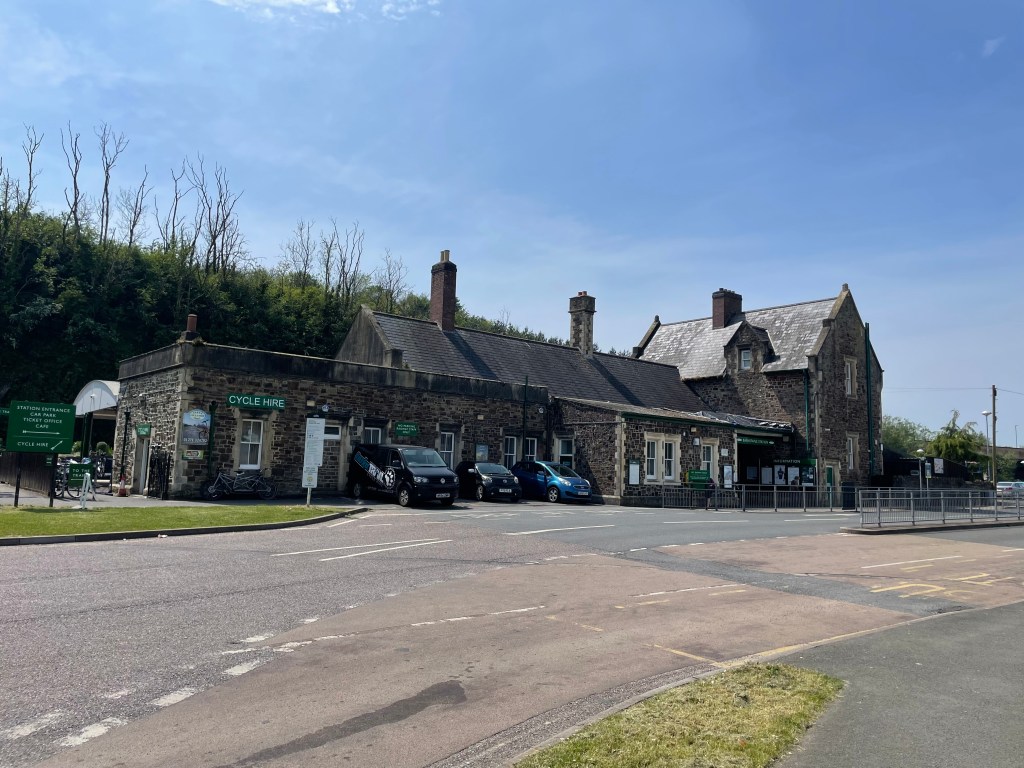
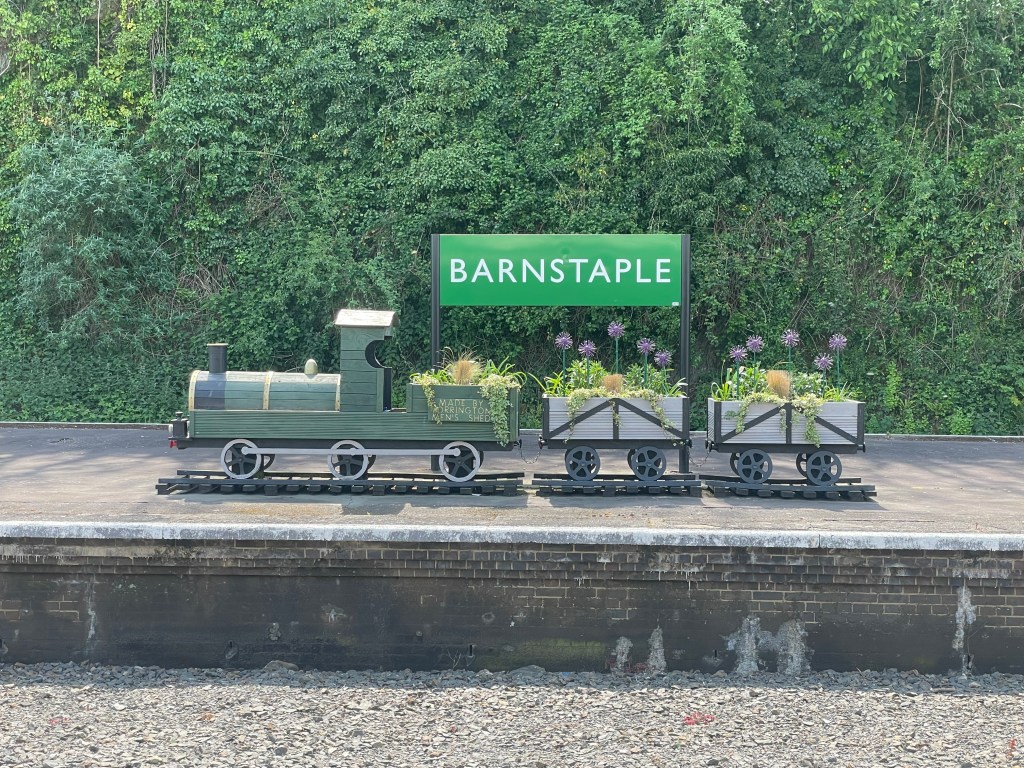
Last weekend, I had to head to North Devon for a family matter. But I did get the chance to take some pictures of some transport infrastructure. As well as remnants of a bygone age of the railways in Barnstaple (some are much more visible than others), I also got to see how road building can actually benefit a town.
Some years ago, after decades of arguing, the ‘Downstream Bridge‘ was finally built as a solution to the chronic traffic problems in Barnstaple. But it wasn’t a case of just providing extra capacity. With through traffic now diverted away from Barnstaple, the County Council set in motion plans to reallocate the road space.
The Town Square – previously a traffic-choked hell hole, was actually closed to traffic on one side, and a proper square has been created outside the museum. The water fountain and the Albert Clock, previously surrounded by a circle of traffic, were now part of a wider square. Meanwhile, The Strand – which before would be solid with stationary traffic from 8am to 6pm – has been reallocated to shared space with much less traffic. The medieval Long Bridge, meanwhile, was released from the relentless pounding of motor vehicles. And the town is better for it.
📺 On the (You)Tube
Many of my British followers may remember watching Blue Peter in their childhood. I do. They had a knack of making what are boring subjects for kids, interesting to kids. Turns out, they did just this with motorways and car parks.
📚 Random Things
These links are meant to make you think about the things that affect our world in transport, and not just think about transport itself. I hope that you enjoy them.
- GhostStripe attack haunts self-driving cars by making them ignore road signs (The Register)
- New Evidence of Big Oil’s Climate Deception Demands Justice Dept. Inquiry (Common Dreams)
- Nuclear Energy: The New Geopolitical Battleground (Naked Capitalism)
- The childhood obesity crisis – driven by deprivation? (Policy@Manchester)
- How Bad Is A.I. for the Climate? (New York Times)
📰 The bottom of the news
You will probably know that a Pelican Crossing in the UK allows pedestrians to cross the road. As does a Zebra Crossing. A Toucan Crossing allows pedestrians and cyclists to cross the road. A Pegasus Crossing allows horses to cross the road. So what do you call a crossing for Camels?
👍 Your feedback is essential
I want to make the newsletter better. To do this, I need your feedback. Just fill in the 3 question survey form by clicking on the below button to provide me with quick feedback, that I can put into action. Thank you so much.
 Mobility Matters