

Good day my good friend.
In case you missed the news yesterday, I have co-authored a book on Mobility-as-a-Service, which you should definitely check out as its a great guide to all things Mobility-as-a-Service. I warn you now that I will be plugging this for a fair while, but not at the expense of the usual content / nonsense (delete as applicable).
If you like this newsletter, please share it with someone else who you think will love it. The main way my audience grows is through your recommendations. I will love you forever if you do. 😍
I have co-authored a book on Mobility-as-a-Service, which is a comprehensive guide on this important new transport service. It is available from the Institution of Engineering and Technology. 📚
🕑 Time to revise
When is a fine time to pick the right time to make a change? A subtle art of transport strategy work is knowing when to actually change it, or at least update it. Whenever I have asked my fellow professionals on what is an appropriate time to revise any strategy that you have in place, I get a whole range of answers. Every 5 years is reasonably common. Whenever we have the time to think is another. Yet another is whenever they are told to do so by councillors.
There is no hard science behind when you should revise a strategy for improving transport in your area. But the art of identifying when is the right time is something that we as professionals have not taken any time to develop at all. For a whole host of reasons. Transport schemes take a long time to deliver, and even longer for their impacts to be realised. And then there is the whole question of political interest in actually having a strategy, when what officers should be doing is making sure that potholes are filled and bus services are not cut.
In truth, there is no real correct time to revise your transport strategy. Any decision to revise your transport strategy needs to be driven by two groups of factors:
- External factors. Namely answering the question “has the world changed so much that our strategy makes no sense anymore?” A common factor here is government policy and changes in it, but this needs to cover changes in other things that affect the deliverability of your strategy. This can include changes in travel patterns, changes in land use, and changes in the economy.
- Internal factors. Namely answering the question “has our organisation changed so much that it affects how we are able to deliver the strategy?” This means understanding your own capabilities and resources. This is not just in terms of not having the capability to deliver, but also how investment in your skills and staff has meant that there are other opportunities for you to deliver.
At the core of all of this is having a high quality monitoring and evaluation of your existing strategy. Having this in place will not answer the question of whether you must change your strategy, but by monitoring data and trends over time you can get an indication that change is happening, which then allows you to explore the question of whether or not it is time to change strategy.
The challenge is that most transport strategies are set up to monitor progress in this kind of way:
| Area | Indicator |
| Cycling | Number of people cycling to and from the city centre |
| Public transport use | Number of trips on local bus services every year |
| Congestion | Average delay per trip |
| Air Quality | PM levels in Air Quality Management Areas (annual average) |
Which is useful to a degree in understanding the impact of scheme delivery. Even then I would argue that indicators similar to the above are limited in their scope and based on data that happens to be available as opposed to something that is meaningful. But that’s another issue.
I would argue that what needs to be measured and analysed to inform any decision to revise a transport strategy is the following.
| Area of interest | Potential KPIs |
| How is the wider world changing? | Population growth Number of new houses completed Economic activity Maturity of key technologies Changes in social attitudes |
| How people are getting around How freight is getting around Impact on wider goals (e.g. air quality) Value added of the investment made (e.g. our schemes leveraged in £5m in funding) | |
| What is our ability to deliver? | Funding levels (current and forecast) Staff levels and capabilities Funding bid success rates Relationship with key partners |
I bet that most of these are not on your list of KPIs in your transport strategy. And I bet that you don’t measure most of them either, as well as understanding the logic of why we need so much information to inform a decision on whether or not to revise your transport strategy.
For me, without understanding all of these things, and using such data as a basis on which to make this decision, then you cannot answer three questions which must underpin your decision as to whether or not to revise your transport strategy:
- How has the world changed, and has it changed to such a degree to make our existing strategy challenging to deliver?
- Is the impact of what we are doing what we expected?
- Do we have the capability to deliver our strategy?
Your answer to these questions determine whether or not you should revise your strategy.
If nothing else, I hope that we as transport professionals get away revising strategies based purely upon what feels right, or having an arbitrary 5 year revision period. A good strategy needs to monitor change over time, and come to that decision organically and through evidence collection. And this, sadly, is something that transport planners tend not to do very well.
👩🎓 From academia
The clever clogs at our universities have published the following excellent research. Where you are unable to access the research, email the author – they may give you a copy of the research paper for free.
Driving the electric vehicle agenda in Nigeria: The challenges, prospects and opportunities
TL:DR – There are a lot of opportunities and challenges in Nigeria. Many of which will be familiar.
Satisfaction-induced travel: Do satisfying trips trigger more shared micro-mobility use?
TL:DR – People tend to use what makes them happy. Colour me shocked.
Ridesourcing regulation and traffic speeds: A New York case
TL:DR – Capping the number of ride sharing vehicles temporarily increased vehicle speeds in New York.
Characterising travel behaviour patterns of transport hub station area users using mobile phone data
TL:DR – Mobile phone data can be used to track how people use stations in the context of wider trips, and not just understanding where they buy coffee.
✊ Awesome people doing awesome things
A lot of noise is made by people who don’t like car restricting measures and 20mph speed limits. But for every one of these idiots who writes an opinion column in The Telegraph, there are hundreds of people campaigning for lower speed limits. Through just a quick Google, I have found recently launched campaigns in Thimbleby, Dudley, Hitchin, Royston, Bewdley, and Saffron Walden. Good luck to every single one of them.
📺 On the (You)Tube
You need to watch this video of Laura Kampf walking 9 miles to get a map in Los Angeles. Its a very good example of “gallows humour” given the sheer insanity of the infrastructure of LA.
📷 Out and About




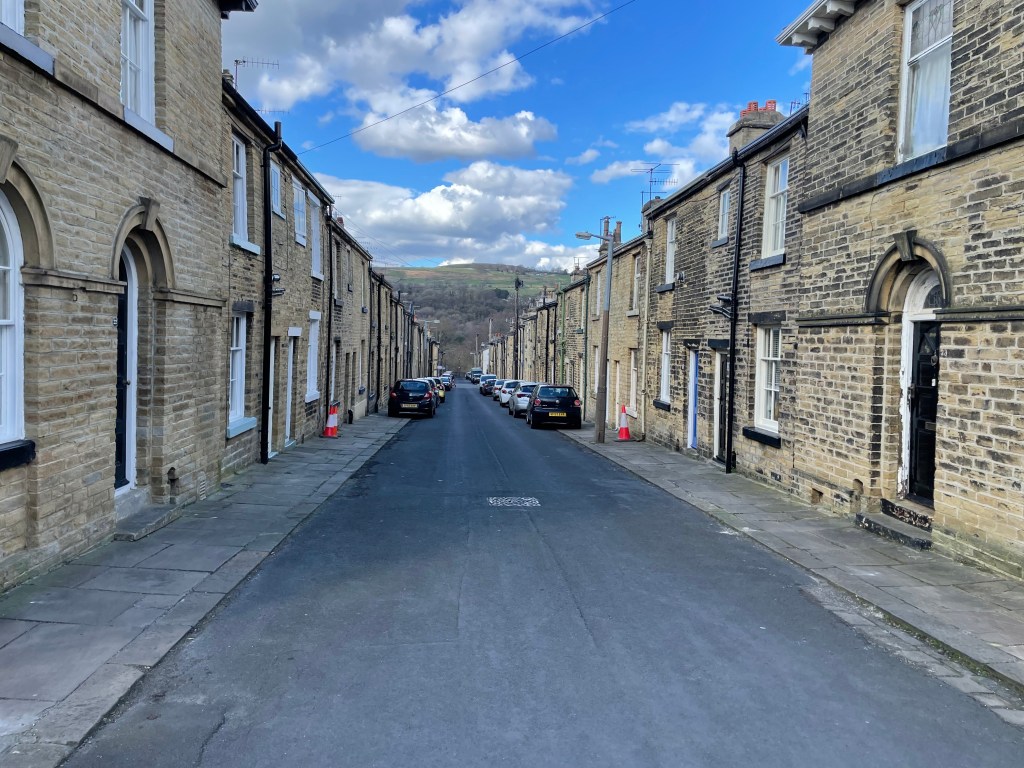


Over the Easter break, I had the chance to visit the beautiful village of Saltaire in West Yorkshire. Its a stunning place, purposely built in 1851 by Sir Titus Salt as a place where all of his workers in the Salt Mills could have an amazing life. And it is beautiful. Naturally, the transport geek in me was taken in by the Shipley Glen Tramway, the Leeds and Liverpool Canal, and the attempted Low Traffic Neighbourhood.
📚 Random Things
These links are meant to make you think about the things that affect our world in transport, and not just think about transport itself. I hope that you enjoy them.
- The energy transition: Technology versus political backlash (VoxEU)
- A World Without Insurance (God’s Spies)
- Wait, does America suddenly have a record number of bees? (Washington Post)
- A stealth attack came close to compromising the world’s computers (The Economist)
- 70% of the land in Britain is still owned by 1% of the population, largely descended from William the Conqueror’s army (ZMEScience)
📰 The bottom of the news
There are many things that present a danger to pedestrians. But…monkeys? The Macaques of Lopburi in Thailand have been running wild for years, stealing foot and even fighting with each other on top of people as they walk in the street. Authorities now have a plan to deal with.
👍 Your feedback is essential
I want to make the newsletter better. To do this, I need your feedback. Just fill in the 3 question survey form by clicking on the below button to provide me with quick feedback, that I can put into action. Thank you so much.



 Mobility Matters