
Good day my good friend.
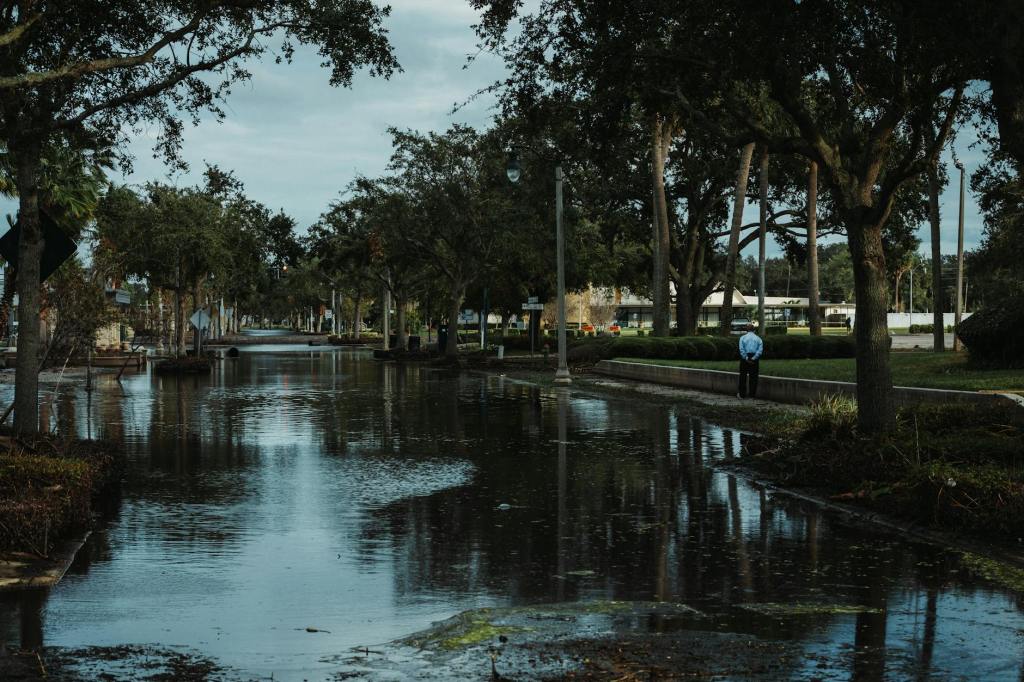
I write this newsletter while the rain is pouring down outside of my train currently passing through Three Bridges (as I write this). The Brits reading this will probably agree with me on how this winter has been especially wet, and the data is showing it. On average, British winters are getting wetter as well as warmer. In a country famed for its rain, to get people to notice quite how wet it is is truly remarkable. If this is not an indicator of climate change, I don’t know what is!
If you like this newsletter, please share it with someone else who you think will love it. The main way my audience grows is through your recommendations. I will love you forever if you do. 😍
🌊 Thoughts on Resilience
If transport planning has a weakness (it has many, but that’s for another time), it is a tendency to err towards the shiny and new. Even when we re-purpose our highways towards cycling and walking, it is through a shiny, new thing. Usually with a big announcement, grand designs, and glum councillors cutting a tape to open it. Or do that stupid walk across a zebra crossing popularised by The Beatles. More on that later.
I don’t make predictions usually, but in this case I will make the exception. I predict that over the next 10 years, transport planning in developed nations will shift quite radically away from focusing on the construction of new things, to management and the resilience of the infrastructure that we currently have, which could include repurposing it. There are several key reasons for this.
In many developed nations, the majority of infrastructure that we will have at that time we already have. Rates of highway construction, for example, have barely moved in the last 20 years in the UK. Much of the change of the length of roads has come from house building (the minor road network), accounting for an additional 50 miles of public road a year over the last 20 years. To put that in context, in 2022 there were 245,100 miles of public road in the UK. One could make the case that the fact that we spend billions on expansion that barely moves the needle on road length, and less on maintenance is a stupid place to be.

Changes in the length of the UK road network (Source: Department for Transport)
The second reason is obvious: climate change. In short, the climate is predicted to become much more turbulent and prone to extreme weather. And extreme weather breaks things. Evidence from the railways shows a strong relationship between incidents of higher temperature and failures of infrastructure and services. Several pieces of critical national infrastructure in the UK, such as the main railway serving Devon and Cornwall, will likely be washed away by the sea more often in the future, raising questions of whether it is economical to keep them running. And this is infrastructure that is ageing, making it more prone to breaking.
The final reason is somewhat less obvious, but something that I am increasingly interested in: declining birth rates globally. The UK trend, much like many other developed nations, is broadly downwards. So much so that without immigration, the UK’s population is expected to decline from next year. When your assumptions about expanding infrastructure depend in a large part on an expanding population, the case for doing so becomes weaker if your population does not expand.
One of the challenges that I have faced in revising a transport strategy is getting many of my fellow professionals to understand the importance of such a shift. We instinctively understand things like road space reallocation because it is doing a new thing with existing infrastructure. But fixing potholes and making sure an embankment doesn’t slide into the river has not been our strength.
An example of this that I have found through individual discussions and workshop sessions has been defining what resilience actually is. To some, it is the defence of the infrastructure – i.e. stopping it from failing. Talking to people responsible for actually defending the infrastructure, they call it something simple but different: defence. They see resilience as recovery from when there is a failure. Some see it as both.
Such a lack of consensus will make it challenging for us to meet the resilience challenges ahead of us. The evidence to me is clear: keeping what we have running must be a big focus in the coming decades. That will mean defending it, recovering from when it fails, and even surrendering some of the infrastructure that we have to nature.
What does that mean? When we build it will be things like expanding culverts, building up embankments, and coastal defences on the really critical things. We will focus more on making the case for maintaining what we have, and ploughing more resources into maintenance in a manner that is compliant with our climate goals. This means more initiatives like sustainable urban drainage systems and nature-based solutions to reduce the impacts of heavy rainfall and heat. As well as repurposing what we have so the trips we make result in less damage to the infrastructure that we have got.
And you know what? I quite like the idea of that future, actually.
What you can do: To get brushed up on this quickly, the Insitution of Civil Engineers has published 6 principles of resilient infrastructure that you should check out. As well as this publication from the Department for International Development. If you want to start something, contact your local council and talk to them about getting installed sustainable urban drainage systems.
👩🎓 From academia
The clever clogs at our universities have published the following excellent research. Where you are unable to access the research, email the author – they may give you a copy of the research paper for free.
Bus bunching: a comprehensive review from demand, supply, and decision-making perspectives
TL:DR – Lots of theory on why you get 3 buses at once. Not enough practice on applying the research, though.
Is electric truck a viable alternative to diesel truck in long-haul operation?
TL:DR – It will be challenging, but yes.
Bicycles and micromobility for disaster response and recovery
TL:DR – It could play a role, maybe, say some very clever people.
TL:DR – What some people are a bit crazy about the idea, it turns out our policy making approaches may not help.
📺 On the (You)Tube
Geoff Marshall rode every single London bus route. After visiting every station in the UK a few years ago, I can believe him doing something like this, the mad man.
🖼 Graphic Design

Hyrule Bus Service Map (Source: r/zelda)
Public transport combined with my favourite video game series? Yes please! I have to say that the service to Gerudo Town might be a bit hard considering the valley is flooded, and the service to Lurelin Village will have to get past a Gleeok on the Bridge of Hylia. Apart from that, the service will be great I am sure.
📚 Random things
These links are meant to make you think about the things that affect our world in transport, and not just think about transport itself. I hope that you enjoy them.
- Is working from home about to spark a financial crisis? (The Economist)
- Deepfakes are out of control – is it too late to stop them? (New Scientist)
- Inflation differentials in the euro area at the time of high energy prices (VoxEU)
- Where Women Pay the Motherhood Penalty (EconLife)
- Work for you? Again? After you lied about the job and stole my stuff? No thanks (The Register)
📰 The bottom of the news
Ships in docks have been known to belch out all sorts of nasty things, notably sulphur and particulate emissions. But the smell of cattle? That is what Cape Town is currently dealing with, as a ship loaded with 19,000 cattle from Brazil bound for Iran has docked to take on fuel (for the cattle). And it is currently stinking the place out.
👍 Your feedback is essential
I want to make the calls to actions better. To do this, I need your feedback. Just fill in the 3 question survey form by clicking on the below button to provide me with quick feedback, that I can put into action. Thank you so much.


 Mobility Matters