

Good day my good friend.
It seems that the first post in the new home largely went off without a hitch. Unless you count hitches as being slightly delayed in delivering the email for some of you, and being in the wrong post template when published on the new website.
Still, when Disneyland in California opened, they ran out of food and drink, the cement on Main Street USA hadn’t set, and one of the steam boats nearly capsized. So I will take this as a win!
If you like this newsletter, please share it with someone else who you think will love it. The main way my audience grows is through your recommendations. I will love you forever if you do. 😍
James
🚗 Where cars go to die
The world is full of complex effects and unseen consequences of the policy choices that we make. We like to think that there is a simple cause-and-effect of our policies. But the reality is the world is far more complex, and indirect impacts are complex, and in some cases not small.
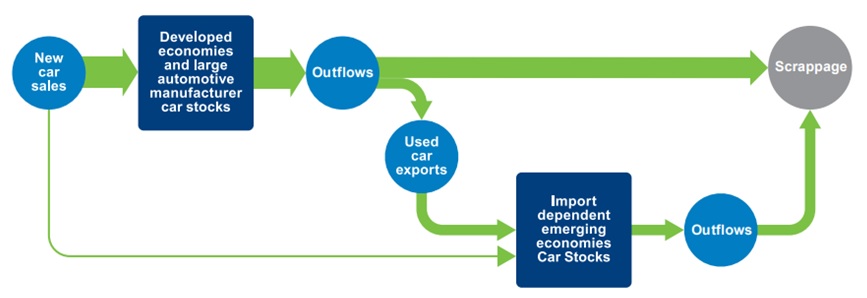
Lets take the transition away from fossil fuel powered cars to electric ones. Something that is needed to meet global carbon emissions goals. But what about second hand cars and cars in the Global South? This excellent report by the International Transport Forum explores this issue in more detail, and the challenges that we face to decarbonise the entirety of our transport system globally.
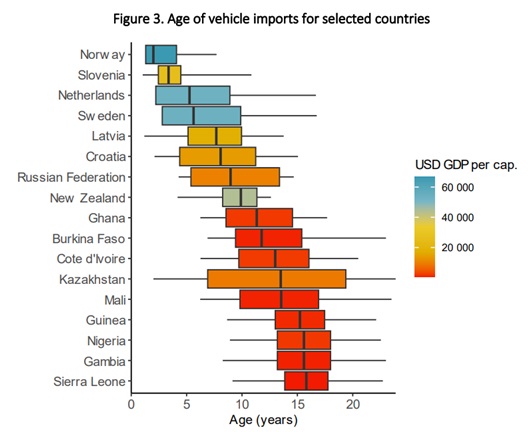
When they come to the end of their servicable life, cars in places like North America, Europe, and China face one of two fates: the scrap heap, or a second life as a second hand car in many countries in the Global South. For the latter, it is amazing quite the age of many cars that are exported to the Global South. Whereas an imported car into Norway may be a few years old, countries like Sierra Leonne have the average age of imported cars as over 15 years old.
Source: International Transport Forum
Source: International Transport Forum
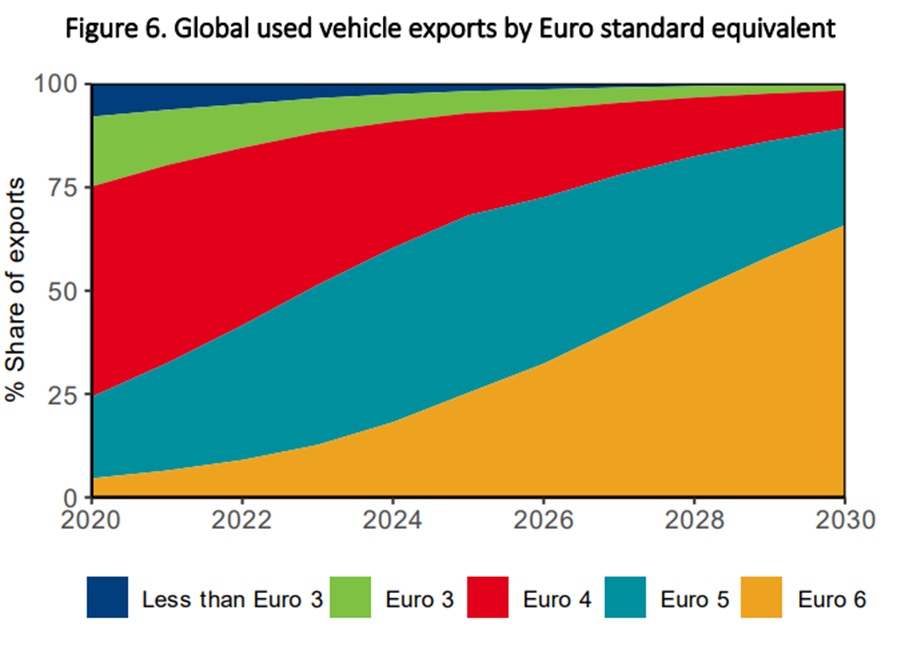
To try and paraphrase the report somewhat, what is exported to many countries across the world are old, dirty vehicles that are poorly tracked as they are imported. The good news is that as the vehicle emission standards have improved over the last 20 years in developed countries, the emissions from the exported vehicles is likely to decrease. By 2030, over 60% of global used vehicle exports will be of a Euro 6 equilavent emissions standard, though that has not stopped calls for export bans on vehicles that are currently Euro 3 equivalent emissions standards.
Source: International Transport Forum
Will such a pattern continue when developed nations adopted electric vehicles en masse? Well, that will depend on a lot of things. The first is the issue of battery depletion. It may not be a case of simply tuning up an old car and sending it off on a ship. Batteries will need recycling and replacing before being exported to have a second life in a different nation – or opportunities for battery recycling within the recipient nation are developed as a means of keeping these cars on the road.
Then, of course, there is infrastructure for charging or replacing batteries on the go. While there are known issues with grid capacity, this potential market for EV export could provide an incentive for electricity grid operators to invest in upgrades.
This is based on the assumption, however, that how transport is electrified in the Global South will essentially be the result of cast-offs from developed countries. There is some evidence that the path towards electrified transport in these nations may be somewhat different to the one many of us in developed nations are following. Solutions such as battery swapping, the emergence of electric motorcycles and scooters, and even electric informal transport point to the potential of such solutions.
Why do I mention all of this? Not just to say that electrification of the vehicle fleet poses all sorts of challenges and opportunities, but to encourage you all to – when developing strategy – think in a systems manner. Taking time to understand the complexities of an issue opens your minds to new issues and opportunities, and what the impacts of your policy actions could be. How our obsession with electrifying cars in the developed world impacts the developing world is just one aspect of this. I urge you all to explore the impacts of what your plans are, so that you can understand the complexity of the modern world, and take better action because of it.
What you can do: Needless to say you should read the International Transport Forum’s report. If you want to learn about systems thinking and how to apply it, there are a number of free online courses from the Open University I would recommend you try out.
👩🎓 From academia
The clever clogs at our universities have published the following excellent research. Where you are unable to access the research, email the author – they may give you a copy of the research paper for free.
Beyond fare evasion: the everyday moralities of non-payment and underpayment on public transport
TL:DR – The morality of avoiding paying fares on public transport is like morality generally – complex, situation-specific, and prone to generalisations.
TL:DR – Someone developed a model to effectively position wireless charging infrastructure to support battery electric buses. They spend the article telling you how useful it is.
Emerging green pathways for a connected and automated vehicle future
TL:DR – Can we deliver the infrastructure necessary to ensure that CAVs are zero carbon?
TL:DR – Think about BOTH network design AND service planning together, not as separate exercises.
✊ Awesome people doing awesome things
Bike Worcester, in Worcester, Worcestershire (sorry to any non-Brits who don’t know how to pronounce that 🤣) have been doing some truly amazing work to improve cycling conditions in the city. In their review of 2023, they listed their 12 ‘Bike Bus’ routes to 9 local schools, creating a barrier map and log of all improvements made, reporting anti-social driving, and having 130 bikes donated to their bike recycling scheme.
Their presentation at the Active Travel Cafe is something to watch if you want help to feel inspired. So enjoy it.
📺 On the (You)Tube
This redesigned street in downtown Milwaukee, USA, is certainly a step in the right direction. Lots of greenery, space for pedestrians, and slowing down traffic? All good stuff.
🖼 Graphic Design

I love this graph on the delay in millennials getting married for two reasons. Firstly, its an interesting social phenomenon. And secondly, this points to wider trends in co-habiting and living arrangements that could have profound impacts on how people travel in different places. Think of it this way – if younger people are having families later (if at all) or are adopting relationships without the expectations that come with marriage, how do you think that will affect their travel patterns?
Every social change has an associated transport change.
📚 Random things
These links are meant to make you think about the things that affect our world in transport, and not just think about transport itself. I hope that you enjoy them.
- BT Group to turn old street cabinets into electric vehicle charging points (BBC)
- Britain’s Economy Is ‘Not Working.’ Here Are Two Key Reasons. (New York Times)
- Five things that didn’t happen in the world in 2023 (Good Authority)
- Germany: Climate Disappointment of the Year (The Duck of Minerva)
- Science-related populism and populist electoral performance (The Loop)
📆 Come and join me
On Friday 27th January at 10am GMT, I will be – for one session only – taking over the facilitating duties at the brilliant SRITC Virtual Cafe from the always-excellent Jenny Milne. We will be talking rural transport, and hearing a presentation from Sharon Payne of Transport East about the work they have been doing to improve it. Sign up (its free), join in, and bring your own cake!
📰 The bottom of the news
In a classic case of pointless meddling by well-intended but overtly officious council officers, a ban on displaying the British flags in taxis in Shropshire is to be overturned. Its the classic local news story – man wages campaign about something few care about but probably think its a slightly silly if well-intentioned rule, and gets council to change the rules.
✍ Your feedback is essential
I want to make the calls to actions better. To do this, I need your feedback. Just fill in the 3 question survey form by clicking on the below button to provide me with quick feedback, that I can put into action. Thank you so much.


 Mobility Matters