
Good day my good friend.
Not much to have small talk on this week. Its been one of those where there are a lot of plates spinning. Which is great for the adrenaline, but not much else. Thankfully, all are still spinning happily. Let’s get to it shall we?
If you like this newsletter, please share it with someone else who you think will love it. I will love you forever if you do. ☺️
James
🌿 In defence of scruffy
Trees and plants are great. I have waxed lyrical over the years about how the simple thing of having trees and plants on streets has numerous benefits. They reduce temperatures, prevent flooding, improve people’s moods, and numerous other things. But one thing we don’t speak about much is that of how to plant things on a street or in other transport infrastructure.
Engineers tend to like order. Order is safe, manageable, something that we know and we can control. Order results in diagrams such as this one produced by Network Rail on sustainable rail corridors. With well-managed lineside vegetation and properly pruned trees much further back from the tracks.
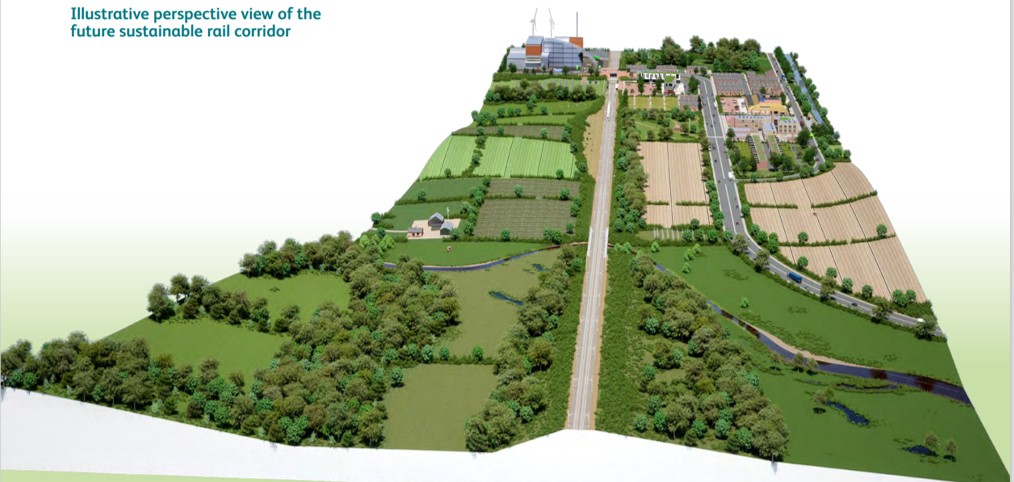
There are very good reasons for this. Safety being a good one. Structural integrity of the infrastructure another. Another one often made is preventing issues that could lead to disruption, through things like leaves blocking drains. This is why highway authorities have policies on such things like managing trees and roadside vegetation management.
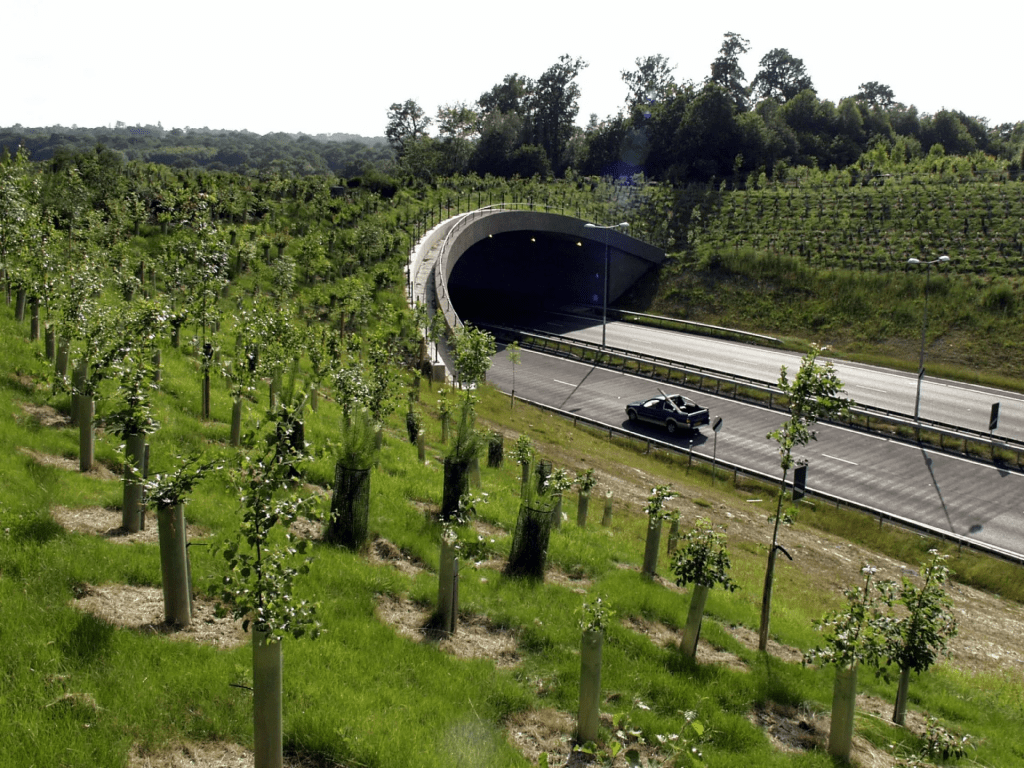
The reality, however, is that nature tends to like disorder. It has a habit of moving into any spare plot of land or bit of infrastructure going, and just…grow. Many of you probably know those random patches of verge that never seem to get mowed, but have grown out over the years with bushes, high grass, wildflowers and even trees becoming established on their own.
The thing is, unmanaged areas are brilliant for biodiversity. Literally leaving such places to grow can improve the chances of pollinator species and increase species diversity. Left alone, these habitats can start a new process of ecological succession (where species and the habitat change over time – think moving from a grassland to woodland). They can act as routes and stop-offs for migratory species. And they do this by simply…existing.
But the presence of these can be a surprising political issue. People can complain about how their area can start to look scruffy and unkempt, when keeping the grass short and the hedges well-pruned are what is required. Believe me, my Councillor email goes mad every single growing season.
Personally, I quite like seeing a bit of green scruffiness. But that is a personal preference.
My point here is that such spaces and the management of vegetation more generally is one of the many areas where we need to change the narrative. To make our streets adaptable to future climates, we need to incorporate planting and trees into them. But we need to move the narrative away from management of a hazard – as is currently done across the transport world – to one of climate resilience and creating places for nature to be nature.
A lot of work has been done to start doing this across the transport industry – notably the Sustainable Drainage Systems and schemes like Grey to Green in Sheffield. But we need to push for better – as professionals and activists. The success of our streets should not just be judged on how they serve place, movement, and people, but how they serve nature as well, and on equal footing to the other 3 aspects. This is a huge ask, but it is one we must start to make.
What you can do: If you want to set up or manage a green area yourself, there are loads of guides on how to do this. The Sustrans Greenway Management Handbook provides some good principles, but is a bit techy. The Plantlife Good Verge Guide is similarly very good. The Wildlife Trust are always very good if you are interested in biodiversity.
The most important thing to do is get the approval of the highway authority for what you plan to do – whether as an individual or a group. State where you plan to manage, what you plan to do, and how you can discuss it further with them. I would also recommend talking to a local conservation group, as not only could they help out with management, but they may also be able to do a survey of the wildlife and species that are there.
🎓 From academia
The clever clogs at our universities have published the following excellent research. Where you are unable to access the research, email the author – they may give you a copy of the research paper for free.
TL:DR – How close you are to your parents may influence how safe of a driver you are.
Public policy instruments to promote freight modal shift in Europe: evidence from evaluations
TL:DR – How you direct subsidies and grants could have a big impact, but the data is mixed.
Does rail transit access affect firm dynamics? Analysis of firm births and closures in Maryland, USA
TL:DR – The closer to a station, the higher the levels of economic activity.
TL:DR – Everyone likes bike share, but people who already cycle like it more than others.
✊ Awesome people doing awesome things
A shout out to John Disley, David Harrison, and other old colleagues at Oxfordshire County Council today. In addition to work of their colleagues on the likes of traffic filters and applying a decide and provide approach to transport planning, they are using some of their Bus Service Improvement Plan funding to cap single bus fares at £1 throughout December. Or at half of the cost of the government scheme. Its great to see some places just quietly getting on with the work of doing a great job.
📼 On the (You)Tube
I find these kinds of videos interesting. Mostly because they tend to take the opposite view of “our city is not like [insert other city name here]” by focussing on how issues are common and solutions can be applied anywhere. I find this well-intentioned but more messaging. Solutions are not all the same everywhere. And everyone’s city is not some special kind of unique. But there are similarities. It is these that make different solutions adaptable and consequently can be deployed across different places. Remember that when communicating your vision of change with people.
🖼️ Graphic Design
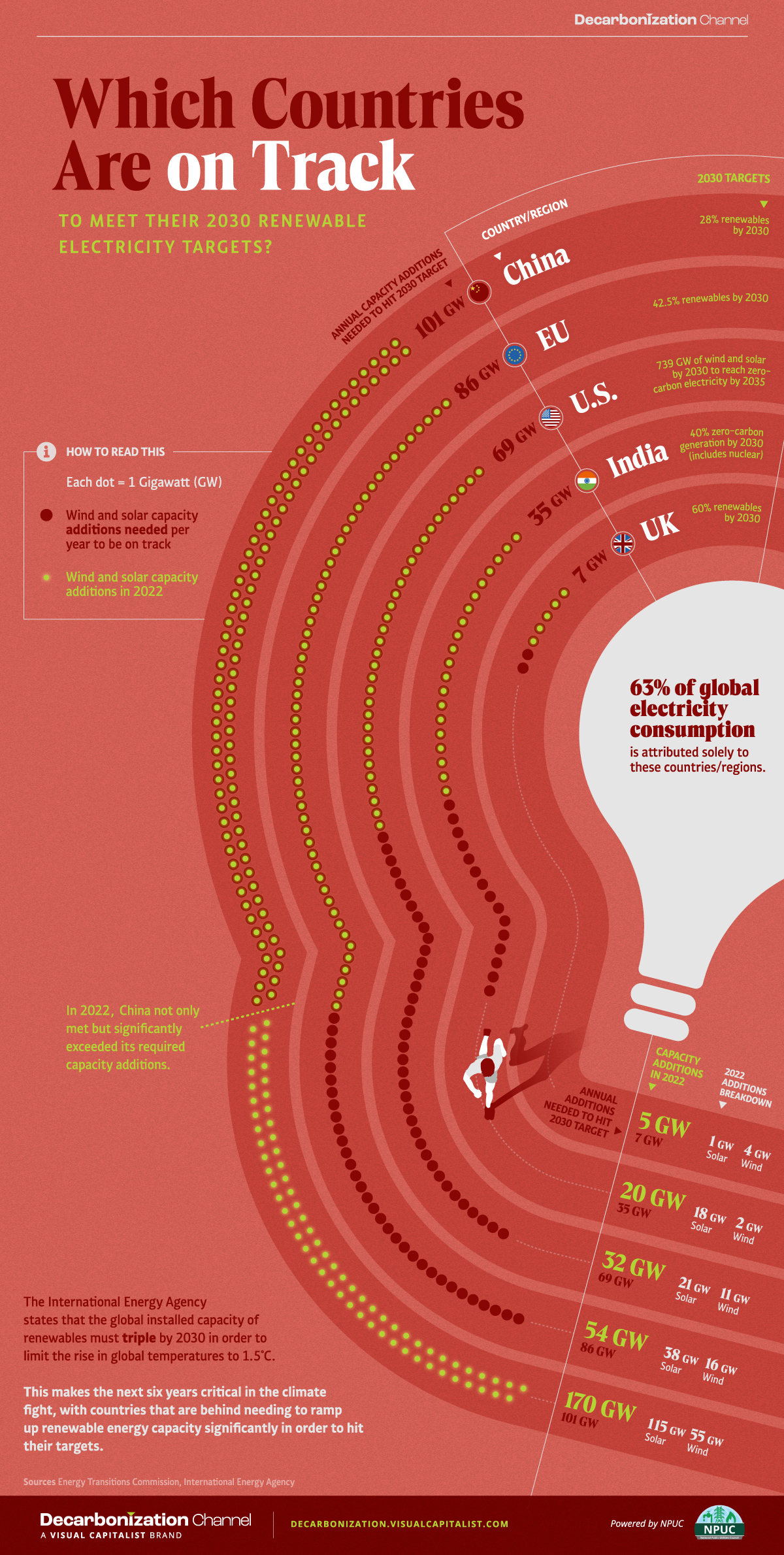
This is a very reassuring graphic. Probably the most critical step in achieving our climate change goals in the next 6 years is decarbonising energy. To achieve the 1.5C target, countries are rapidly deploying new capacity right now, with China smashing its targets. More needs doing, but we might just do it…
📚 Random things
These links are meant to make you think about the things that affect our world in transport, and not just think about transport itself. I hope that you enjoy them.
What was the best park in London to hold a duel? (City Monitor)
Are politicians brave enough for daredevil economics? (The Economist)
Ship technology and human questions (Hellenic Shipping News)
Private Ways to Tackle Gender Discriminatory Inheritance Law: Lessons From a Survey Experiment in Tunisia (Economics That Really Matters)
Tackling climate mis/disinformation: ‘An urgent frontier for action’ (United Nations)
✍️ Your feedback is essential
I want to make the calls to actions better. To do this, I need your feedback. Just fill in the 3 question survey form by clicking on the below button to provide me with quick feedback, that I can put into action. Thank you so much.
 Mobility Matters