
Good day my good friend.
I know that there seems to be a week and day for everything, but this week in transport circles is something that is truly worth celebrating – Community Transport Week. Community Transport (often called paratransit elsewhere in the world) does something that represents the best of the transport world. Teams of hardworking, dedicated people doing something not because it will make money, but because it provides a great community service.
If you want inspiration on what Community Transport can achieve, have a look at the Community Transport Association website. I personally take inspiration from my local operator, Flittabus. From a single bus operating one route, to a network of lifeline services in rural areas staffed by 30 drivers with a whole fleet of vehicles. And not a bad word is said about them.
If you like this newsletter, please share it with someone else who you think will love it. I will love you forever if you do. ☺️
James
Your councillor to-do list
I have said it many times, one of the most effective ways of affecting change in your area is to become a councillor. Whether it be Parish, Town, City, District, Borough, County or whatever. They have the ability to make significant changes to an area (despite having no money), and while you don’t have total power, you have more of an influence than you think.
I myself am a Town Councillor. It has been an eye-opening experience to say the least. But while I was given a run through of the standing orders, there was no guide on how to get things done. As we are in a climate emergency, and we are well past due in delivering action on equalities, and inspired by Greg Marsden’s work, I thought I would share my thoughts on how best to enact change quickly as a councillor.
If you want to know how to become a councillor, the Local Government Association has an excellent guide.
Your first 30 days
The most important things to find out during this time is what powers you have and decisions you can make, and the process for making them. Read the standing orders or Council constitution. Sign up to a committee that focuses on matters such as auditing so you can learn on the job, as well as a committee aligned to what you want to achieve. Contribute to meetings a helpful way – in other words, ask questions that help the Council come to a decision.
Start making friends with your fellow councillors. Chat to them over coffee and get to know why they got into being a councillor, and what motivates them.
Its tempting to submit a motion to the first Council meeting. A word of advice: don’t. Chances are it won’t succeed. It may make to feel good, but to others it will seem pointless.
Your first 60 days
This is when you start building connections, and formulating plans. Identify from your fellow councillors who would be happy to work with you on a plan to make meaningful change to your local streets. Ask them if they are up for it.
As for what that plan is, identify something small scale that can deliver significant benefits for low cost. This is because budgets for the year are often agreed by the time you take office. If you get an allowance or fund dedicated to local projects, use that. Work with officers to identify what underspend there could be.
An example of such a project could be how many single bollards could you install for £20,000, that would close roads and reduce traffic?
Your first 90 days
During this time, your initial plan should start coming together. You know what you want to do, and you should do work on identifying how it links to Council objectives (look at the Council’s Plan). Now you and your fellow councillors have to win over important people.
Talk to your communities. Talk to community groups and fellow businesses. Talk to councillors. Share you plan, make changes to it following their feedback. Communicate with them. Build a broad coalition of support in favour of what you are doing. It is your job to build support for it.
By the end of this, you will have a plan and are starting to build support for it. Only now can you start thinking about bringing a formal proposal to do the work to your Council. Work with council officers on making this so.
Do this, and you never know, your time as a councillor may get off to a flying start.
🎓 From academia
The clever clogs at our universities have published the following excellent research. Where you are unable to access the research, email the author – they may give you a copy of the research paper for free.
✊ Awesome people doing awesome things
*Gestures generally at the Community Transport sector*
Check out the #CTWeek23 hashtag on LinkedIn (and that other social media site, you know the one). Find out who your local provider is. Donate to them, and even consider about volunteering to be a driver.
📷 Out and About
While out paying a visit to a good friend on Monday evening, I got the opportunity to interchange at London Bridge station. A lot of people like London Bridge station, and until Monday I have never quite understood why.
It is a nice station, and about a billion times better than the station that was there before the recent rebuild. Its light, airy, and relatively easy to navigate, but a lot of stations are like that. Finally, on Monday, I finally understood why people like it.
Its a fantastic station for looking up.
The amazing arches, timber-cladded roofs underneath the overhead tracks, and The Shard of course. All beautiful to look at, and almost make London Bridge seem more like a grand old hall that trains serve. If you want to stand at a station and look up, around, and admire, London Bridge is brilliant for it.
If only the walk from the Underground to the Thameslink platforms was not such a pain.
🖼️ Graphic Design
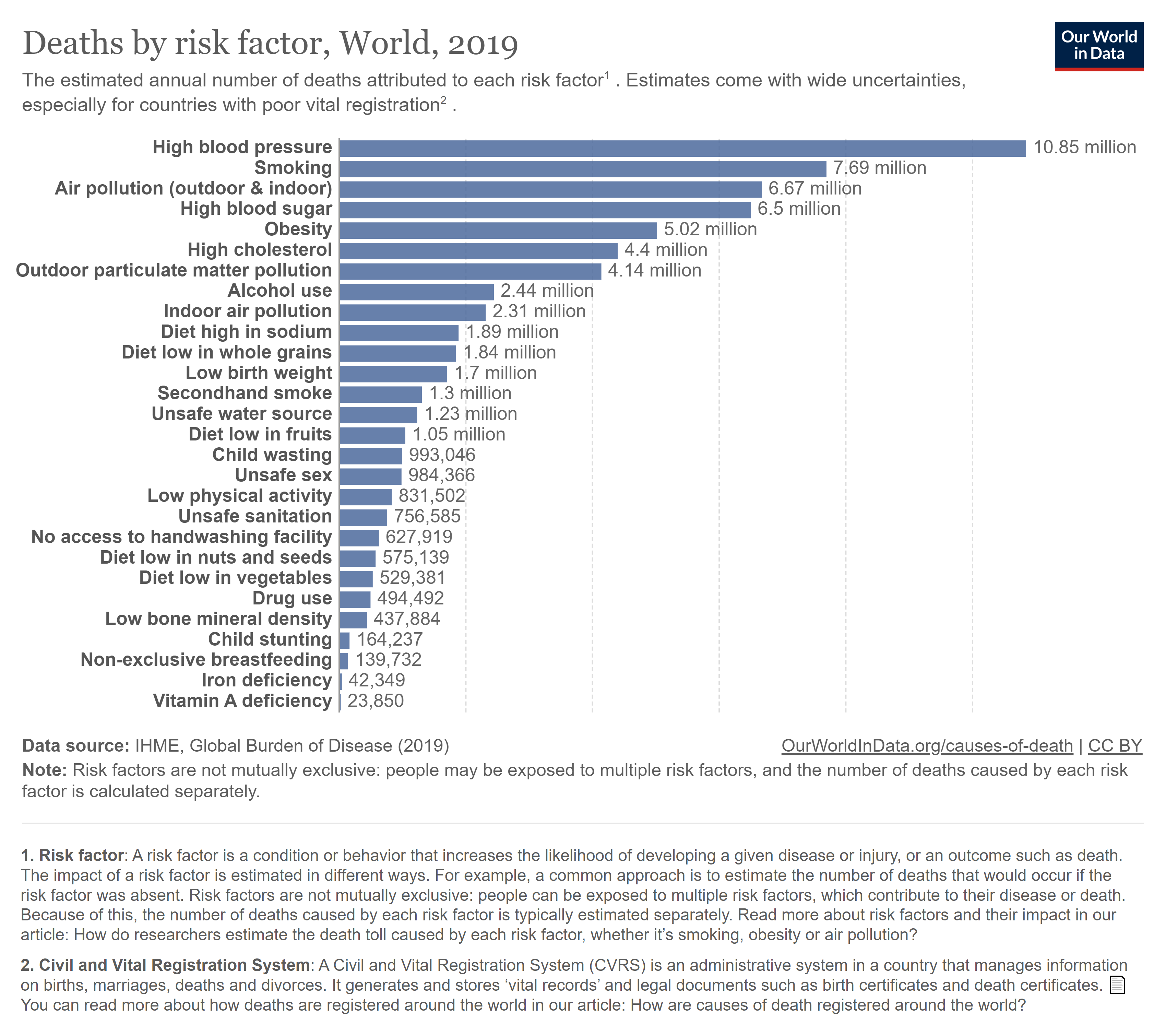
I post this graphic on deaths by risk factors not only because it is interesting (air pollution has the most direct link to transport, but transport has a hand in a number of these risk factors). But because the article on Our World In Data on how scientists estimate risk factors is well worth a read.
🕛 Blast from the Past
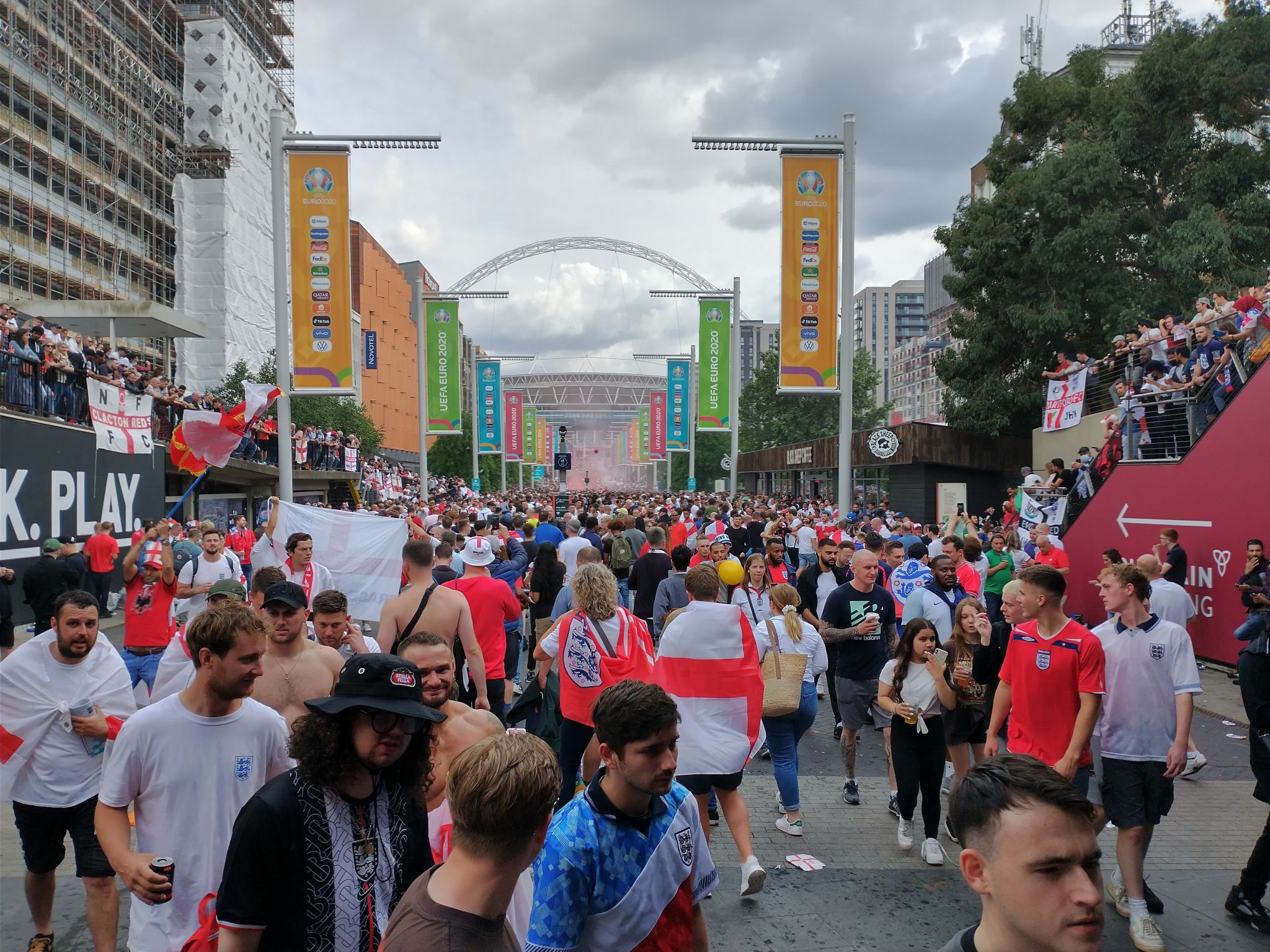
At the time of writing, England are currently beating Italy on their way to qualification to next summer’s Men’s European Championships. I was at Wembley the last time England played the Azzuri on a rather special but ultimately disappointing occasion. On that day, 3 hours before kick off I took this picture of a public space acting like one. In this case, Wembley Way1.
📚 Random things
These links are meant to make you think about the things that affect our world in transport, and not just think about transport itself. I hope that you enjoy them.
Natural gas isn’t natural, it’s methane (The Climate Brink)
Teens Spend Average of 4.8 Hours on Social Media Per Day (Gallup)
Have Economists Contributed to Inequality? (Fast Company)
China cracks open the door to flying taxis (The Verge)
Snippets 11: US deep state, how Apple is managed, laughable HS2 ‘evidence’ to No10 in 2020, why do OneWeb (Dominic Cummings)
✍️ Your feedback is essential
I want to make the calls to actions better. To do this, I need your feedback. Just fill in the 3 question survey form by clicking on the below button to provide me with quick feedback, that I can put into action. Thank you so much.
I know it is called Olympic Way now. But it will always be Wembley Way to me.
 Mobility Matters