

Good day my good friend.
Its September. So naturally, summer has decided to make an appearance in the UK after taking a break for most of July and August. The nation eagerly awaits the customary speed restrictions on the trains, and everyone heading to the coast on Saturday. Thankfully, with no rail strikes to disrupt everyone. Enjoy the weather, folks!
If the recent announcement by the Prime Minister still has you hot under the collar, we are talking ‘changing the narrative’ on sustainable transport at Mobility Camp on 26th September 2023 in Birmingham. It would be great to see you there. Get your tickets now.
If you like this newsletter, please share it with someone else who you think will love it. I will love you forever if you do. ☺️
James
🎫 Integrated ticketing? Lol
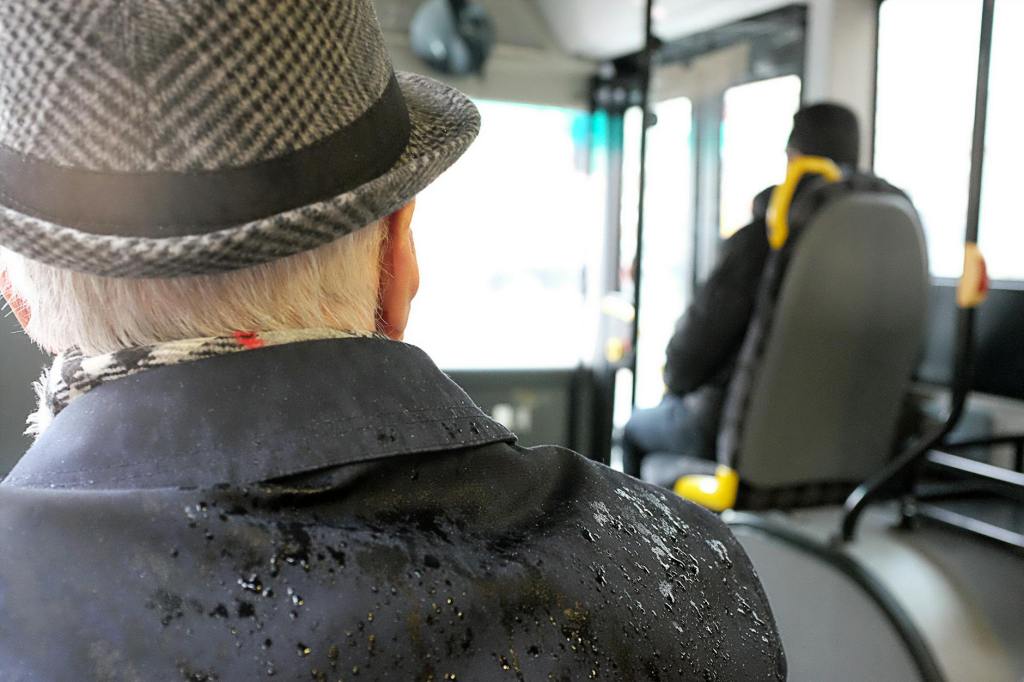
Last week, I took my car to its annual MOT and service. The only mechanic who could fit us in at rather short notice was in Bedford. By good fortune, Flitwick has two bus services running hourly to and from Bedford, which just so happen to run from the end of my road, and drop off and pick up outside the mechanic. All good.
Then you remember that the UK has a deregulated bus system. This makes joint ticketing hard to do, as well as, rather than being logical and having buses run every half an hour, the two services departing within 15 minutes of one another. Then, as I found out on the day, only one of the bus operators is part of the UK Government’s £2 maximum single fare scheme, as under deregulation its entirely voluntary.
This was a fact that I only found out after I boarded the bus and asked for a single ticket. Whereas it cost £2 to go and pick my car up in the evening, it cost £5.50 to travel home after picking it up in the morning.
Things like this are a small barrier in the wider context of barriers to bus use. But it plays into a wider view of buses being an unnecessary pain. Why should I have to check what operators run a discount scheme ahead of boarding? Why can I only use this bus and not that one? Why aren’t the buses every half an hour? These are questions that us transport professionals perfectly understand the answers to – the law, route timings etc. But they make no sense in terms of a usable system.
When buses were deregulated, the intention behind it was that on-street competition would improve standards or services where they are provided. And to be fair to the operators, the buses are very nice indeed and in some cases operators do run excellent services. The problem, however, is that to compete with the private car, public transport needs to operate as a connected system. The only way that works under a private ownership model is through close co-operation (which is often seen as collusion, and not in ‘the consumer interest’ as it means it is harder for new entrants to enter the market), or through a monopoly (definitely not seen as in the consumer interest).
I don’t think for one second that bus franchising or public ownership – effectively illegal outside of existing municipal bus companies in the UK thanks to the Bus Service Act 2017, by the way – will solve all problems with buses in the UK outside of London. Far from it. But it holds the potential to more easily overcome pointless barriers to use such as this.
From the end of this month, Manchester will take the first steps in delivering bus franchising for real. Personally, I wish them every success. As more people on buses, and less pointless barriers to using buses, is dearly needed.
To be fair, though. The buses themselves were quite nice.
📆 Events you should go to
This is a quick shout out for a couple of events that I would highly recommend that you go to. The first is about how planners are using AI to help with decision making, featuring good friend Annette Jezierska and the excellent Dr. Julie Wall from the University of East London. In fact, its an all-woman panel (womanel, is that? I don’t know), and its online tomorrow (Thursday 7th September) at 1pm BST. Sign up right here.
Not content with one excellent event on a day? Well, tomorrow the Transport Planning Society are holding an event on Meeting the challenges of Scotland’s Transport Strategy, notably its 20% reduction in car kilometres. Good friend Daisy Narayanan from the City of Edinburgh will be speaking. You can join online, but also attend in person in Edinburgh. The fun starts at 6:30pm BST, and you can sign up here.
🎓 From academia
The clever clogs at our universities have published the following excellent research. Where you are unable to access the research, email the author – they may give you a copy of the research paper for free.
Scheduling trucks and drones for cooperative deliveries
TL:DR – Its hard.
Uneven mobilities and epistemic injustice: towards reflexive mobilities research
TL:DR – Reflective analysis could help us learn lessons better, we should do it.
Reducing road transport emissions for climate policy in China and India
TL:DR – EVs, reducing demand, you know the drill by now…
How does background music affect drivers’ behaviours, emotions and mood behind the wheel?
TL:DR – Blasting out Metallica changes your driving behaviour. Very slightly.
✊ Awesome people doing awesome things
A bit of a sad one this, and there was only one hero for today – Sergeant Graham Saville. Last week, Sergeant Saville was hit by a train saving a distressed man from the same fate, and sadly he died yesterday from his injuries.
Nearly £150,000 has been raised for fund to help his bereaved family. You can donate if you wish. But on a related note, I highly recommend reading the website of Rail Suicide Prevention, and particularly on how it affects families and rail staff. Remember the words of this website the next time you are frustrated by delays caused by someone being hit by a train.
📼 On the (You)Tube
I’m only posting this as I am listening to the Alan Partridge podcast. This is probably the funniest transport joke that will ever be told. Warning, contains innuendo and British humour.
What you can do: Listen and laugh. Or cringe. Either are valid, as its Alan Partridge.
🖼️ Graphic Design

In researching places to visit next year, I came across this map of the metro system of Lisbon. It is absolutely stunning. I mean, Harry Beck’s map is a work of art. But like the Brazilians with football, the British invented it, and the Portuguese seem to have perfected it.
📚 Random things
These links are meant to make you think about the things that affect our world in transport, and not just think about transport itself. I hope that you enjoy them.
It’s reassuring to think humans are evolution’s ultimate destination – but research shows we may be an accident (The Conversation)
Disarming disinformation: How to understand and counter the “post-truth playbook” (Big Think)
Rethinking Cities for Resilience and Growth in the Post-COVID-19 World (Asian Development Bank)
Why we need more ‘trickle out’ economics (Centre for Cities)
Mineta Shows How not to Reduce Construction Costs (Pedestrian Observations)
✍️ Your Feedback Is Essential
I want to make the calls to actions better. To do this, I need your feedback. Just fill in the 3 question survey form by clicking on the below button to provide me with quick feedback, that I can put into action. Thank you so much.

 Mobility Matters