

Good day my good friend.
My business advisor complains that I never sell myself. And dag-nammit I am going to listen to his advice for once. I had the pleasure to work with the amazing Jenny Milne, Sharon Payne, and Jo Hazell-Edwards over the winter on a Compendium of Best Practice for Rural Mobility. This has now been published as part of Transport East’s Rural Mobility Centre of Excellence. You should go read it, and maybe if you really like it then you should talk to me about how me and my fellow transport geeks can do the same for you.
There, you happy now Michael? Good. Now, on with the news.
If you have any suggestions for interesting news items or bits of research to include in this newsletter, you can email me.
James
Driver’s Being Dicks, Studied
Whilst driving back through country lanes from Milton Keynes yesterday, I happened to notice the, shall we say aggressive driving of some of my fellow motorists towards cyclists on said roads. It reminded me of Dr Ian Walker’s famous blonde wig experiment on how people overtake. That study had some issues, and I have looked forward to a further, in depth study to back this up. Now that study is here. Well, partly, someone did some model validation and published the results. But its still an interesting finding.
In short, the results say “it depends.” On things like whether cyclists are cycling in a group, conditions on the road, and on the drivers themselves. When you dig into other data, factors such as whether they are driving longer vehicles and the presence of oncoming traffic play a role too. If there are 3 certainties in life, it seems they are this: death, taxes, and drivers will drive like idiots seemingly at random.

Politician’s speeding does matter, actually
Not a year goes by without a British politician being caught up in a storm of controversy about speeding. The poster child of this is Fiona Onasanya MP, who got jailed after speeding then lying to police about it. But right now its the Home Secretary Suella Braverman, who asked for a private speed awareness course instead of the group one after being caught speeding. Needless to say that the political reactions have ranged from “sack her immediately” to “a storm in a teacup.” But does it matter? Yes it does, and here is why.
We have a funny relationship with speeding. We support lower speed limits, but speed more often in them. We also think its a major social issue and support more enforcement. So why do we speed? A big reason is exposure to role models who speed. Not to say that political leaders are huge role models necessarily, but when you occupy one of the great offices of state, being a role model kind of comes with the territory. While there is nothing to say that the Home Secretary thinks this is a minor issue or that she is being deliberately obstructive on the matter, your actions are scrutinised when you are in such a position. Next time, stick to the speed limit, maybe?
Random things
These links are meant to make you think about the things that affect our world in transport, and not just think about transport itself. I hope that you enjoy them.
Hyper-visitation, the Fate of the National Parks, and Tourism Toxification in a Small Town (The Daily Yonder)
Time to pay the piper: Fossil fuel companies’ reparations for climate damages (One Earth)
Achieving Scale Collectively (Microeconomic Insights)
Beyond Cash: The Enduring Impacts of a Youth Entrepreneurship Program on Kenyan Women (Center for Global Development)
Why AI’s diversity crisis matters, and how to tackle it (Nature)
Something interesting
The Yamanote Line in Tokyo is a single line that handles more passengers per year than the whole of the London Underground. This video shows quite how this feat is achieved.
If you do nothing else today, then do this
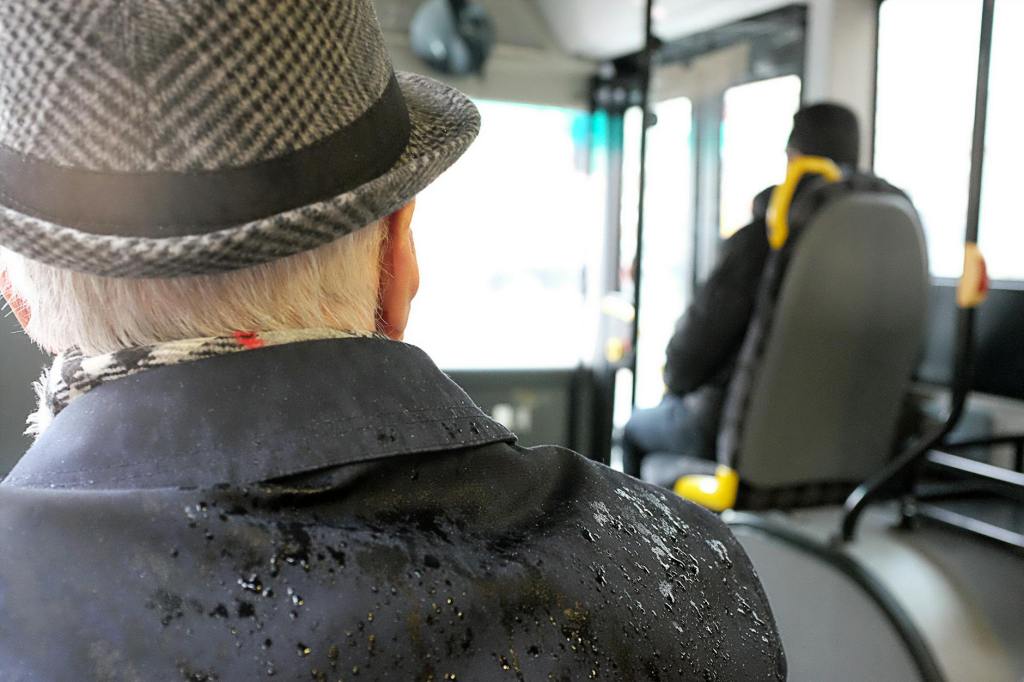
A lot has been said about working from the office and the overwhelming desire to get people back in the office. Including by yours truly. But this opinion article in the New York Times nails it harder than most. Working in the office is fine. Its the commute that sucks.

 Mobility Matters