

Good day my good friend.
Well, that was a lovely day in Scotland, talking all sorts of things about rural mobility with the lovely people at the Scottish Rural and Islands Transport Community. Plus with people from seemingly half of Europe, which is a very good thing indeed! Lots of buzzwords were said, but with a focus on putting them behind us and putting stuff into action. I will say more words on this next week. Needless to say that Jenny – you did an amazing job!
If you have any suggestions for interesting news items or bits of research to include in this newsletter, you can email me.
James
It’s all in the attitude
One thing that did come up at today’s Gathering was that of compensation for when things go wrong with transport services. And they often do. And there are all sorts of laws in place that compel companies to compensate you to varying degrees. The Americans are so impressed with how the EU twists the arms of the airlines, that they are looking to copy their rules.
But, why does compensation have to be claimed? Why, if companies know what plane, bus, train, boat, or any other mode that you are going to take because you booked it, does it not come automatically? I asked this question myself recently. I am currently in an ongoing battle with Northern over being compensated for making me two hours late due to them cancelling trains all day on the Penistone Line. They put my delay down to other operators. Funny that, considering they are the only operator on that route. When they were clearly at fault, its frustrating.
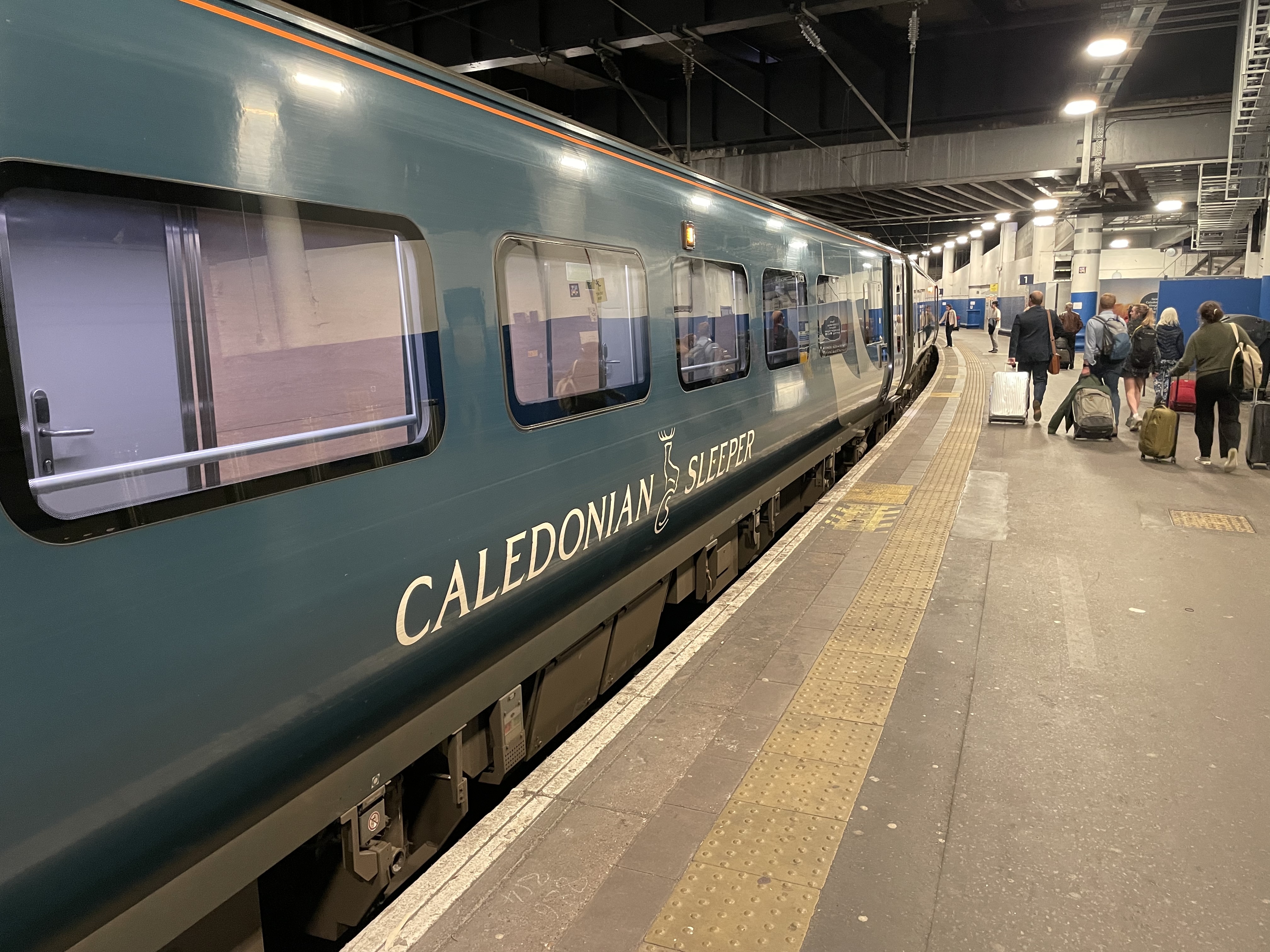
Meanwhile, yesterday, my Caledonian Sleeper train broke down at Perth, and we were booted off onto the next Scotrail train to Aviemore, arriving two hours late. Instead of complaining about it, they sent me the below text. In short, they said they were sorry, and refunded me the cost of the trip without question. I have never experienced that with a British train company before.

Don’t get me wrong. Delays are still frustrating. But that simple action by Caledonian Sleeper makes me feel like they care. Contrast that with Northern who clearly just want to weasel out of it. Now, who am I more likely to recommend based on this? I have long held the view that you see what companies are truly like when things go wrong. Its time for public transport operators to show they are the best in the business. The Sleeper has set the bar. Let’s hope others match it.
Knowledge economy
Phil Goodwin is always a good person to listen to. And in this lengthy article on transport knowledge dissemination, he is bang on the money. The core of the thesis is this: we find it hard to share knowledge as professionals, when there is so much knowledge out there. Application of this knowledge is a whole other issue, but there is a whole host of issues in sharing it that isn’t limited to the absurd academic publishing model.
The only thing I will add, which Phil refers to as grey literature, is this. Some of the best analytics, number crunching, and leading edge knowledge sharing is being done outside of academia in start-ups, the public sector, and even consultancies (rent abstractors though they are). And we now live in a world where there is almost too much knowledge sharing (this newsletter included), and what is needed is ensuring that knowledge is valuable and can be deployed at the right time. Otherwise, its just another link not visited on the Internet.
Why do we choose THAT road?
Imagine the situation. The way is shut. It was made by those who are dead…sorry, where was I? Ok. The road ahead of you is shut. What determines what route you choose? Apart from Waze, obviously. If most of you said that it was whatever is the quickest way, well that is the most common answer. But it is not as common amongst all people as you might think. And that’s important when we want to understand the impact of road closures.
Some new research shines a light on this subject. And you know what, apparently young men are less likely to follow the SatNav for reasons I can’t fathom. And knowing the diversion route isn’t that much of an influence on behaviour either. Could it be that we are finally beginning to trust our SatNavs when it comes to navigation?
Graph of the Week

The exponential tech industry is being adopted exponentially. Instagram took 30 months to get to 100 million Monthly Active Users (MAU). TikTok took 9 months. ChatGPT? 2 months.
Random things
These links are meant to make you think about the things that affect our world in transport, and not just think about transport itself. I hope that you enjoy them.
Warehouses Outperform in Cloudy Commercial Real Estate Environment (Chief Investment Officer)
Everything Google Announced About AI, Bard, and PaLM 2 at I/O 2023 (Gizmodo)
To Oppose All Forms of Bans in the Name of Democratic Values Is a Liberal Virtue (The Wire)
Why not scientism? (aeon)
Cybertruck Prototype Gets Stuck In Field (The Byte)
Something interesting
Looks like I will be finding a reason to go to Oslo soon.
If you do nothing else today, then do this
I wrote something! Its on serious games and how we should do more of them. Thank you to Katie Lamb for giving me the chance to write it. You should go read it.



 Mobility Matters