

Good day my good friend.
As of the time when you will be reading this, I will be what many consider to be the UK’s second city, and for a purpose. You will find out more on that within the next month or two. Aren’t I such a tease?
By the way, in an effort to get away from the Billionaire’s Plaything Hellsite (you know, the Bird One), I am starting to publish more on TikTok and now on Substack Notes. Hey, if we are going to play the surveillence capitalist game, I may as well try and give a vain billionaire manbaby a black eye while doing it.
If you have any suggestions for interesting news items or bits of research to include in this newsletter, you can email me.
James
The Riverboat Conundrum
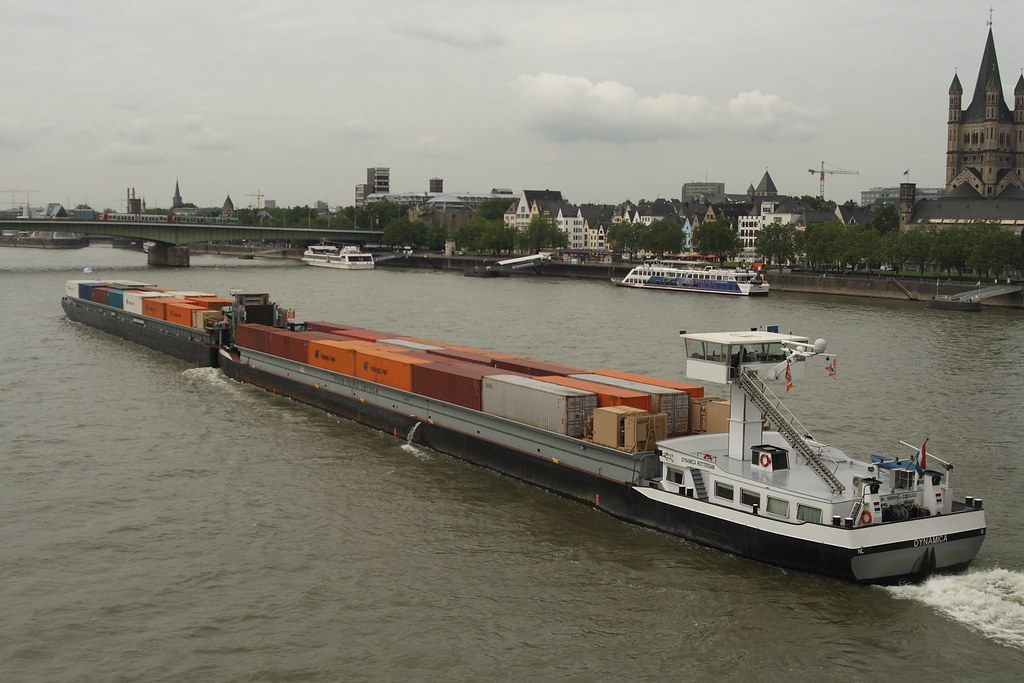
Rivers. Us humans have been using them for transport ever since someone came up with the idea of a boat (and that crossing the river in the shallow bit is usually better). And they are still a huge part of global logistics chains. So much so that when rivers start to run dry, they created a serious headache. And with Europe’s rivers facing a winter drought after a crippling drought last summer, thoughts are going into how to make river boat traffic drought proof.
Recent research has shown some of the approaches that are typically taken to this: figure out what river traffic you want down a river, make improvements to the channel, and hey-presto, more river boats. But increasingly research has focussed on the viability of river freight in the time of a climate emergency. Reductions in volumes shipped and some modal shift are expected. But the industry is really not preparing for a changing world.
Bike lanes don’t gentrify
Fans of land value capture and gentrification and its impacts on communities may be interested in this. A study has been undertaken in China of the relationship between house prices and active travel infrastructure, looking at Shanghai specifically. To summarise the summary, the relationship appears to be much closer to the structure of the urban form as opposed to the proximity of active travel infrastructure.
Is this pattern repeated elsewhere? Evidence from Portland shows that land values can go down closer to bike lanes. While more recent evidence from Paris shows there is no relationship between land values and proximity of bike lanes. Yet much is written about the gentrifying impacts of bike lanes. If changes in land values are primary indicator of gentrification, the evidence showing bike lanes gentrify is simply not there. Don’t get me wrong, there are plenty of social justice and participation issues associated with poorly planned bike lanes. But the bike lane maybe does not deserve the hate it gets.
Random things
These links are meant to make you think about the things that affect our world in transport, and not just think about transport itself. I hope that you enjoy them.
The Truth About the Internet’s Favorite Stress Hormone (New York Times)
This Website Reimagines Cities as Foraging Utopias (Atlas Obscura)
Public Reporting Of Hospital Quality Measures Has Not Led To Overall Quality Improvement: Evidence From Germany (Health Affairs)
Lack of Access to Infrastructure Hurts Voter Participation in Rural America (Daily Yonder)
What if someone mixed The Sims with ChatGPT bots? It would look like this (The Register)
Something interesting
Those of you who care about the state of the Electric Vehicle market may find this video of how Tesla squandered its massive lead interesting. Maybe that is not so bad. Other manufacturers are starting to get on the EV train in a big way partly due to Tesla’s early running.
If you do nothing else today, then do this
I don’t often recommend events, but thank you to good friend Mariana Khanom for highlighting this transport ‘Datathon’ taking place in Berlin in a month. The explainer sells it, but if you have ever been to hackathon, you will know what to expect.


 Mobility Matters