
Good day my good friend.
Whilst heading out for an evening’s entertainment in Manchester last night, I thought it worthwhile checking out parts of the city’s cycle infrastructure. I came across an excellent example of placemaking on a national cycle network route that enabled people to mingle a socialise with ease, without interference from cars.
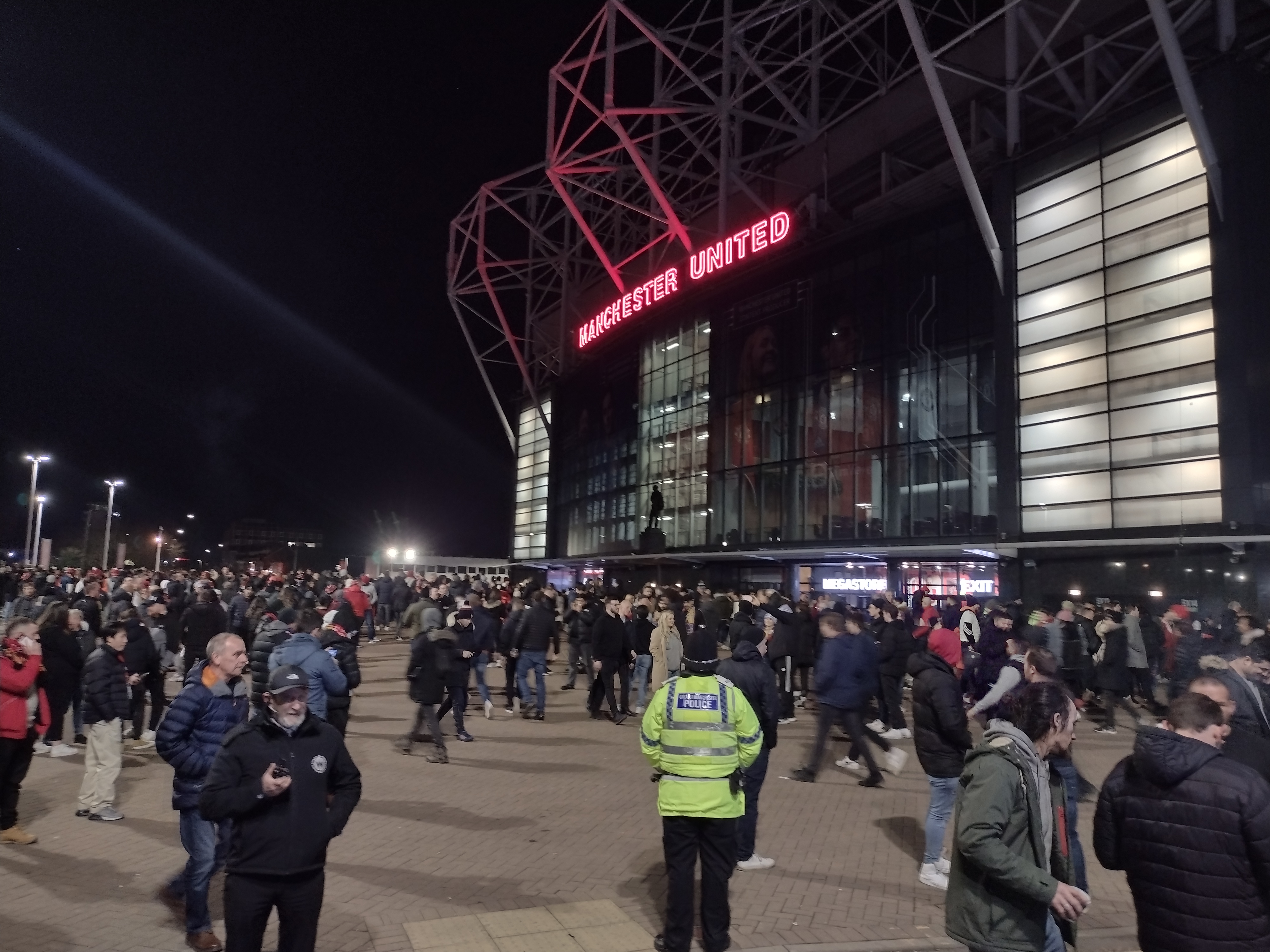
I also came across what is arguably the most magnificent statue on the National Cycle Network.

And before you ask, yes. The evening’s entertainment was very good indeed.
If you have any suggestions for interesting news items or bits of research to include in this newsletter, you can email me.
James
People like trams, but…
Every city wants a tram, right? They inspire imagines of modern, progressive cities, with sparking clean trams gliding by silently, sometimes on a carpet of grass. Urbanists speak of them in almost reverential terms. Can you even call yourself a city if you don’t have a tram? Here is a picture of trams looking incredible that I took – how can you not like them? Well…
Such attitudes really do not help. As transport planners, we must consider what is the most appropriate solution for the issue at hand. It is too easy to solutionise to a perceived problem, whereas finding out the actual problem and designing a solution that is appropriate to it. Its great having a vision to what a city could be. But preferring a solution has got cities into trouble in the past, and while sometimes it can pay off its by no means certain. Being blinded by your vision is not a good place to be.
One issue rarely talked about is where trams get their passengers from. Lets put it bluntly – in many cases they do abstract substantial numbers of passengers from buses, not from private cars (you need other complimentary measures to do that). This may not be a wholly bad thing, as it frees up capacity on the bus network. But grand reports of modal shift sometimes need to be taken with a pinch of salt.
Then there is the cost. The capital costs are significant though revenue costs tend to be slightly cheaper. Not to mention that capital costs fluctuate significantly over time. Its not just the trams and drivers plus associated maintenance, but also whole systems of traffic management and signalling that must be maintained. This is not to say that trams aren’t great (they are) and that they do not have value (they do). But, lets be professional about this, and think about whether trams are solving the problem and meeting our vision, or whether promoters are getting blinded by their own vision.
Building roads is good for poverty reduction
Despite the recent, and welcome, announcement by the Weslh Government that they are pausing road building, its worthwhile remembering that road building isn’t entirely bad. In fact, there is a lot of evidence – especially from countries where road networks are not as extensive as they are in developed countries – that shows that road building can be a good thing. Especially economically, and even to the most disadvantaged people.
A recent panel study of rural residents in China showcases just this fact. It found that where roads were constructed in areas previously poorly accessible by road, incomes and business revenue grew, especially where it was relatively low before. Though the study does state that if education levels are poor, this effect is not as big. All this goes to show that building roads isn’t a bad thing entirely, and has its merits as a transport solution.
Understanding conspiracies
If any of you are following the discussions online about 15 minute cities, some of the things being said there are just, wild. Now, I know that you – as a fellow member of the Elite Globalist Wokerati Lizard People dedicated to enslaving all of human kind and stomping on freedom using traffic filters (sarcasm) – may be concerned about how on Earth you tackle conspiritorial thinking? Well you need to understand it first.
That is where I have your back. Firstly, learn from people who have actually spoken to those conspiracy theorists. Secondly, don’t rely on facts (evidence against the conspiracy is evidence for the conspiracy) and instead focus on the emotion of the argument – often you are just trying to take the sting out of the argument rather than convert them.
Random things
These links are meant to make you think about the things that affect our world in transport, and not just think about transport itself. I hope that you enjoy them.
Google’s quantum computer hits key milestone by reducing errors (Nature)
The Death of Office Culture Leads to Boom Times for Used-Chair Salesman (Vice)
Overcoming Systemic Racism Through System Engineering (IEEE Spectrum)
What does a world with billions of old people look like? Asian countries are searching for answers (Grid)
Rejecting science has a long history – the pandemic showed what happens when you ignore this (The Conversation)
ChatGPT is everywhere. Here’s where it came from (MIT Technology Review)
Graph of the week
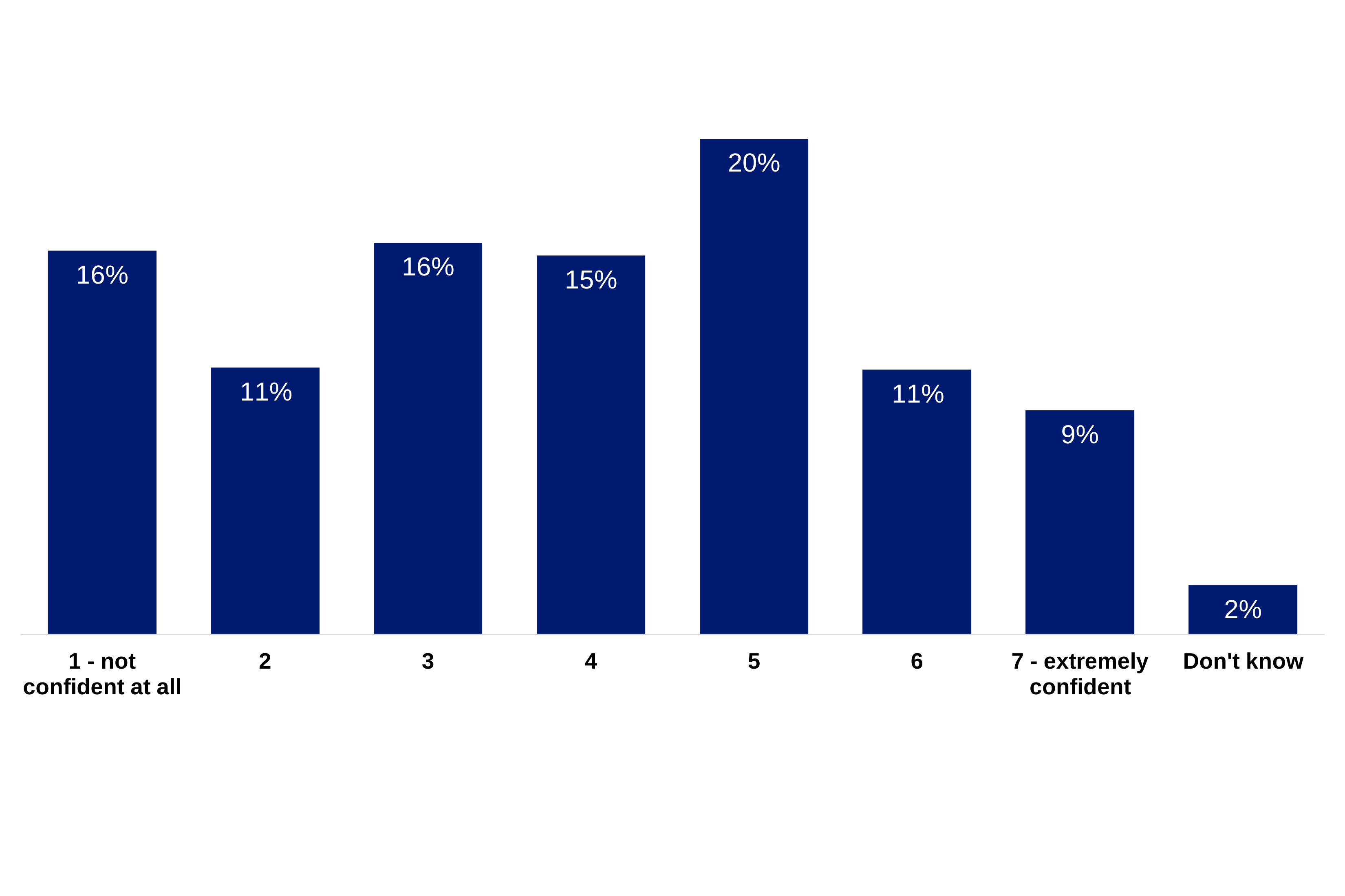
The National Travel Attitudes Survey is always worth checking out. This graph shows quite how confident people in the UK are with electric vehicles. That is far more than I thought it would be.
Something interesting
This video has strong old-Top Gear vibes (without the hitting people and veiled racism). And this race across London was amazingly close.
If you do nothing else today, then do this
Help out some good friends with a couple of surveys. Specifically, friends at the Scottish Rural and Islands Transport Community (SRITC). Note that these surveys are open to anyone, not just people from Scotland. Here comes the blurb (and the links):
The Rural Communities Fund has given funding to SRITC to progress its Big Ask 5, which relates to developing a Sustainable Transport Challenge for young people in rural and island communities. SRITC is keen to gather views from parents, young persons, professionals, homeschoolers, volunteers or potential sponsors. We have 9 questions on the surveys to answer which will take you just a few minutes to complete. Survey one is designed for young people to complete and survey two for adults to complete with or without a young person. The survey will be live until the middle of March.


 Mobility Matters