
Good day my good friend.
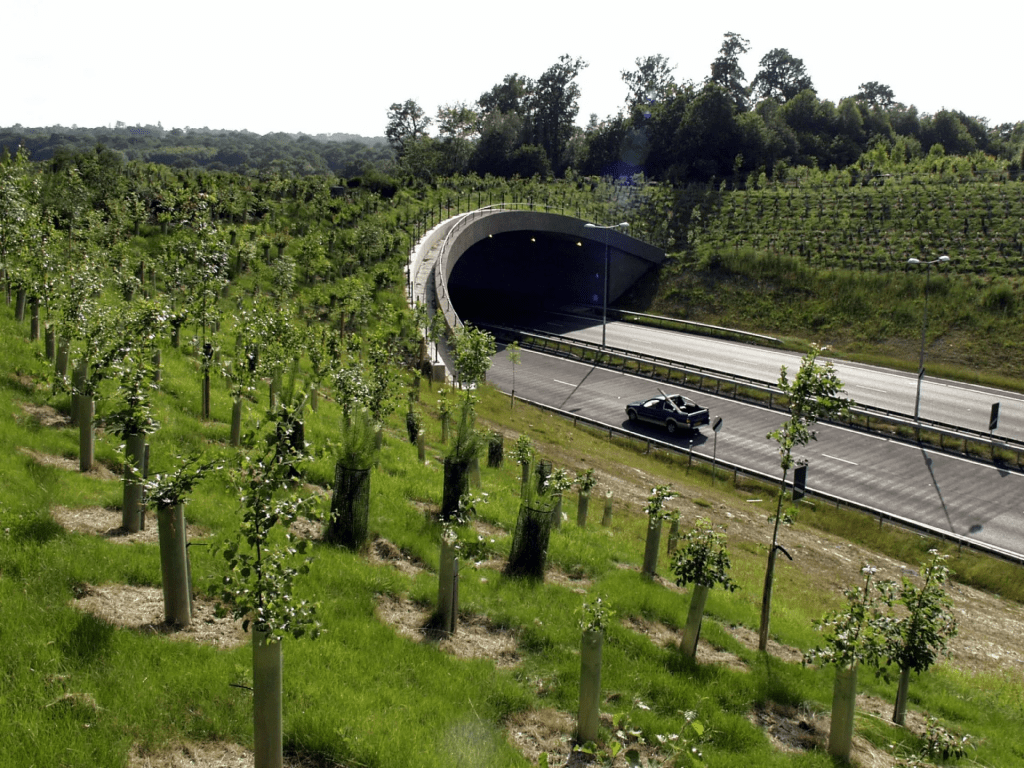
Often, I hear in response to transport schemes how major changes are not possible. Yet also, people reflect on the great engineering feats of our ancestors. Achieved with little more than pick-axes and muscle (ok, and a worrying disregard for human life), asking why we can’t achieve that feat of greatness. Just because we are not building huge bridges, does not mean that the change that we are looking to achieve to tackle the great issues of our time is not as revolutionary.
If you have any suggestions for interesting news items or bits of research to include in this newsletter, you can email me.
James

Building stuff grows the economy. Eventually.
For almost as long as transport planning has been a profession, the arguement of whether there is a link between infrastructure development and economic growth has raged. The general consensus is that yes, it does grow the economy. But its effects varying across the population, and can even vary (and affect) the density of population. Even then, the subject is affected by all sorts of debates about Keynesiam’s and the like.
An analysis of UK transport infrastructure investment since the 1970s has pointed to an often-overlooked fact. The changes are long term. The impacts of what we build are long term. Yet the need to evidence change is often short term, and driven by immediate time horizons. Something to think about the next time that you build a scheme.

Rethinking parking in one of the world’s biggest countries
There may or may not be 9 million bicycles in Beijing, but what is a fact is that the city has rapidly motorised over the years. Some much so that since 2011 the city authorities began to restrict ownership. Bringing growth down from 20% per annum to just over 4%. But the city has started to go much further than that, and started to look at how its parking needs to be managed.
What they are doing would make the Shoup Dogg very pleased indeed. The wide-ranging plan of the city includes abolishing parking minimums, launching a Blitzkreig on illegal parking, and rolling out a parking app used by over 6 million residents. Oh, and actually managing parking in a way that clearly marks out spaces for pedestrians, cyclists, and cars. And expanding the bus service. This carrot and stick approach might catch on…

Random things
These links are meant to make you think about the things that affect our world in transport, and not just think about transport itself. I hope that you enjoy them.
The World’s Farms Are Hooked on Phosphorus. It’s a Problem (Wired)
Why The AI Ethics War Will Make The Content Moderation Fight Seem Tame (Big Technology)
The Cult of Bike Helmets (Slate)
Why struggling cities still lead their regions (Centre for Cities)
Economists Are Still Right About Airline Deregulation! (Milken Institute Review)
Something interesting
Cars do make a lot of noise. I learned that very much during the first lockdown. But its an often-underrated fact of removing traffic.
If you do nothing else today, then do this
I am just going to leave this article here. Warning: clicking on the link may trigger your workplace’s website blocker and get you in trouble (its nothing graphic, but the subject is rude). This will be an Ig Noble Prize contender.

 Mobility Matters