
Good day my good friend.
In my complete absent-mindedness (for which there is no excuse), yesterday was Martin Luther King Jr. Day. Its fair to say that transport is far from untouched by the legacy of racial discrimination. While many countries are past the days of enforced segregation on public transport, that doesn’t mean that racism is a thing of the past. This is just a reminder that, no matter how far we have come, we can always be better.
If you have any suggestions for interesting news items or bits of research to include in this newsletter, you can email me.
James

Times of trouble show your true colours
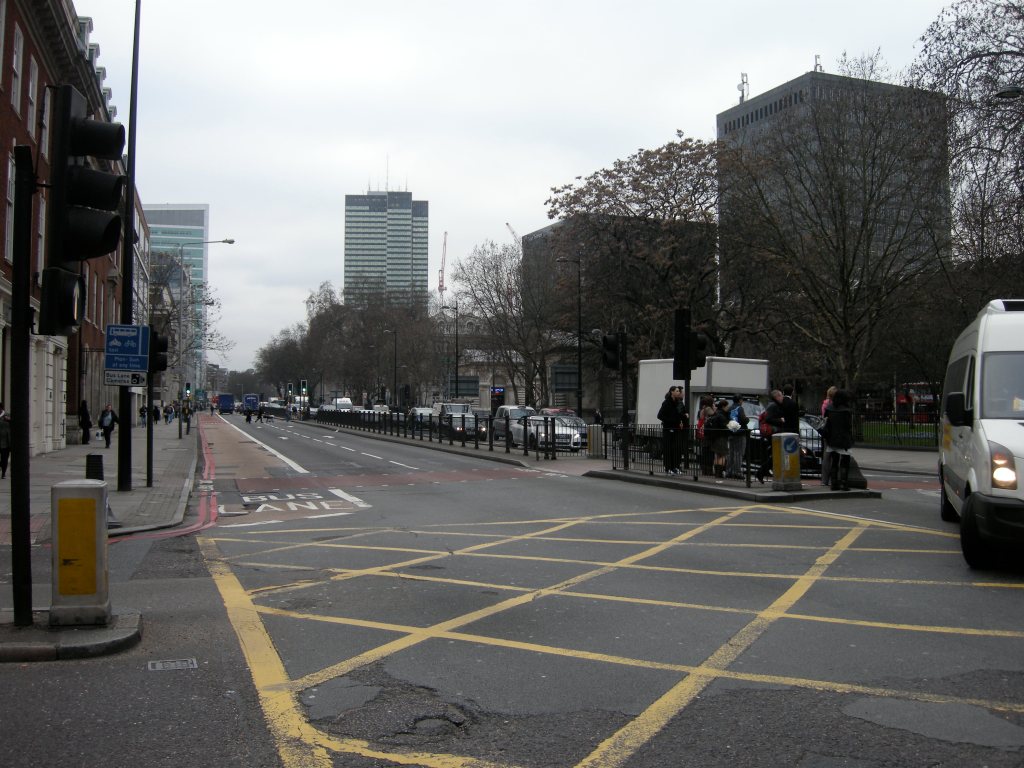
In not-so-shocking news, the construction of HS2 is going to cause a significant amount of disruption. In this case, Euston Road in London will see major changes over the coming years. What is notable about this change is how no alternative provision will be made for bus lanes or for cyclists. Which is a shame, as its not as if TfL does not have the experience of delivering said lanes on Euston Road.
The network management duty of local transport authorities is a hard one to balance, but the reallocation of roadspace isn’t fundamentally against this duty. What is done with limited space on a highway network reflects the relative importance of policies and duties of transport authorities, and when major construction and works take place, your priorities become clear. Which is a shame, as Transport for London have a track record of prioritising non-car modes during construction. Sometimes, these lessons need relearning.
Keeping things going during strikes – what is it like in practice?
UK readers will be fully aware of the impact of rail and bus strikes across the UK over the last 6 months or so. Now government is looking to act by preparing to write minimum service levels for such services into law. I don’t want to debate the merits of such legislation here, but this is a useful prompt I feel to understand what the operational challenges are associated with strike action. After all, we know a lot about the impact of strike action on city transport networks.
Evidence is actually a bit thin on the ground. We know that the impact of strike causes management issues outside of the immediate operational environment. There is evidence from other sectors that resilience against strikes is poor, and that strikes rarely build resilience against future strikes. Personally, I find this lack of evidence and study somewhat disconcerting.

Random things
These links are meant to make you think about the things that affect our world in transport, and not just think about transport itself. I hope that you enjoy them.
The golden fuel (aeon)
Who Is Going to Police the New World Trading System? (Wall Street Journal)
A Luddite Library (Librarian Shipwreck)
The state of American entrepreneurship: everything you should know (Faster, Please!)
Something interesting
What happens when you half-build a metro system and then just…give up? That is what happened to Charleroi in Belgium. More specifically on the branch out to Châtelet, as the rest of the Metro system in the city is, in fact, very good indeed, if somewhat brutalist.
If you do nothing else today, then do this
I’ve shared this before, but the Transport Planning Society is looking for new board members and a new chairperson. They are an excellent society to be part of, and you get a real say in what they do. So you should register your interest!



 Mobility Matters