
Good day my good friend.
The history of airports is fascinating to me, and the history of them in the UK is relatively unique. In that we built loads quickly for the Royal Air Force (and some civilian aviation), and then just said ‘well, there you go. Go do flying things.’ But what do you do when airports are no longer needed? In the UK, the experience of Silverstone and Goodwood says that it will go to motor racing. But maybe we should follow Berlin’s lead, where the former Tempelhof Airport has been turned into a city park. People like parks.

If you have any suggestions for interesting news items or bits of research to include in this newsletter, you can email me.
James
The role of micromobility in climate change points to us accepting that the perfect may be the enemy of the good
I have to say that Nate Seeskin of the Shared Used Mobility Centre has put together a really good guide on how micromobility (translation: e-scooters, shared bikes mainly) can play a role in local climate change strategies. Bear in mind this is a review of plans and identifying best practice as opposed to an assessment of delivery, and the scorecards in the appendices show that while micromobility is mentioned a lot, the funding is less forthcoming. But like good research does, it makes me think. Are we letting perfect be the enemy of the good when it comes to micromobility?
The potential of micromobility to tackle climate change needs to be put in context. Yes, walking and cycling is better for the climate. But micromobility is better than using cars, by a long way in the case of public fleets. There is potential for micromobility to replace short car trips (and bike trips as well). So while promoting walking and cycling is better, that does not mean that micromobility is bad. But we put up barriers to their implementation because we want them to be perfect. Lets just let it be good.

Disaster planning may not benefit from centralised control
When it all goes wrong, us transport professionals tend to go for the command and control method of dealing with disruption. Which is fine, assuming your information is good and you have the right people on board. But one of the best books I have read in the last 10 years is A Paradise Built In Hell by Rebecca Solnit. It makes the case for the opposite. That while centralised guidance is needed, when disaster strikes, communities are amazingly resilient and you should work with them.
This research on disaster planning in cities, specifically focussing on housing, identifies a key reason why centralised strategic planning has a big risk associated with it. It does not understand the social tensions well enough so that when things break down after a disaster, it cannot react. This is hard for transport planners to do, hence why we usually focus on repairing the infrastructure and establishing temporary services. But as we start to plan for climate change, understanding the social elements of our work becomes more important.
Random things
These links are meant to make you think about the things that affect our world in transport, and not just think about transport itself. I hope that you enjoy them.
Switzerland sets record with world’s longest passenger train (BBC)
A National Park Wants to Use Rat Poison to Get Rid of a Fish They Brought In (Daily Beast)
Obesity, Poverty and Public Policy (The Economic Journal)
Evidence in Transport Policy (The Transport Economist)
Blame Big Oil (Heisenberg Report)
Something interesting
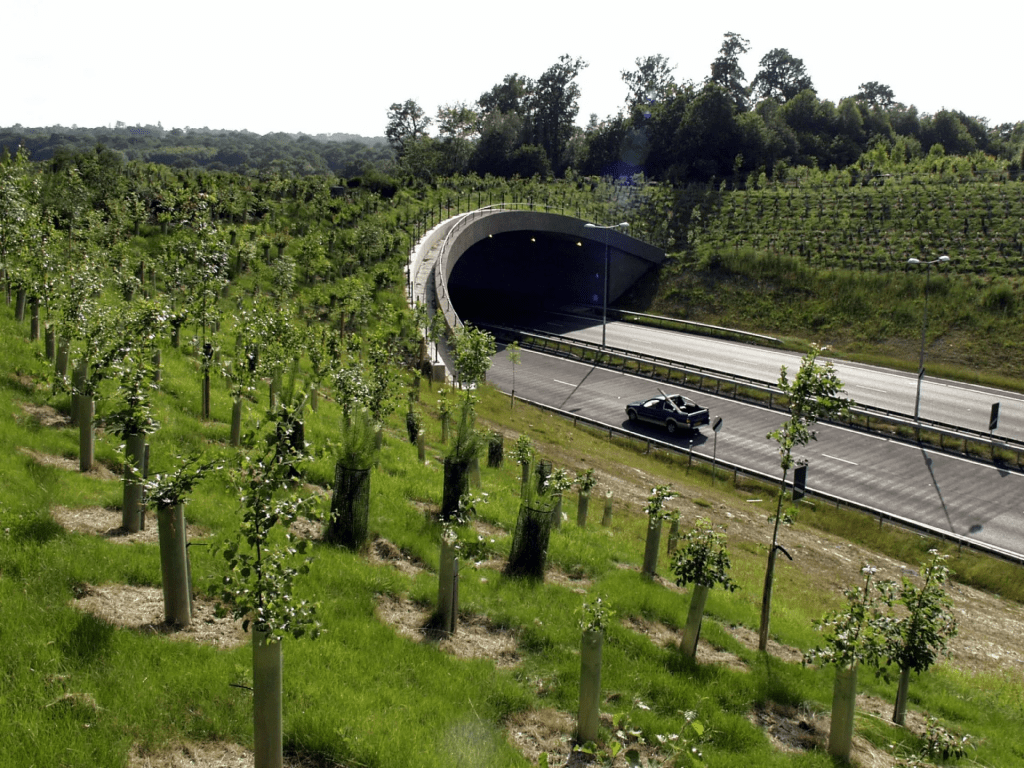
Our infrastructure is full of hidden surprises. So why not try and spot these while driving up the M1?
If you do nothing else today, then do this
The Pedestrian Observations blog is always worth a read. The latest post is on Sandbagging. No, its not a term that should be in Urban Dictionary (frankly I’m scared to even look). Basically, its the act of making the option you don’t want see being delivered look worse. Maybe a better term is deliberate scope creep, but maybe this is pointing to one of the darker arts of transport planning.



 Mobility Matters