
Good day my good friend.
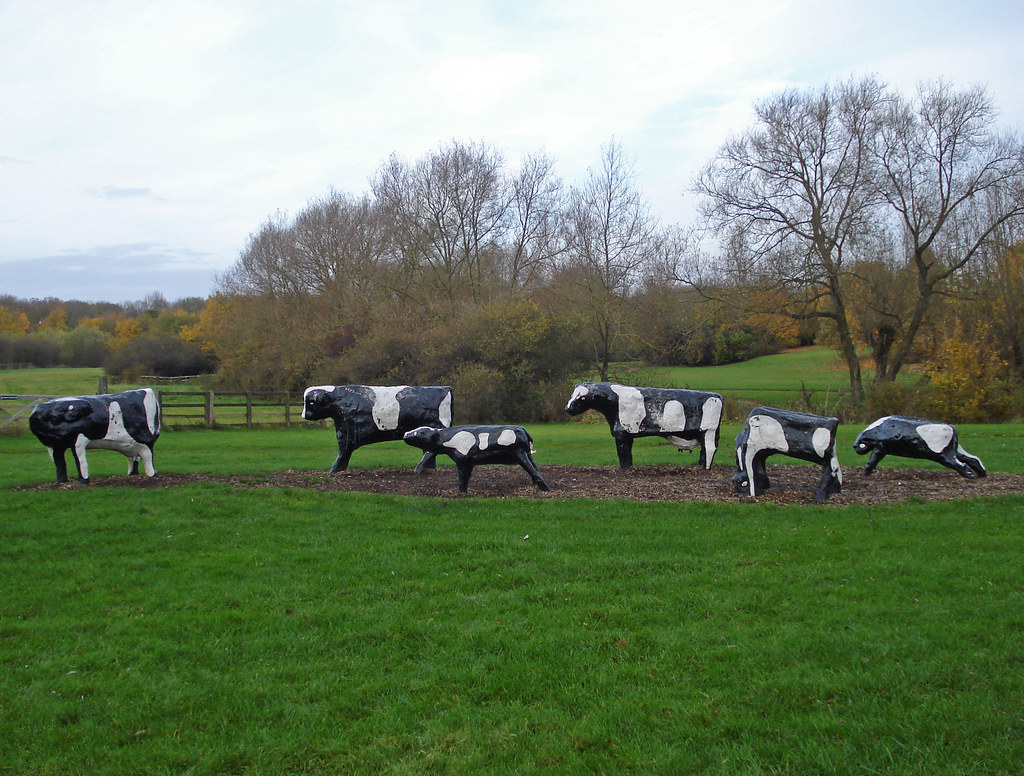
Currently, I am writing this in my back garden. The sun is shining, the birds are singing, the cows are creating a bit of a din in a distant field somewhere. I know that many of you love the hustle and bustle of cities. But sorry, I am a country boy at heart. I love it when transport isn’t a constant noise in the background.
Bliss.
If you have any suggestions for interesting news items or bits of research to include in this newsletter, you can email me.
James
The blind spot designed into vehicles that you aren’t taught about
One of the most significant changes brought about by a rise in the use of SUVs is more drivers being exposed to larger A-pillars. These pillars, that support the roof and the windscreen, have been expanded over the years to support the roof in case the car rolls over. But the impact of that is to expand the range of the blind spot when turning, to the point where a small car can be hidden in that spot.
Whilst checking twice before moving is something increasingly being taught in driving schools, this blind spot is also influencing road design, specifically at intersections. Right-angle intersections where one traffic flow has priority is a good example of this, forcing traffic to stop and take care, as in the now famous example of Ipley Crossroads in the New Forest. Safety is a function of vehicle design, infrastructure design, and behaviours. Each influences one another in strange ways.

Intersectionality and cycle infrastructure
One of the more interesting research areas where transport is intersecting with social sciences is research around intersectionality. This article does more justice to the matter and the debates surrounding it than I ever well, but just to summarise intersectionality, it contends that there are multiple forms of oppression in society, and they interact to maintain existing power structures.
For me, these ideas are interesting because they challenge the way that we think about things. But one of the more interesting research articles exploring this is on urban cycling by Tiffany Lam. It provides a good overview of gender and other inequalities. It suggests two things that can help: increased provision of, and spatial equity in, orbital cycle routes and improved data collection and disaggregation.
Random things
These links are meant to make you think about the things that affect our world in transport, and not just think about transport itself. I hope they do just that.
The dawn of the FemTech revolution (McKinsey)
COVID bailouts helped politically connected businesses more than others – new research (The Conversation)
Cycling Art, Energy, and Locomotion (The Public Domain Review)
When a seismic network failed, citizen science stepped in (Ars Technica)
Machines Against the Rage (The Baffler)
Something interesting
There are few better indicators of civilisation than the humble street light.
Things for a better world
This is a weekly collection of transport strategies, experiments, and cool projects looking to create a better world that you should find out more about. Not only that, you should think about adapting and doing yourself.
Strategies
Open Streets (Comune di Milano)
Policy Position Statement: Active Travel (Transport for the North)
Guidelines for City Mobility: Steering towards collaboration (World Economic Forum)
Connecting Leicester (Leicester City Council)
National Mobility Plan for a New Normal (Gobierno de Mexico)
Experiments
Cutting the distance from Farm to Fork – the SKIN project (Horizon 2020)
Shared Mobility Benefits Calculator (Shared Use Mobility Center)
Africa Transformative Mobility Accelerator (Africa Mobility Initiative)
Smart Trams in Florence (Eltis)
Cool projects
e-Rickshaws in Bangladesh (TUMI)
Kampagne #BesserWeiter – English translation: Campaign #BetterNext (Die Bundesregierung)
#WeAllMove (Wunder Mobility)
The Climate Bet (Doughnut Economics Lab)
MARTA Reach, Atlanta (MARTA)
If you do nothing else today, then do this
Read the Privacy Principles for Mobility. And adopt them.

 Mobility Matters