
In short: people can’t tell if the machine is driving or not, dogs are bad for transport emissions, and lets respect drivers more.
Good day my good friend.
It’s the two-week crazy period before Christmas. No time for wasting. So here are your links.
James
Thank you for being a paid subscriber. Remember to check out this week’s article was on technology roadmaps.
Should driverless cars need to pass a Turing Test?
One of the (many) ethical debates on driverless cars is whether or not they should drive like humans? This is a long, and sometimes tedious, debate centred on questions of personal preference and whether humans are at fault for collisions. Cascetta et al took a slightly different approach. They asked whether we could tell if it was the car driving, or whether it was a human driving, through applying a Turing Test1 to a Level 2 Automated2 vehicle and a load of university students.
The test posed is somewhat simplistic, in that it focussed on some basic commands for driving. Most of the time, the passengers in the back seat (unable to see who – or who wasn’t – driving) couldn’t tell if it was the computer or a human driving. Apart from in congestion and at high speeds. This research needs some follow up to it with more advanced automated vehicles, but it is useful in helping us understand how people may perceive the transition to automated vehicles.

Bad dog!! (for transport carbon emissions)
Some research did the rounds on social media last week, and its bad news for us dog lovers. It appears that having man’s best friend in your house means that you are more likely to drive more often. Furthermore, this is the case even if you account for things like household income. What’s more, this isn’t the first bit of research to confirm this link.
As I shared yesterday on LinkedIn, this goes to show that accounting for lifestyle choice is important when we are trying to create policy responses and projects for the climate emergency. Also, I would love to see some additional research. Firstly, to see if there is a link with the number of short distance walking trips for leisure purposes (aka walkies). Secondly, to see if there is a difference by breed. I can imagine a fair few more longer walks for owners of Border Collies compared to owners of Yorkshire Terriers.
Driving is a hard, thankless, and critical job that is finally getting some respect. Too bad it’s taken a crisis to make that happen.
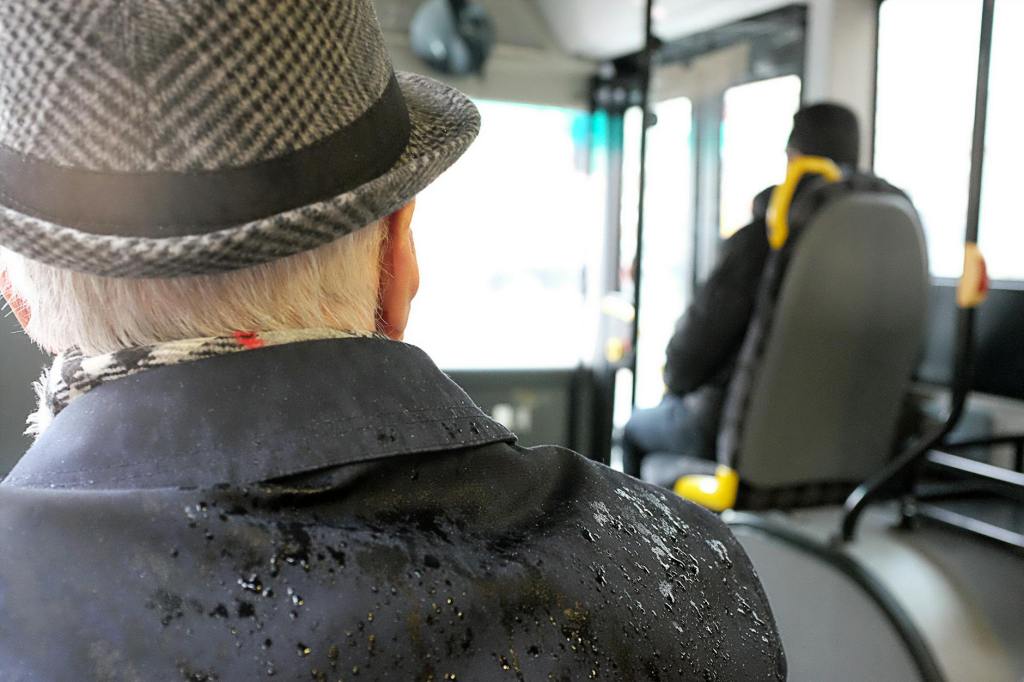
Drivers don’t get put on lists of key workers, but they really should be. Their role in society is different to that of nurses and firefighters, but they literally keep our countries and economies running. That is as much the case in public transport as it is for driving freight. This is why Jarrett Walker’s post on the bus driver shortage in the US hit home3.
This advice may sound simplistic, but it’s actually practical. Kindness is a powerful form of activism. A lot of it can add up to big change.
For too long our words on drivers have been to see them as an inconvenience at best, and at worst a menace. No wonder ideas like the driverless Tube keep getting a mention. Let’s give them some respect.
Random things
Random stories, straight from my news feed to your inbox.
The Great Neutrino Mystery Could Point to Missing Particles (Wired)
After Wakashio, MOL Sets Up Blue-Economy Fund for Mauritius (The Maritime Executive)
Allego enters into strategic partnership with Nissan (New Mobility)
San Diego’s $160B transportation overhaul calls for three tax hikes, plus road charges (Encinitas Advocate)
Evidence for the “great resignation” is thin on the ground (The Economist)
Interesting things

Few things shock me, and this did. Last year, the mass of everything that humans have created is estimated to have exceeded the biomass of every living thing for the first time. I am astounded at this.
If you do nothing else today, then do this
Watch this video by Practical Engineering. This sort of science is why construction projects take so long.
In summary, a Turing Test is whether a machine exhibits a level of intelligence that makes it indistinguishable from a human. Alan Turing used the example of an imitation game.
Simply put, Advanced Driving Assistance Systems (ADAS) can take over steering, acceleration, and braking in specific scenarios.
And yes, there is a huge shortage in bus drivers in the UK as well. So much so that many companies are seriously considering pulling routes not because of a lack of demand, but because there are not enough drivers to drive the buses.

 Mobility Matters